
How A Boy From Houston Found His Way From A Modest Childhood Into A Life Of Music, Touring And Millions Of Listeners
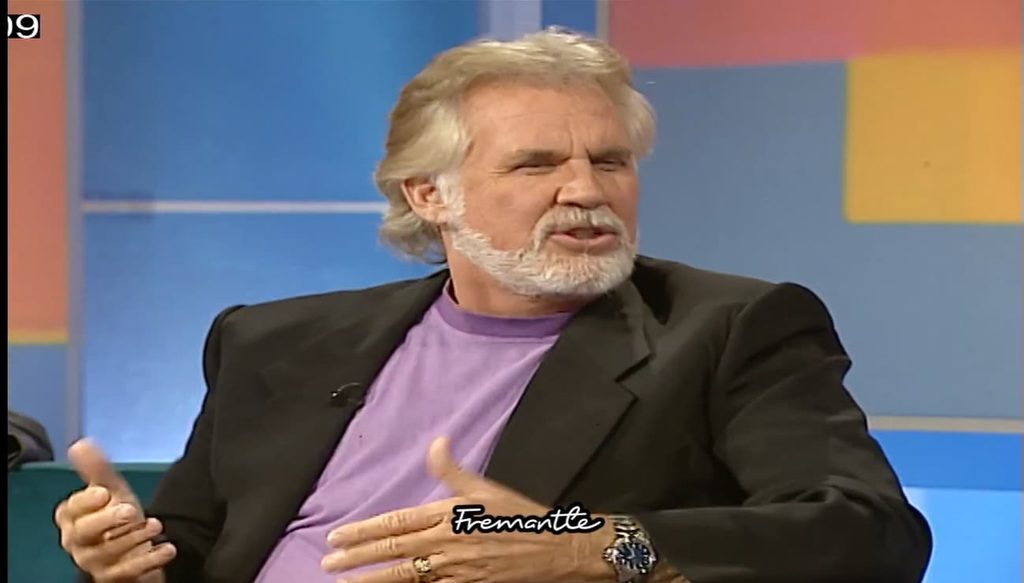
When Kenny Rogers sat down for 5’s Company, the conversation offered something different from the usual celebrity interview. Instead of beginning with the enormous records, sold out concerts and international fame that would eventually define his career, the discussion looked back at the young man who came before all of it. Rogers had grown up in Houston, Texas, in a working class family, and music was not initially presented to him as a guaranteed profession. His journey toward becoming a performer was gradual, almost accidental at times, shaped by opportunity, determination and the simple realization that audiences responded when he stood in front of them. That early uncertainty makes the later story of Kenny Rogers all the more remarkable. The man who would eventually become one of country music’s most recognizable voices had to discover, piece by piece, that performing could become his life.
Rogers was born in 1938 and was one of eight children. His family lived in the Houston housing project known as San Felipe Courts, and money was often tight. The young Kenny did not grow up surrounded by the privileges normally associated with future stars. Music entered his life through ordinary means, particularly the radio and the records he heard around him. He eventually learned to play the guitar, and as a teenager he began looking for opportunities to perform. One of his earliest important experiences came when he won a talent contest at the age of 13, which gave him an early taste of something that would become central to his identity: the feeling of an audience listening to him. It was not yet a career, but it planted the idea that perhaps performing was something he could actually do.
His first records came long before the Kenny Rogers most people remember. In 1958, under the name Kenneth Rogers, he recorded “That Crazy Feeling” for Carlton Records. The song became a modest hit, reaching No. 47 on the Billboard Hot 100, and Rogers even appeared on The Tonight Show with Jack Paar to perform it. It was an extraordinary opportunity for a young man still trying to understand where music might take him. Yet there was no straight road from that single to superstardom. Rogers moved through different musical worlds, playing bass, singing with groups and learning how the business actually worked. He became a member of The New Christy Minstrels in the mid 1960s and then helped form The First Edition, the group that eventually evolved into Kenny Rogers and The First Edition. Their 1968 hit “Just Dropped In (To See What Condition My Condition Was In)” gave Rogers a national audience, years before his greatest country successes arrived.
That period is important because it reveals how much of Rogers’ eventual career was built on adaptability. He was never confined to one musical identity. The young performer who had started with rock and roll could sing pop, folk, country and psychedelic material, and later he would move comfortably between country and adult contemporary music. When “The Gambler” became a major hit in 1978, followed by songs such as “Lucille,” “She Believes in Me,” “You Decorated My Life” and “Coward of the County,” Rogers had already spent more than two decades learning how to connect with different audiences. He understood something that had been visible in him from the beginning: the song mattered, but so did the person telling the story.
That instinct eventually made him one of the great crossover entertainers of his generation. “Lady,” written by Lionel Richie, became a No. 1 hit on the Billboard Hot 100 in 1980, while “Islands in the Stream,” his 1983 duet with Dolly Parton, became another worldwide No. 1. Rogers could move from a country audience to mainstream pop without making either audience feel that he had abandoned them. His voice remained unmistakably his own, warm and conversational, carrying the sense that he was speaking directly to the listener rather than performing at them. The seeds of that ability were already present in the young Kenny Rogers who discovered that an audience could respond to him.
What makes interviews such as 5’s Company valuable is that they allow the enormous career to be viewed from the other direction. Instead of seeing Kenny Rogers as the finished legend, we see the young man before the legend existed. He did not begin with a carefully designed image or a master plan to become one of America’s most successful entertainers. He kept taking opportunities, learning from different musicians and finding new ways to communicate with an audience. Even when one musical chapter ended, another opened. That persistence became one of the defining characteristics of his career.
By the time Rogers became a global star, the path from San Felipe Courts in Houston to international stages could hardly have seemed more unlikely. Yet there is a thread connecting the two. The teenager who discovered the thrill of making an audience listen never completely disappeared beneath the celebrity. He remained the storyteller, the musician and the performer who understood that people wanted more than a technically perfect voice. They wanted someone who could make a song feel personal.
That is perhaps the most revealing part of Kenny Rogers’ early story. He did not simply become famous and then learn how to perform. He learned how to perform long before he became famous. The confidence, warmth and storytelling ability that audiences eventually associated with “The Gambler” and “Islands in the Stream” were formed during those much smaller moments, when a young man from Houston was simply trying to find out whether people would stop and listen. Decades later, millions did.