
How Showaddywaddy Revived A Doo Wop Favorite And Turned Its Sweet Sixties Romance Into One Of Their Most Memorable British Pop Hits
In the autumn of 1978, Showaddywaddy brought a little piece of early rock and roll romance back into the British charts with “Pretty Little Angel Eyes.” Released on 16 October 1978 through Arista Records, the single captured everything that made the Leicester band such a distinctive presence in British pop: close vocal harmonies, a bouncing rhythm, a strong backbeat and a look that celebrated the golden age of American rock and roll. At a time when punk and disco were reshaping the charts, Showaddywaddy continued to champion the music of an earlier generation, performing with the energy of a band that genuinely loved the sound it had chosen to preserve. Their version climbed to No. 5 on the UK Singles Chart, spending 12 weeks on the chart and becoming another Top Five success in a run that had already included “Under the Moon of Love,” “When” and “I Wonder Why.”
The song itself had a history stretching back to 1961, when American singer Curtis Lee recorded the original version, written by Tommy Boyce and Curtis Lee. Produced by Phil Spector, that recording carried the youthful excitement and dramatic production associated with early sixties American pop. Showaddywaddy approached the material from their own rock and roll revival perspective, bringing the song into the late seventies without losing its innocent romantic spirit. The repeated refrain, the affectionate lyrics and the buoyant rhythm gave the track an immediate appeal. It was the kind of song that could make listeners remember their first dances, school discos and evenings spent listening to the radio, while introducing younger audiences to a sound that had helped shape popular music long before they were born.
By 1978, Showaddywaddy had become one of Britain’s most successful groups at revisiting the rock and roll era. Formed in Leicester in 1973, the band built its identity around the sounds of the 1950s and early 1960s, combining vocal group traditions with an energetic stage presence and coordinated visual style. Their earlier hits had demonstrated that this music still had a powerful place in contemporary pop. “Under the Moon of Love” reached No. 1 in 1976, while “When” peaked at No. 3 in 1977 and “I Wonder Why” reached No. 2 in 1978. “Pretty Little Angel Eyes” continued that remarkable sequence, reaching No. 5 and showing that the group’s enthusiasm for vintage rock and roll could still compete in a rapidly changing musical landscape.
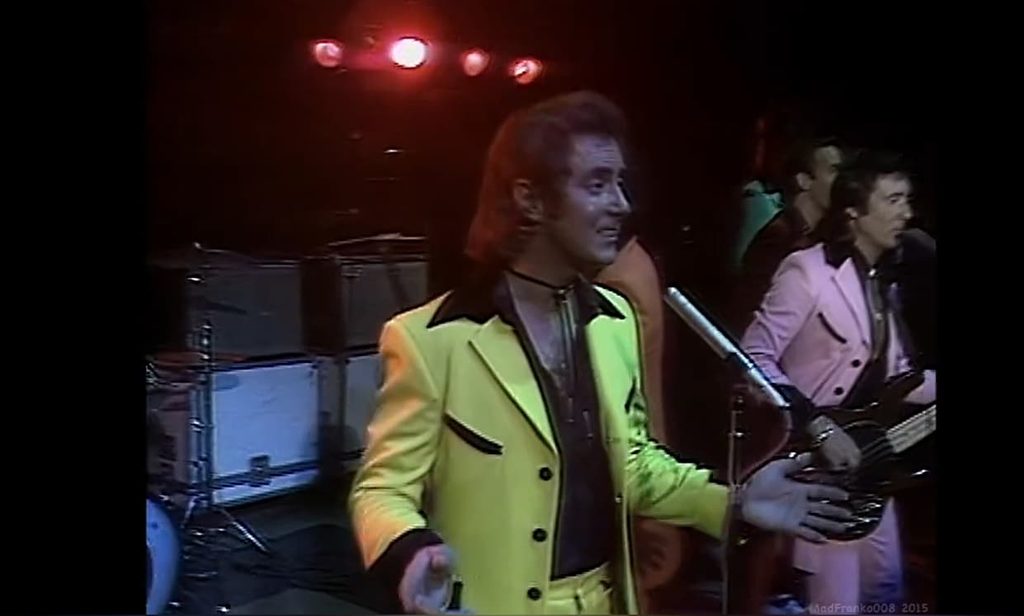
One particularly memorable moment came when Showaddywaddy performed the song on BBC’s Top of the Pops on 19 October 1978. The appearance coincided with the single’s early chart run, introducing the record to a national television audience. The performance was mimed, as was customary for many Top of the Pops appearances, but the band’s visual energy and unmistakable style helped bring the song to life on screen. Seeing the group in that familiar television setting now offers a glimpse of a time when a new single could become part of the national conversation through a weekly chart show. The episode also featured a striking cross section of late seventies music, including the Boomtown Rats, Boney M., John Travolta and Frankie Miller.
What makes “Pretty Little Angel Eyes” endure is its uncomplicated happiness. It does not attempt to reinvent the song or turn a simple declaration of affection into something grander. Instead, Showaddywaddy leaned into its melody, its harmonies and its old fashioned romantic charm. Their recording belongs to a particular moment in British pop history, but the feelings at its centre are timeless: the excitement of falling in love, the memory of a familiar face and the pleasure of hearing a tune that seems to lift the mood of an entire room. In 1978, the song reached No. 5 and added another success to Showaddywaddy’s extraordinary run. Today, it remains a welcome reminder of the group’s ability to bring the spirit of early rock and roll to a new generation without losing the warmth that made the original so appealing.