
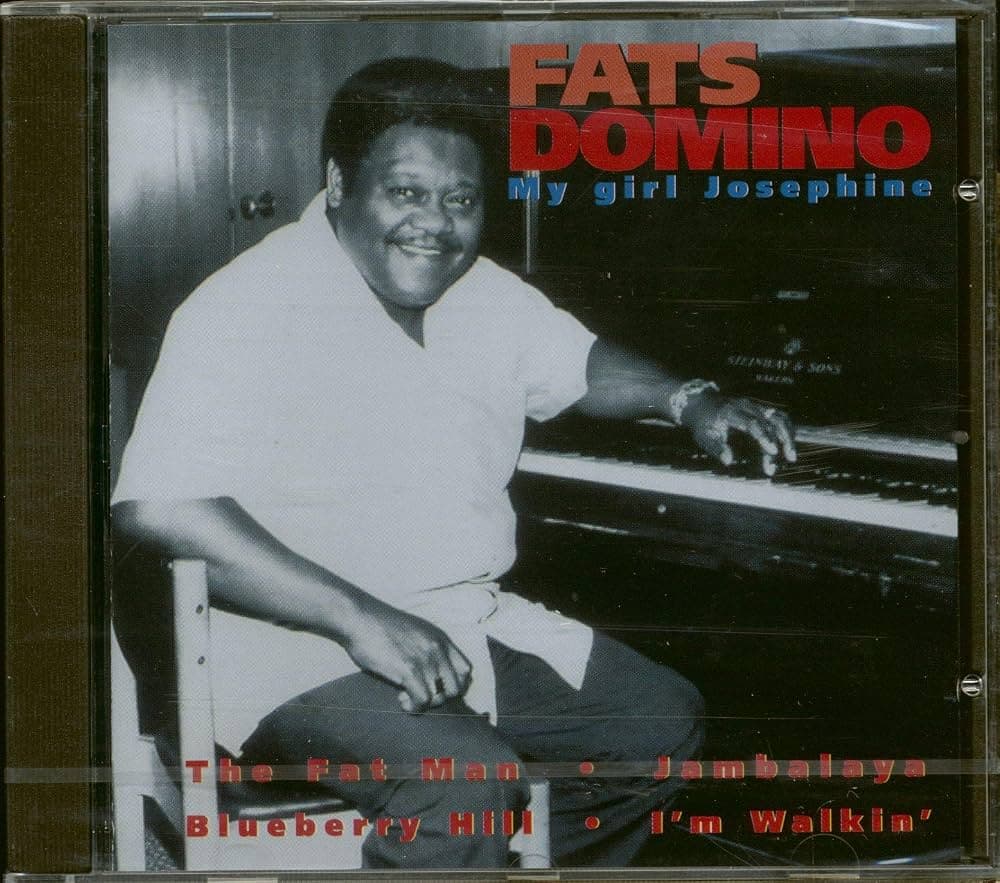
How Fats Domino Turned A Playful Love Song Into A Rock And Roll Favorite That Carried The Irresistible Rhythm Of New Orleans Around The World
In 1960, Fats Domino released “My Girl Josephine,” a lively little record that captured everything listeners had come to love about his music: the rolling piano, the relaxed vocal delivery and the infectious rhythm that made it almost impossible to sit still. Written by Domino and his longtime collaborator Dave Bartholomew, the song appeared on Imperial Records and became another successful entry in a remarkable run of hits that helped shape early rock and roll. It climbed to No. 14 on the Billboard Hot 100 and No. 7 on Billboard’s R&B chart, while reaching No. 32 on the British singles chart in January 1961. The recording lasted only about two minutes, but it contained the unmistakable personality of a musician who understood that a great song did not need complicated arrangements to make a lasting impression. Sometimes a piano, a memorable melody and a singer with the right kind of warmth were more than enough.
By the time “My Girl Josephine” arrived, Domino had already helped establish New Orleans as one of the essential centers of postwar popular music. Born Antoine Dominique Domino Jr. in New Orleans in 1928, he developed a distinctive style that blended rhythm and blues, boogie woogie piano and the city’s rich musical traditions. His breakthrough began with “The Fat Man” in 1949, followed by a succession of records that brought his sound to audiences far beyond Louisiana. His partnership with Bartholomew was particularly important. Bartholomew was a songwriter, arranger, bandleader and producer who understood how to build a recording around Domino’s natural feel for rhythm. Together, they created songs including “Ain’t That a Shame,” “I’m Walkin’,” “Walking to New Orleans” and “My Girl Josephine,” helping lay some of the foundations for the rock and roll explosion of the 1950s and early 1960s.
Part of the charm of “My Girl Josephine” is the way Domino makes the performance sound effortless. His voice never needs to overpower the band. Instead, it settles comfortably into the rhythm, while the piano gives the recording its buoyant character. There is a lightness to the performance that suits the song’s affectionate tone, and that relaxed delivery was one of Domino’s greatest strengths. He could make a record sound intimate without losing its danceable energy. His music carried the feeling of a neighborhood gathering, where the rhythm came first and everyone seemed to understand it instinctively. That combination helped distinguish him from many of the louder, more theatrical performers emerging during rock and roll’s early years. Domino had his own kind of charisma, built on musical confidence rather than spectacle.
The song also found a life beyond Domino’s original recording. It became known in some later versions as “Hello Josephine,” a title associated with recordings by other artists, including Jerry Lee Lewis. The melody proved flexible enough to travel across different styles and audiences, while retaining the central appeal of the original. This was part of the wider influence of Domino’s music: his songs were rooted in New Orleans rhythm and blues, but their melodies and grooves could be picked up by rock and roll singers, pop musicians and performers from different musical backgrounds. His records helped show how closely these genres were connected, long before the boundaries between them became less rigid.
Listening to “My Girl Josephine” today, what stands out is how naturally the record moves. There is no need for a dramatic introduction or a grand vocal climax. The piano establishes the mood, the rhythm carries the song forward, and Domino delivers the melody with the easy confidence of someone completely at home in his own sound. By 1960, he had already become one of the defining figures of early rock and roll, yet recordings like this preserved the warmth and simplicity that made his music so inviting in the first place. “My Girl Josephine” remains a small but revealing example of his gift: turning a straightforward song into something full of personality, movement and the unmistakable musical spirit of New Orleans.
 Oldies Songs