
How A Young Dolly Parton Used A Playful Country Song To Challenge Stereotypes And Take Another Step Toward The Stardom She Had Dreamed Of Since Childhood
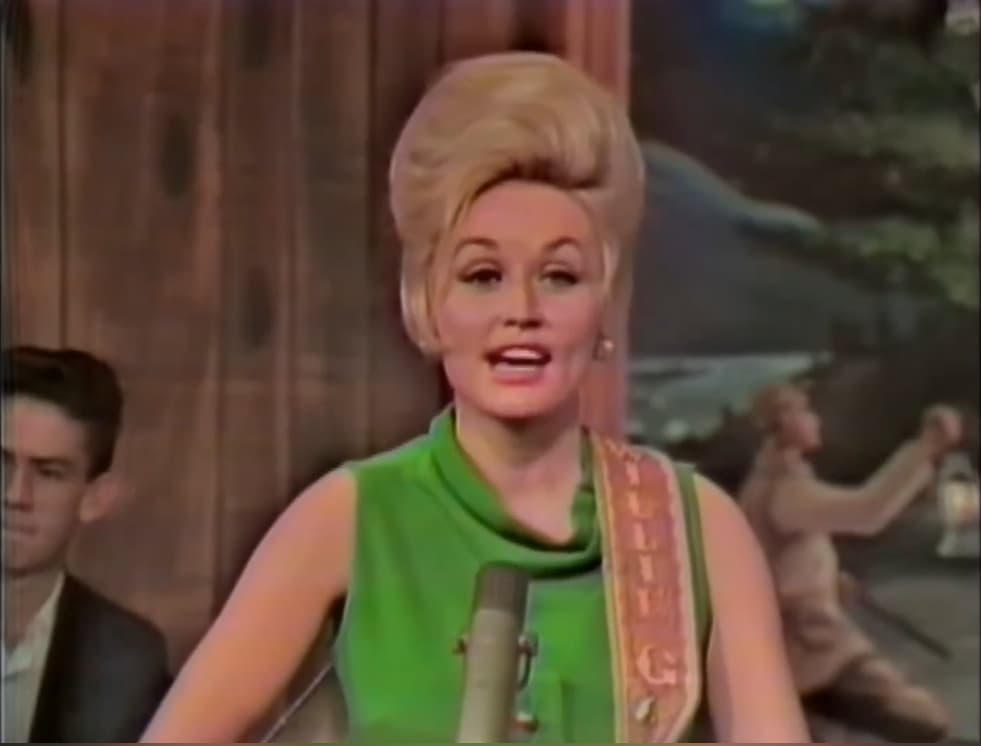
Long before Dolly Parton became one of the most celebrated women in country music, she was a young singer from the foothills of East Tennessee, determined to make her voice heard. Her appearance on the Cas Walker Show takes us back to that formative chapter, when television and local radio offered her opportunities to perform for audiences who were only beginning to discover her talent. Dolly had started appearing regularly on the program as a child, around 1956, and those early experiences helped prepare her for the much larger stages that would follow. By the time she performed “Dumb Blonde,” she was no longer the little girl just beginning to find her place in music. She was a young woman with a distinctive voice, a sharp sense of humor and a personality that was becoming impossible to overlook.
Released as a single on November 7, 1966, “Dumb Blonde” was written by songwriter Curly Putman and produced by Fred Foster for Monument Records. The song later appeared on Dolly’s debut solo album, Hello, I’m Dolly, released on September 18, 1967. Its title might suggest a familiar stereotype, but the song turns that assumption on its head. Dolly’s character makes it clear that blonde hair does not mean a woman is foolish, helpless or easily deceived. With its lively rhythm and spirited delivery, the recording gave her room to display the wit and confidence that would become hallmarks of her songwriting and public persona. The single became her first entry on Billboard’s country singles chart, eventually reaching No. 24 in March 1967.
What makes this early performance so enjoyable is the contrast between the young woman on screen and the enormous career that lay ahead. Dolly had grown up in a large, financially struggling family in the Smoky Mountains, where music was woven into everyday life. She began writing songs as a child and learned to perform in front of audiences long before Nashville made her a recording artist. Her uncle, Bill Owens, played an important role in encouraging her ambitions and helping her pursue professional opportunities. When she graduated from high school in 1964, she moved to Nashville the very next day, determined to build a career in music. Success did not arrive overnight. She recorded several singles before “Dumb Blonde” became her first country chart hit, and she still had to convince people in the industry that her high, distinctive voice belonged in country music.
There is also a wonderful sense of continuity in seeing Dolly perform on a regional television program after she had spent so many years appearing before local audiences. The Cas Walker Show was part of the musical world that helped introduce her to listeners in East Tennessee. These were not the elaborate productions of her later television specials, nor the massive concert stages on which she would eventually perform. The appeal was more immediate: a young artist, a familiar country song and the chance to connect with people through a camera. Even in this early period, Dolly’s ability to combine humor, confidence and musical skill was already evident. She did not need to imitate another singer to make an impression. She was developing the qualities that would eventually make her instantly recognizable.
Looking back at “Dumb Blonde” today, it is fascinating to hear the attitude that would remain central to Dolly’s work for decades. She would go on to write about women who loved deeply, made difficult choices, endured heartbreak and refused to let other people define their worth. Here, that spirit appears in a playful, straightforward form. The song was an early step rather than a finished portrait of the artist she would become, but it offered a glimpse of the sharp-minded woman behind the famous blonde hair and sparkling stage image. Before the awards, the sold-out concerts and the worldwide recognition, there was Dolly Parton on a Tennessee television show, singing a song that made one thing perfectly clear: never judge a woman by the color of her hair.