
Before This Song Became A Worldwide Phenomenon, Dolly Parton Wrote It As A Personal Goodbye To Someone Who Had Helped Shape Her Career
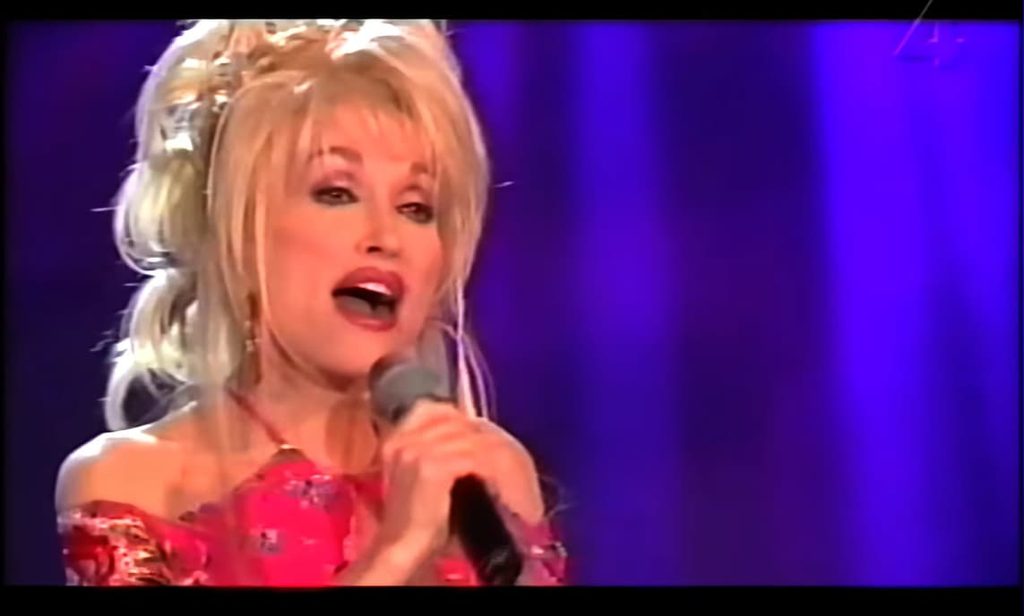
Some songs become famous because of the voice that sings them. Others become unforgettable because of the story behind every word. “I Will Always Love You” carries both, and Dolly Parton’s performance on the Swedish television programme Bingolotto in 2002 brings the song back to its original heart, long before it became one of the most recognised ballads in modern music.
When Dolly appeared on Bingolotto on October 12, 2002, she was already an international star whose career had crossed the boundaries of country music. Hosted by Lasse Kronér on Swedish channel TV4, the programme welcomed Parton as its special guest. Yet among the many songs she had written and performed throughout her career, this particular ballad offered something more personal than a display of vocal power. It was a chance to revisit the song that had helped define her as a songwriter as much as a singer.
The story began in 1973, when Dolly was preparing to leave The Porter Wagoner Show after seven years working alongside the country star who had become her mentor and professional partner. Their relationship had brought her valuable opportunities, but Dolly wanted to pursue a solo career. She struggled to explain her decision to Porter, so she did what she had always done best: she turned her feelings into a song. “I Will Always Love You” became her farewell, expressing gratitude and affection without hiding the sadness of moving on. Dolly later recalled that when she played it for Porter, he was deeply moved. He agreed to let her leave and offered to produce the recording.
Released as a single in March 1974 from her album Jolene, the original recording reached No. 1 on Billboard’s Hot Country Songs chart in June that year. Its success was built on a very different arrangement from the sweeping pop production that many listeners would later associate with the song. Dolly’s version is restrained and direct, allowing the melody and the meaning of the words to carry the emotion. There is no need for a dramatic story of heartbreak between lovers to understand it. The song speaks to the difficult moment when someone must leave a relationship or a chapter of life, while still acknowledging what that connection has meant.
By the time Dolly sang it on Bingolotto, the song had travelled far beyond its country music beginnings. Her own rerecording had returned it to No. 1 on the country chart in 1982, and Whitney Houston’s celebrated 1992 version later introduced it to a vast new international audience. But Dolly’s interpretation remains distinct because it sounds so close to the song’s original purpose. The emotion is not about possessing someone or demanding that they stay. It is about wishing them well, even when the path forward means separating. That understanding gives the performance a quiet strength that does not depend on elaborate production or a spectacular vocal climax.
Watching Dolly return to this song in 2002 also means hearing it with the knowledge of everything that followed: decades of hit records, films, television appearances and an extraordinary career built on her own songwriting. Yet the heart of the song remains rooted in a decision made nearly three decades earlier. In her hands, “I Will Always Love You” is still a farewell shaped by respect, affection and the courage to move forward, carrying the memory of a meaningful relationship without pretending that every goodbye has to end in bitterness.