
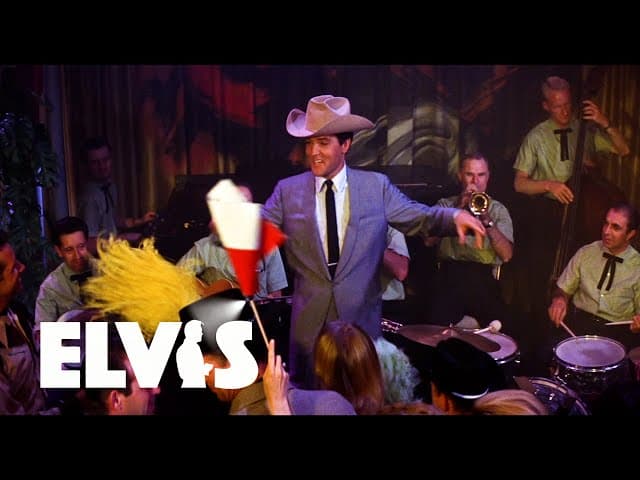
How Elvis Presley Blended Two Beloved Texas Songs Into A Playful Musical Moment During The Making Of Viva Las Vegas
On July 11, 1963, in the early hours of the morning, Elvis Presley entered Radio Recorders Studio in Hollywood to continue recording music for his upcoming MGM film, Viva Las Vegas. Among the songs recorded during those sessions was a surprising medley combining “The Yellow Rose of Texas” with “The Eyes of Texas.” It was an unusual choice for a film most closely associated with neon lights, racing cars and the excitement of Las Vegas, but it revealed the playful side of Elvis’s musical personality. Rather than delivering another dramatic rock and roll number or romantic ballad, he took two familiar songs associated with Texas and brought them together in a brisk, lighthearted performance. The recording session ran from midnight until approximately 3:30 a.m., with Elvis working alongside a large group of experienced studio musicians and his longtime backing vocal group, The Jordanaires. The result was a short but distinctive recording from a particularly busy period in his Hollywood career.
The first part of the medley, “The Yellow Rose of Texas,” had a history stretching back to the nineteenth century. Its origins are associated with traditional American folk music, and the song became especially popular through numerous recordings over the decades. In 1955, a version by Mitch Miller reached No. 1 on the American charts, introducing the familiar melody to a new generation. Elvis’s recording used an adaptation credited to Fred Wise and Randy Starr, giving the traditional song a more contemporary arrangement suited to the film soundtrack. Its lyrics celebrate a beloved woman from Texas, and Elvis delivers them with an easy confidence that makes the old-fashioned romantic sentiment feel natural in his hands. The song’s familiar melody also gave the recording a distinctly American character, connecting the film’s playful musical world with a piece of folk tradition that had already travelled through generations.
The medley then moves into “The Eyes of Texas,” a song closely associated with the University of Texas at Austin. Written by John Lang Sinclair in 1903, it became the university’s traditional spirit song and was set to the melody of “I’ve Been Working on the Railroad.” Its familiar opening phrase gives the second half of Elvis’s recording a different character, shifting from a romantic folk song to a tune associated with university gatherings and Texas identity. Bringing these two songs together was a clever musical decision. Both were familiar to American audiences, but they carried different associations: one belonged to folk tradition and romantic storytelling, while the other belonged to a shared regional and collegiate culture. Elvis’s performance joins them without making the transition feel overly complicated, allowing the medley’s novelty to provide much of its charm.
The musicians surrounding Elvis were among the experienced session players who helped give his Hollywood recordings their polished sound. The session credits include guitarist Scotty Moore, bassist Bob Moore, pianist Floyd Cramer, saxophonist Boots Randolph, drummer D. J. Fontana and the Jordanaires on backing vocals, alongside several additional musicians. Musical director George Stoll supervised the soundtrack sessions, while engineer Dave Weichman handled the recording. This was a different working environment from the early Sun Records sessions that had helped make Elvis famous. By 1963, he was recording material for carefully planned film productions, often with larger ensembles and arrangements designed to serve particular scenes. Yet his natural phrasing and relaxed vocal personality remained present, even when the material was far removed from the raw rockabilly sound of his earliest records.
Although the medley was recorded during the Viva Las Vegas sessions, it did not appear in the finished film. The movie, released in the United States on May 20, 1964, starred Elvis as race car driver Lucky Jackson opposite Ann-Margret as Rusty Martin. Its soundtrack included songs such as “Viva Las Vegas,” “What’d I Say” and “The Lady Loves Me,” but “The Yellow Rose of Texas / The Eyes of Texas” remained outside the film’s final musical programme. It was eventually released in 1969 on the RCA Camden album Elvis Sings Flaming Star, allowing listeners to discover a recording that had been set aside during the original soundtrack release. That later appearance gave the medley a life of its own, separate from the film for which it had been recorded.
Listening to the recording today offers a small but revealing glimpse of Elvis Presley at work in the studio. There is no attempt to turn the medley into a major dramatic statement. Instead, he approaches the material with a light touch, bringing two familiar American songs together with the confidence of a singer comfortable moving between musical styles. The recording also preserves a moment from the long and sometimes overlooked process of making Elvis’s Hollywood films, when dozens of songs were recorded, rearranged, or left unused before a final soundtrack took shape. For listeners who know Elvis primarily through his celebrated rock and roll hits, this medley reveals another side of his repertoire: an entertainer who could take traditional melodies, add his own personality and leave behind an unexpected musical souvenir from a single night in a Hollywood studio.