
How Elvis Presley Turned A Controversial Rock And Roll Performance Into A Defining Moment In Television History And Changed The Way America Saw Its Youngest Music Star
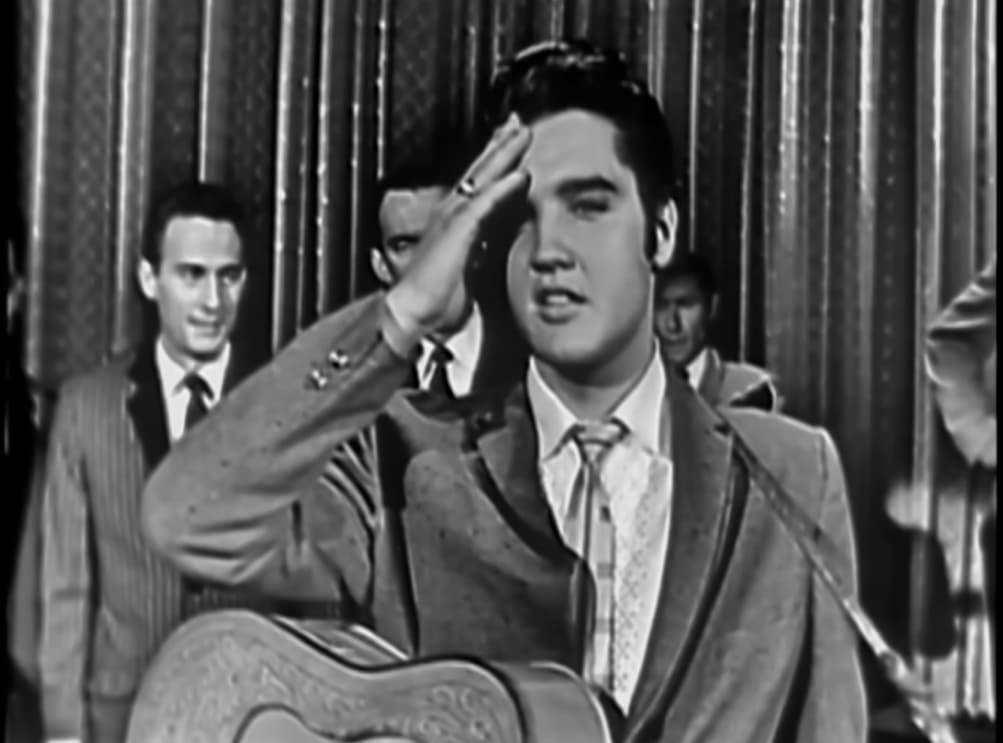
By the autumn of 1956, Elvis Presley was no longer simply a promising singer from Memphis. He had become a national sensation whose every television appearance seemed to provoke another argument about music, youth and changing American culture. His second appearance on The Ed Sullivan Show on October 28, 1956, was particularly memorable because the programme allowed viewers to see Elvis perform from head to toe. He opened with “Don’t Be Cruel” and “Love Me Tender,” returned later to sing “Love Me,” and closed with “Hound Dog.” By then, the song had become closely associated with the movements and rebellious energy that had made Elvis such a controversial figure. His performance was full of attitude, but there was also a playful side to it. Introducing the number, he jokingly described it as one of the saddest songs he had ever heard before launching into the familiar refrain. The audience responded with enormous enthusiasm, while critics continued to debate what his style meant for American entertainment.
The story of “Hound Dog” began before Elvis ever recorded it. Songwriters Jerry Leiber and Mike Stoller wrote the song for blues singer Big Mama Thornton, whose original recording was released in 1953 and became a major rhythm and blues hit. Elvis transformed the song into something different, drawing on a faster, more explosive rock and roll arrangement that suited his voice and his stage personality. His version was recorded for RCA Victor on July 2, 1956, during a New York session that also produced “Don’t Be Cruel.” Released that summer, the two songs became one of the most successful double sided singles of the era. Elvis’s interpretation brought the song to an enormous pop audience, while its pounding rhythm and emphatic vocal delivery helped establish him as one of the defining performers of early rock and roll.
There was already a history of controversy surrounding the song by the time Elvis appeared before Sullivan’s cameras. His performance of “Hound Dog” on The Milton Berle Show in June 1956 had attracted widespread attention because of his energetic hip movements and the enthusiastic reaction of young women in the audience. In July, he performed the song on The Steve Allen Show in a tuxedo, singing to a basset hound wearing a top hat in a deliberately restrained presentation. The appearance helped fuel the rivalry between Allen and Sullivan, whose programme had initially hesitated to book Elvis. Sullivan eventually agreed to three appearances for a reported $50,000, an extraordinary television fee at the time. Elvis’s October performance therefore carried the weight of everything that had happened during the previous few months. He was not simply singing a hit song. He was appearing on one of America’s most influential television programmes at a moment when rock and roll itself was becoming a cultural battleground.
What makes the October 28 performance so fascinating today is the contrast between Elvis’s youthful confidence and the nervousness of the world around him. His movements seemed perfectly natural to the teenagers who adored him, but to some adults they represented a challenge to established ideas about respectable entertainment. The television audience could see the full performance, including the physical energy that had made Elvis famous, rather than the restricted camera framing that would become associated with his final Sullivan appearance in January 1957. Yet Elvis was also a gifted vocalist with an instinctive understanding of rhythm, phrasing and dramatic timing. Beneath the controversy was a performer who knew exactly how to command a stage. His quick expressions, sudden changes in movement and playful delivery made “Hound Dog” feel less like a routine television number and more like an event unfolding in real time.
Looking back, this performance captures Elvis Presley at one of the most important turning points of his career. He was only 21 years old, yet he was already changing the relationship between popular music and television. The appearance demonstrated that a singer could reach millions of people in their homes while still making the performance feel immediate, physical and personal. The controversy surrounding his style did not silence him. Instead, it helped make him a symbol of a generation discovering its own music and identity. Decades later, the sight of Elvis launching into “Hound Dog” still carries the excitement of that moment. His voice, his movements and the delighted response of the audience preserve the energy of a young artist who had no intention of standing still, either musically or culturally.