
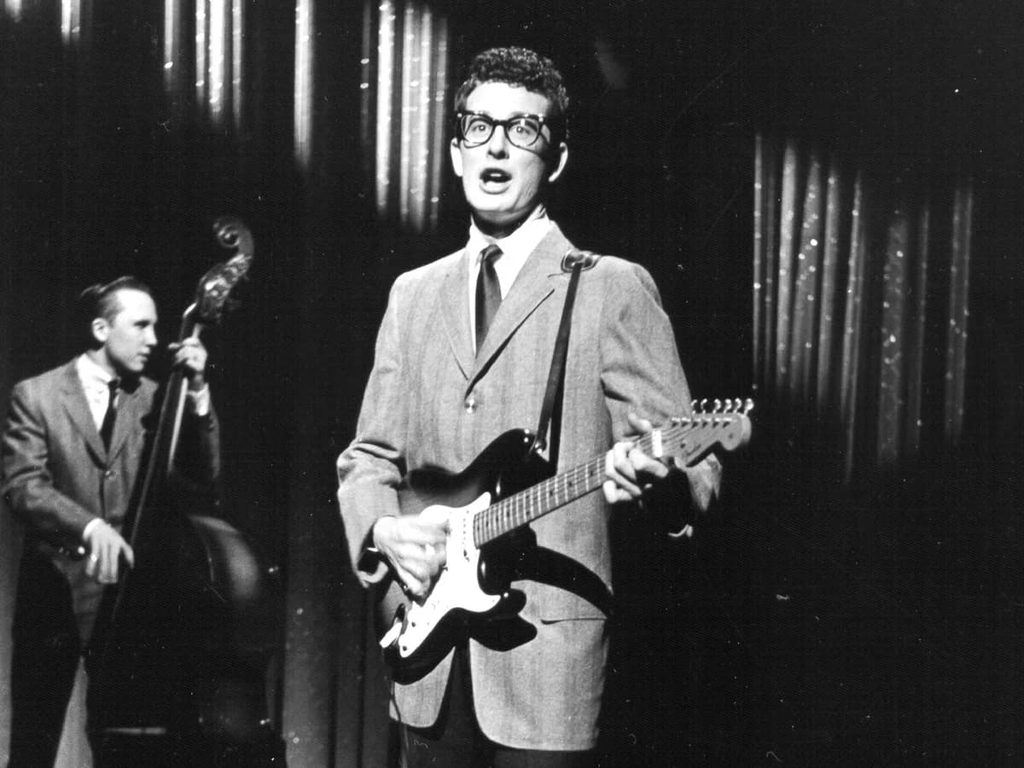
Released Just Weeks Before His Death, Buddy Holly’s Recording Became An Unforgettable Farewell From One Of Rock And Roll’s Most Influential Pioneers
Some songs become more moving with time, especially when history gives their lyrics a meaning no one could have anticipated. Buddy Holly’s “It Doesn’t Matter Anymore” is one of those recordings. When it was released in January 1959, it was a fresh, bittersweet pop song about a relationship that had ended. Within weeks, following Holly’s sudden death, listeners would hear it differently, turning an ordinary heartbreak song into one of the most poignant recordings associated with his legacy.
Written by Paul Anka specifically for Buddy Holly, the song was recorded on October 21, 1958, in New York City. Unlike the lean rock and roll sound of Holly’s best known hits with the Crickets, this recording featured an orchestral arrangement by Dick Jacobs. The sweeping strings gave the song a softer, more polished sound, while Holly’s distinctive voice retained its youthful directness. He sings about accepting the end of a romance, insisting that the hurt no longer matters, even as the melody reveals that the feelings have not entirely disappeared.
The single was released on January 5, 1959, with “Raining in My Heart” on the B side. It reached No. 13 on the American Billboard Hot 100, becoming Holly’s final US Top 20 hit. In Britain, the record climbed to No. 1 in April 1959, becoming the first posthumous chart topper in UK chart history. Those achievements came after the tragic plane crash of February 3, 1959, which killed Holly, Ritchie Valens and J. P. Richardson, known as the Big Bopper. Holly was only 22 years old.
There is another touching detail behind the recording. Paul Anka donated his songwriting royalties from the song to Holly’s widow, Maria Elena, recognising that its success now carried a significance far beyond the music business. What had begun as a song written for a young performer became part of the effort to support the family he had left behind. That gesture added another layer to a recording already surrounded by an extraordinary turn of events.
Listening today, it is difficult not to think about how much music Buddy Holly might have made had his life continued. He helped shape the sound and spirit of early rock and roll, influencing generations of musicians through his songwriting, vocal style and approach to the recording studio. Yet “It Doesn’t Matter Anymore” reveals a gentler side of his artistry. The strings rise around his voice, the melody moves forward, and Holly sounds young, confident and full of possibility. He could not have known that this recording would soon become part of his farewell, but its enduring beauty ensures that his voice continues to reach listeners more than six decades later.