
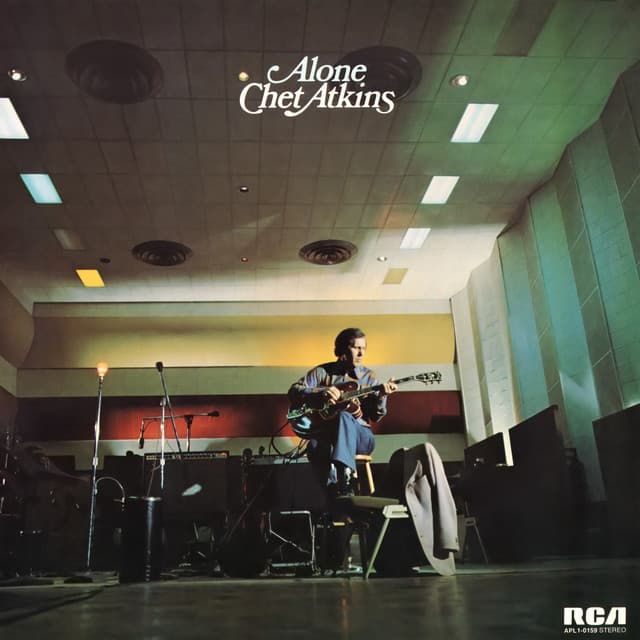
A Gentle Guitar Remembers the Passage of Time — “It’s Been a Long, Long Time” in the Hands of Chet Atkins Becomes a Tender Reflection on Memory, Love, and Reunion.
Few melodies in the Great American Songbook carry the quiet emotional gravity of “It’s Been a Long, Long Time.” When the legendary guitarist Chet Atkins interpreted this timeless song, he did far more than perform a familiar standard. He transformed it into a delicate instrumental meditation, allowing the guitar to speak with the same warmth and longing that once defined its earliest recordings.
The song itself dates back to 1945, written by Jule Styne with lyrics by Sammy Cahn. It emerged at a moment when the world was still catching its breath after the end of the Second World War. The most famous early version, recorded by Harry James with vocals by Kitty Kallen, captured the emotional climate of that era perfectly. In late 1945, the song soared to No. 1 on the Billboard chart, remaining there for three consecutive weeks. It became more than just a hit single—it was a musical symbol of reunion, echoing the relief and joy felt by countless families as soldiers returned home after years of separation.
Decades later, when Chet Atkins approached “It’s Been a Long, Long Time,” he was already celebrated as one of the most elegant guitar stylists in American music. Often called “Mr. Guitar,” Atkins had reshaped the language of country and popular guitar through his signature fingerstyle technique. His playing combined melody, bass lines, and rhythm simultaneously, giving the impression that more than one musician was performing.
In his instrumental version of “It’s Been a Long, Long Time,” Atkins chose restraint rather than virtuosity for its own sake. The familiar melody emerges slowly from the guitar, each phrase carried with extraordinary care. Instead of grand orchestration, the arrangement feels intimate, almost conversational. The guitar sings softly, as though recalling a memory that has remained vivid despite the passing years.
What makes this interpretation so compelling is the emotional history contained within the melody itself. When the song first reached the charts in 1945, it spoke directly to a world recovering from war. Its lyrics describe the moment of reunion after a long absence—the relief of seeing a loved one again and realizing that time has not erased the bond between them. Though Atkins performs the piece without words, that sense of reunion still lingers in every note.
The guitarist’s touch allows the melody to breathe. Each bass note gently anchors the rhythm, while the higher strings carry the song’s romantic sentiment. Listening closely, one can almost imagine the guitar speaking in place of a singer, quietly retelling the story of patience, distance, and the enduring hope of return.
Throughout his remarkable career, Chet Atkins often chose songs with strong melodic foundations. He understood that a great melody could survive any arrangement if treated with respect. “It’s Been a Long, Long Time” was exactly that kind of song—a piece whose emotional truth transcended generations.
Atkins’s interpretation also reflects a broader musical philosophy. Rather than overwhelming the listener with technical display, he allowed simplicity to reveal deeper feeling. His guitar does not rush the melody. Instead, it pauses between phrases, leaving small spaces where memory and imagination can quietly settle.
Today, hearing “It’s Been a Long, Long Time” played by Chet Atkins feels like opening a window into another era of music. The song carries echoes of wartime ballrooms, radio broadcasts, and quiet evenings when a melody could express emotions too complex for ordinary conversation.
In that sense, Atkins achieves something remarkable. Without a single lyric, he preserves the heart of the song—the sense that time may pass, distance may grow, but certain feelings remain patiently alive.
And through the warm, thoughtful voice of his guitar, Chet Atkins reminds us that sometimes the most powerful stories in music are not shouted at all. They are simply remembered.