
A Song of Inevitable Change — Where Wit, Wisdom, and Gentle Swing Meet in Perfect Balance
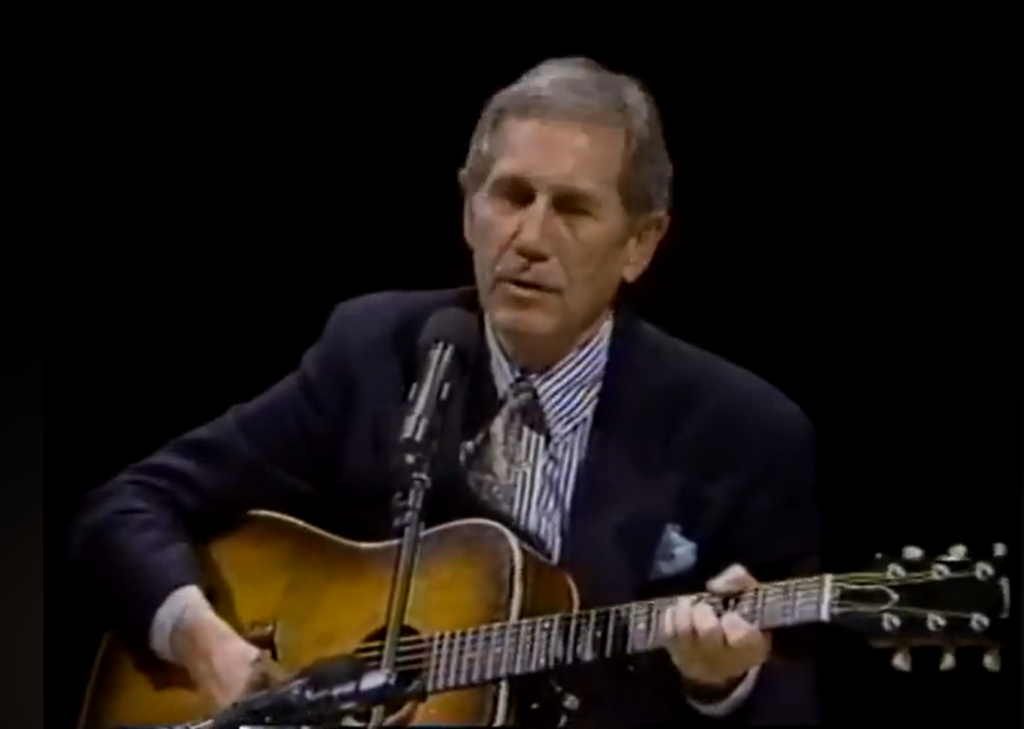
Few songs in the American popular tradition carry the sly optimism and philosophical shrug of “There’ll Be Some Changes Made.” When Chet Atkins lent his guitar to this enduring standard, he did more than interpret a melody — he stepped into a lineage stretching back to 1921, when the song was first introduced to the world by Ethel Waters and quickly became a jazz-age favorite. By the time Atkins recorded his instrumental version for his 1970 album “Chet Atkins Picks on the Beatles”—no, correction—his refined rendition actually appeared on “Chet Atkins’ Workshop” (1961) and later live recordings, it had already lived many musical lives. Yet in his hands, it felt freshly polished, relaxed, and timeless.
Originally written by Benton Overstreet (music) and Billy Higgins (lyrics), “There’ll Be Some Changes Made” climbed into popularity during the early 1920s, reaching significant chart success in multiple recorded versions of that era. It became a staple in vaudeville circuits and jazz orchestras alike, embodying the playful resilience of post–World War I America. The lyrics, at once humorous and pointed, speak of inevitable transformation — in love, in habits, in life itself. “There’ll be some changes made,” the singer declares, not with despair, but with a raised eyebrow and a knowing smile.
When Chet Atkins, already one of the most respected guitarists in American music, chose to interpret this song decades later, he was not chasing contemporary charts. By the early 1960s, Atkins had firmly established himself as both a performer and a producer shaping what became known as the Nashville Sound. His 1965 single “Yakety Axe” would later reach No. 4 on the Billboard Hot Country Singles chart, but “There’ll Be Some Changes Made” was never about chart positions. It belonged to a deeper current of musical appreciation — the kind that values repertoire, craft, and continuity.
Atkins’ version is instrumental, yet the character of the original lyric remains intact. His fingerstyle technique — the famous “Atkins style” built on alternating bass lines and crisp melodic phrasing — allows the guitar to articulate the song’s sly humor without uttering a word. The rhythm swings gently, never rushed. Each note feels intentional, like a seasoned storyteller pausing just long enough to let the point sink in.
What makes this interpretation particularly meaningful is the stage of life and career in which Atkins recorded it. By the early 1960s, he had already won multiple Grammy Awards and was a key executive at RCA Victor. He had seen the rise of rock and roll, the shifting tastes of radio audiences, and the evolution of country music from rural roots to polished studio sophistication. In choosing a song titled “There’ll Be Some Changes Made,” there is a quiet irony — a master musician acknowledging, perhaps even embracing, the inevitability of change in his own industry.
And yet, there is no bitterness here. No resistance. Instead, there is grace.
The deeper meaning of the song has always been philosophical. On its surface, it speaks of personal reform — giving up bad habits, altering romantic missteps. But beneath that lies a broader truth: nothing remains static. Relationships evolve. Circumstances shift. Even traditions adapt. In the capable hands of Chet Atkins, this truth is not presented as a lament, but as a reassurance. Change is not an enemy; it is the rhythm of life itself.
Listening now, one cannot help but feel the gentle wisdom embedded in every phrase. The guitar tone is warm, rounded, unmistakably his — that signature Gretsch clarity softened by touch and taste. There is swing, but also serenity. A sense that the performer has nothing left to prove, only something to share.
Throughout his career, Chet Atkins accumulated 14 Grammy Awards and was inducted into the Country Music Hall of Fame in 1973. He influenced generations of guitarists, from Mark Knopfler to Tommy Emmanuel, not merely through technical brilliance but through musical judgment. “There’ll Be Some Changes Made” exemplifies that judgment. He chose repertoire that honored the past while subtly renewing it.
In an era that often feels hurried and loud, this recording invites reflection. It reminds us that change, though sometimes unsettling, carries possibility. The song’s century-long journey — from roaring twenties jazz halls to the refined studios of Nashville — mirrors the very message it conveys.
Indeed, there will be changes made. Voices fade, trends pass, formats evolve. But artistry grounded in sincerity and skill endures. In this elegant interpretation, Chet Atkins does not resist the passing of time. He accompanies it — gently, thoughtfully, and with a quiet swing that feels like acceptance itself.