
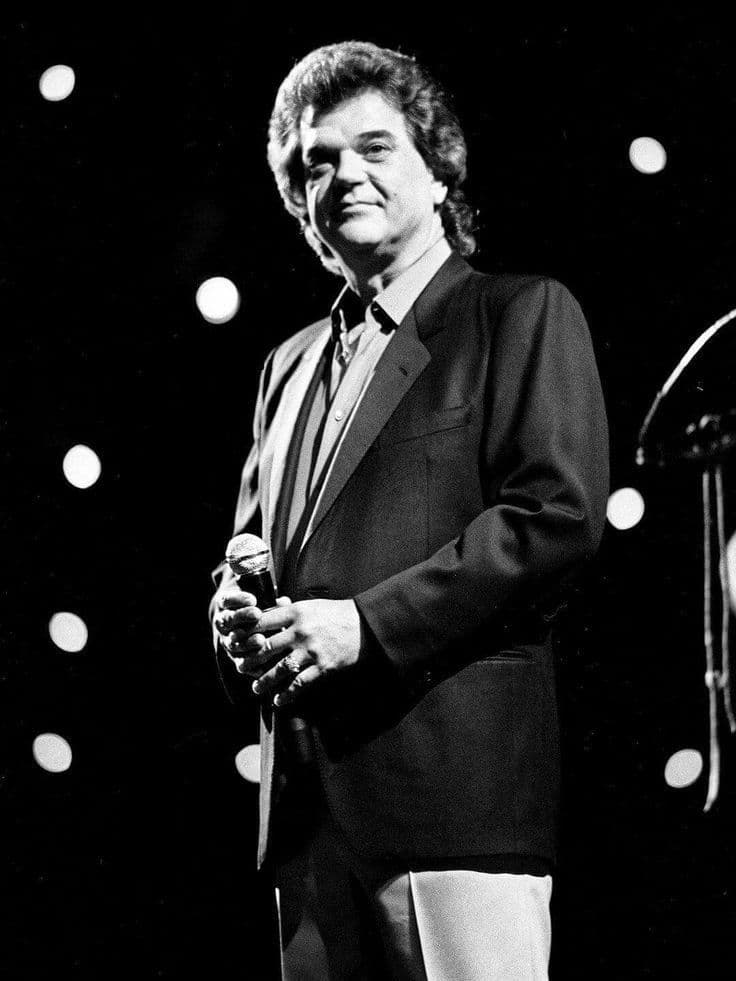
Conway Twitty – “Don’t Cry Joni”: A “High-Fidelity” Masterpiece of Timing, Heartbreak, and the Generational Torch
In the sun-drenched, radio-filled summer of 1975, a song arrived that perfectly captured the “rhythmic” ache of growing up and the bittersweet nature of missed connections. When Conway Twitty released “Don’t Cry Joni,” he wasn’t just delivering another chart-topping ballad; he was creating a “mini-movie” of the soul. Reaching Number 4 on the Billboard Hot Country Songs chart, the track became a global phenomenon, resonating far beyond the borders of Nashville. For those of us who remember the mid-seventies—the era of wood-paneled station wagons and the warm, analog crackle of a MCA Records 45rpm—this song was a visceral experience of the “High Priest of Country Music” at his most paternal and poignant.
The “story” behind “Don’t Cry Joni” is a masterclass in “high-level” vocal collaboration. Written by Conway himself, the song features a duet with his then-16-year-old daughter, Joni Lee. The narrative is a classic, cinematic tale of “too much, too soon, and then too late.” It begins with a young girl professing her love to a neighbor boy, only to be told she’s “much too young.” Years later, when the boy returns, the roles have shifted in a cruel twist of fate. Conway’s delivery is a study in “velvet” authority; he navigates the narrator’s regret with a masculine sincerity and a melodic “growl” that felt entirely authentic. It was an era where Conway was successfully bridging the gap between his rockabilly roots and his status as a sophisticated elder statesman, proving he could inhabit any emotional landscape with total, soulful power.
For the sophisticated listener who has navigated the “twists and turns” of their own personal journey, hearing “Don’t Cry Joni” today is a deeply evocative experience. It brings back memories of youth, the “quiet desperation” of unrequited love, and the realization that timing is often the most formidable character in our life stories. The lyrics—”Jimmy, please say you’ll wait for me”—speak to the “qualified” reader who understands that life is a collection of “if onlys” and “what ifs.” For those of us in our silver years, the song is a mirror of our own resilience. It reminds us of a time when the “Master Storyteller” could take a simple story of a neighborhood crush and turn it into a universal anthem for anyone who has ever looked back at a “fork in the road” with a sigh.
The meaning of “Don’t Cry Joni” lies in its unapologetic honesty. Conway Twitty possessed the unique, almost magical gift of being a “vocal chameleon” who could transition from a smoldering romantic to a regretful friend without ever losing the “Truth” in his voice. As we reflect on this 1975 masterpiece today, through the lens of our own decades of experience, we see it as more than just a radio hit; it is a testament to the enduring power of the narrative song to capture the passage of time. The High Priest may have left the stage in 1993, but in the shimmering, rhythmic notes of this duet, he remains the eternal witness to our own growing pains. To listen to it now is to sit once more with Conway, acknowledging that while the “years have flown by,” the beauty of the memory remains eternally clear.
 Music Legend