
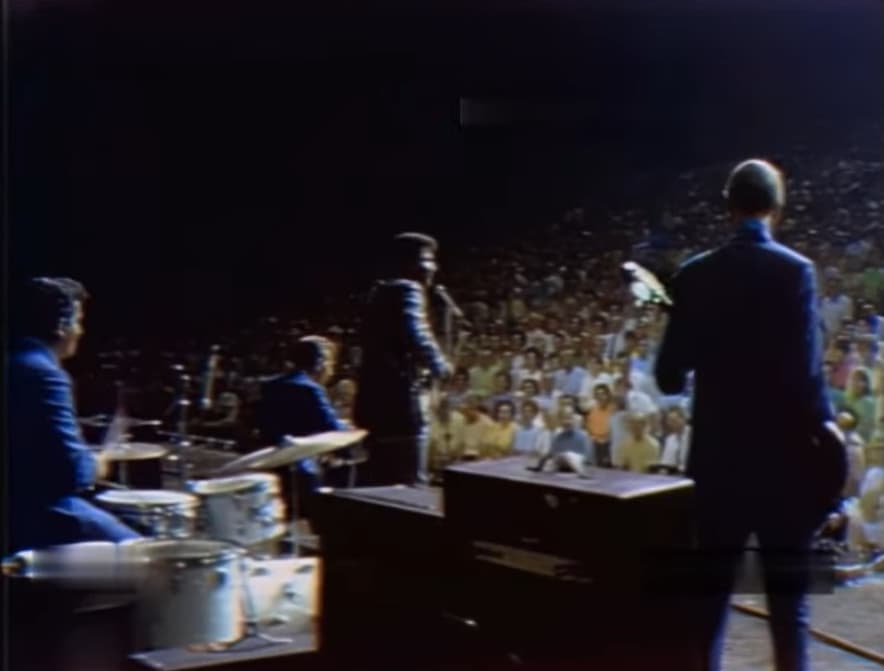
Merle Haggard, Charley Pride, and Conway Twitty: The 1969 “Triple Threat” That Defined the Golden Era of the Nashville Sound
In the storied landscape of 1969, a year defined by seismic shifts in American culture, a convergence occurred on the country music stage that felt like a coronation of three distinct musical dynasties. When Merle Haggard, Charley Pride, and Conway Twitty shared the spotlight for a “live” experience, they didn’t just perform a concert; they provided a “High-Fidelity” map of where the genre had been and exactly where it was heading. For those of us who remember the late sixties—the era of wood-paneled consoles and the steady hum of the AM radio—this trio represented the absolute zenith of vocal authority. It was a time when Capitol, RCA, and Decca were battling for airplay, and these three men were the heavyweights carrying the flags of their respective labels into the history books.
The “story” behind this 1969 era is one of raw, rhythmic authenticity meeting a new level of “high-level” showmanship. Merle Haggard was at his absolute peak of defiance, having just released “Okie from Muskogee,” a track that turned him into a socio-political lightning rod and a Number 1 sensation. Charley Pride, with his crystalline, soulful baritone, was shattering barriers and dominating the charts with hits like “All I Have to Offer You (Is Me),” proving that “The Truth” in a voice knew no boundaries. And then there was Conway Twitty, the former rockabilly rebel who had successfully completed his transformation into the “High Priest of Country Music” with the smoldering intensity of “To See My Angel Cry.” Together, they offered a masterclass in the “Gentle Giant” style of masculinity—rugged, sincere, and impeccably melodic.
For the sophisticated listener who has spent a lifetime observing the “twists and turns” of the American narrative, reflecting on this 1969 lineup evokes a powerful, lingering nostalgia. It brings back memories of a time when “Country Music” was the heartbeat of the working man and the sanctuary of the dreamer. The sight of Merle with his telecaster, Charley with his infectious, warm smile, and Conway with that legendary “velvet” growl is a mirror of our own resilience through the decades. For a “qualified” reader who has navigated the “Saturday nights” of their youth and seen the seasons of life turn, this performance is a reminder that while the world outside was in turmoil, the music remained a steady, principled anchor.
The meaning of this 1969 “Live” era lies in its unapologetic excellence. These weren’t just singers; they were architects of the human experience. Haggard gave us the grit of the laboring life, Pride gave us the warmth of unconditional devotion, and Twitty gave us the cinematic drama of the heart’s deepest secrets. As we reflect on these legends today, through the lens of our own silver years, we see them as more than just chart-toppers; they are the poets who narrated our own “mini-movies” of life. To revisit their 1969 collaborations is to sit once more in that vintage living room, acknowledging that while the “live” shows may have ended, the echoes of their triple-part impact will never truly fade.
Would you like to explore a specific hit from that 1969 period for one of these legen
 Music Legend