
A Quiet Promise That Even in Heartbreak, Love Finds a Way to Bloom Again
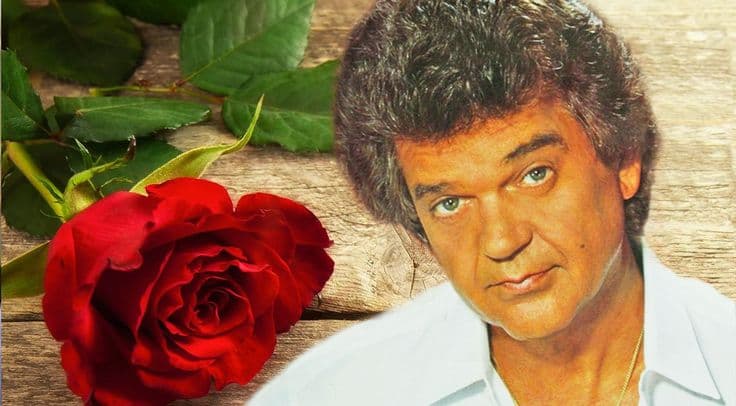
When “The Rose” found its way into the voice of Conway Twitty, it carried with it a history already steeped in emotion, reflection, and quiet resilience. Originally written by Amanda McBroom for the 1979 film of the same name, and first brought to prominence by Bette Midler, the song had already touched a wide audience before Twitty ever approached it. Yet when he recorded his version in 1983 for the album “Lost in the Feeling”, it took on a different weight—less theatrical, more intimate, as though it had settled into the slow rhythm of lived experience.
Although Conway Twitty’s “The Rose” was not released as a major chart-topping single in the same way as some of his No. 1 hits like “Hello Darlin’” or “Tight Fittin’ Jeans”, it became a deeply cherished piece within his catalog. It resonated strongly with listeners who had followed his career through decades of shifting sounds, from rock and roll beginnings to the rich, mature storytelling of country music. By the early 1980s, Twitty was no longer chasing charts—he was shaping moments, offering songs that felt less like performances and more like quiet conversations.
What makes “The Rose” endure is not its melody alone, though it is undeniably gentle and memorable. It is the way the song speaks in metaphors that feel almost universal in their truth. “It’s the heart afraid of breaking that never learns to dance…”—lines like these do not rush past the listener. They linger. They ask for reflection. In Twitty’s voice, these words are not declarations; they are realizations, as though each line has been earned over time rather than simply sung.
There is a distinct difference between the original version and Twitty’s interpretation. Where Bette Midler’s rendition carries a certain dramatic swell, almost cinematic in its delivery, Conway Twitty brings the song down to earth. His phrasing is unhurried, his tone warm but slightly worn, as if shaped by years of both love and loss. It feels less like a performance on a stage and more like a moment shared in a quiet room, where the meaning of the song unfolds slowly, without insistence.
The early 1980s marked a period in Twitty’s career where his artistry had reached a kind of emotional clarity. Albums like “Lost in the Feeling” were not built around chasing trends but around preserving a certain honesty in storytelling. Including “The Rose” in this collection was not incidental—it reflected his understanding of the song’s deeper message. Love, in this context, is not portrayed as something grand or triumphant. Instead, it is fragile, uncertain, and often shadowed by fear. And yet, it remains necessary.
Behind the song lies a simple but profound idea: that the risk of heartbreak is inseparable from the possibility of something beautiful. The imagery of the rose itself—something delicate yet capable of enduring through harsh conditions—serves as a quiet metaphor for the human heart. In Twitty’s hands, this metaphor feels less like poetry and more like truth observed over time.
Listening to “The Rose” today, especially through the voice of Conway Twitty, one cannot help but feel a sense of stillness. It is not a song that demands attention; it earns it. It invites the listener to pause, to remember, and perhaps to reconsider the moments in life where fear may have held them back. And in that reflection, there is a gentle reassurance—that even after the longest winters, something within us still knows how to grow.
In the broader landscape of Twitty’s career, “The Rose” may not stand as his most commercially dominant recording, but it holds a different kind of significance. It represents an artist who understood that music, at its best, does not need to be loud to be heard. Sometimes, the most lasting songs are the ones that speak softly, carrying with them the weight of everything that has come before.
And so, the legacy of Conway Twitty’s “The Rose” is not measured in chart positions or awards, but in the quiet spaces it fills—in the memories it stirs, and in the gentle reminder it offers: that love, no matter how fragile, is always worth the risk of blooming.
 Oldies Songs