
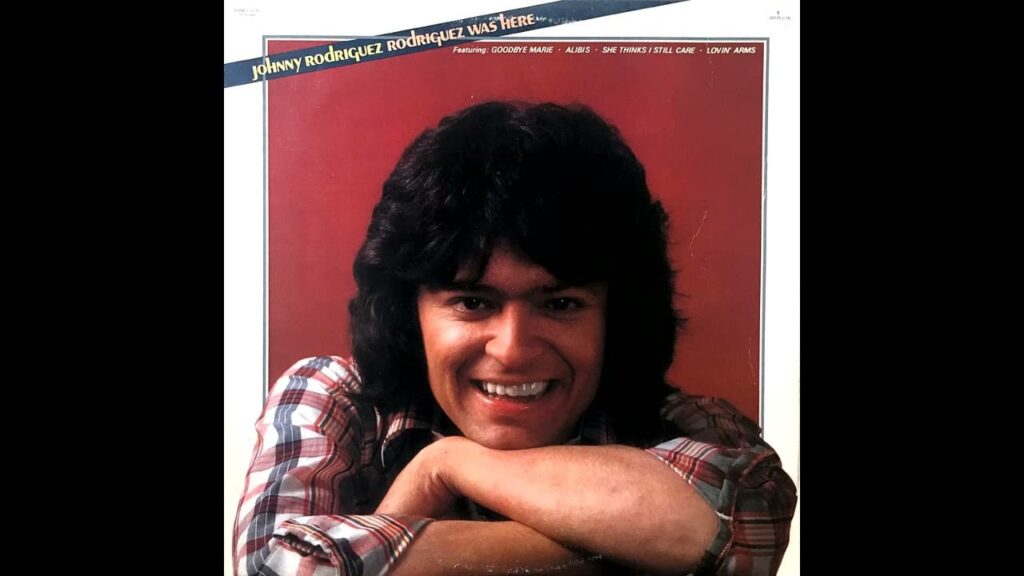
A quiet plea for comfort, where a wandering heart finally admits it still needs a place to belong
When Johnny Rodriguez recorded “Lovin’ Arms”, he was stepping into a song that already carried a certain emotional gravity, yet he made it unmistakably his own. Originally written and first recorded by Tom Jans in the early 1970s, the song found wider recognition through interpretations by artists like Kris Kristofferson and Rita Coolidge. But when Rodriguez brought his voice to it, something shifted—subtly, but permanently.
Released during a period when Rodriguez was already a consistent presence on the Billboard Hot Country Singles chart, his version of “Lovin’ Arms” did not necessarily chase the top positions in the same way as his earlier No. 1 hits like “Ridin’ My Thumb to Mexico” (1973) or “That’s the Way Love Goes” (1973). Yet chart placement, in this case, feels almost secondary. The song’s significance lies not in numbers, but in the way it reveals a different dimension of his artistry—one that leans more toward introspection than declaration.
By the time he recorded “Lovin’ Arms”, Johnny Rodriguez had already built a reputation for blending traditional country storytelling with a smooth, deeply human vocal delivery. His voice never demanded attention; it invited it. And in this particular recording, that invitation feels more personal than ever.
The song itself is deceptively simple. A man returns after a period of wandering, asking not for forgiveness in grand terms, but for something quieter—acceptance, warmth, the familiarity of someone who once understood him. There is no elaborate narrative, no dramatic twist. Instead, there is a steady unfolding of vulnerability, line by line.
What makes Rodriguez’s interpretation so affecting is the restraint he brings to it. He does not overstate the emotion. He allows the words to breathe, to settle into the listener. There is a softness in his phrasing, a sense that each line has been lived rather than merely sung. In a genre often associated with directness, this kind of subtlety becomes its own form of honesty.
Listening closely, one can hear the echoes of his own journey within the performance. As one of the first Mexican American artists to achieve mainstream success in country music, Rodriguez had navigated a path that required both resilience and adaptability. Yet none of that complexity is stated outright in the song. Instead, it lingers beneath the surface, giving the performance a depth that is felt rather than explained.
The arrangement supports this emotional tone with quiet precision. Gentle instrumentation—steel guitar, soft rhythm, understated backing—creates a space where the vocal can remain at the center without being overwhelmed. It is the kind of production that does not draw attention to itself, allowing the song’s meaning to emerge naturally.
Over time, “Lovin’ Arms” has become one of those songs that reveals more with each listen. It does not rely on a single moment or a climactic refrain. Instead, it unfolds gradually, much like the experience it describes. The longer one sits with it, the clearer its emotional landscape becomes.
There is also something enduring about the song’s central idea—that no matter how far one drifts, there remains a longing for connection, for a place where one can return without explanation. It is a theme that transcends time, making the song as relevant now as it was when it was first recorded.
For Johnny Rodriguez, this recording stands as a reminder that his artistry was never limited to chart-topping hits. It extended into quieter territory, where the true measure of a performance lies not in its visibility, but in its ability to resonate on a deeply personal level.
And as the final notes fade, what remains is not just a song, but a feeling—one that lingers gently, like a memory that refuses to disappear, waiting patiently for the moment it is needed again.