
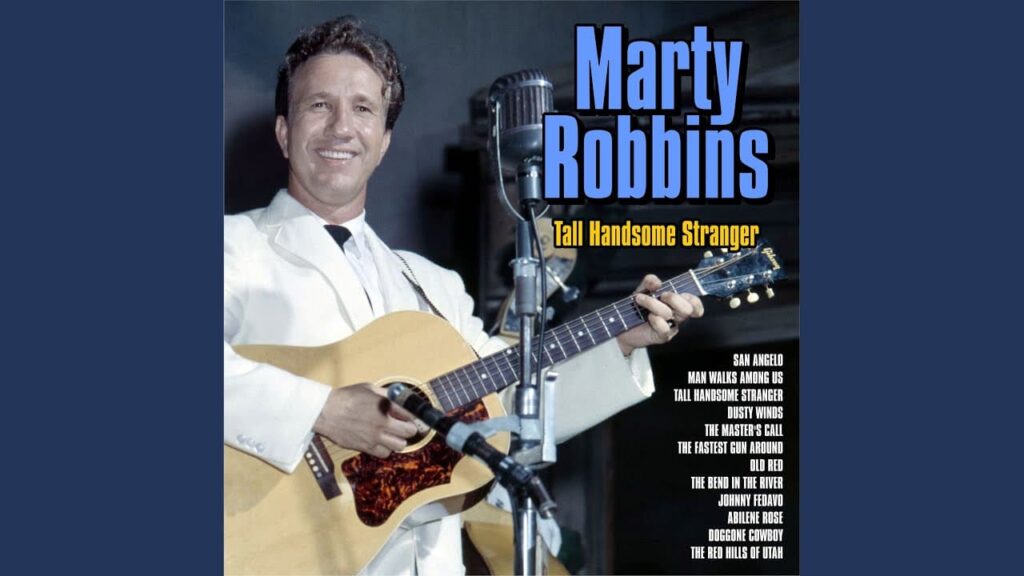
Marty Robbins – It Makes No Difference Now: A Resilient Sunset over a Love That Lost Its Sting
In the quiet, reflective twilight of a long journey, there comes a moment when the heart finally stops aching for what it cannot have. Marty Robbins, a man whose voice could carry the weight of a thousand midnights, captured this precise moment of emotional liberation in “It Makes No Difference Now.” While this song is a foundational pillar of country music—originally penned by Floyd Tillman and Jimmie Davis—it was Marty Robbins who, on his 1962 album Portrait of Marty, transformed it into a sophisticated anthem of peaceful resignation. As the album surged to Number 7 on the Billboard Top Country Albums chart, this track became a sanctuary for the weary soul, offering a masterclass in the art of letting go with dignity.
For those of us who grew up under the spell of the Nashville Sound, a Marty Robbins performance was never just a song; it was a conversation with the self. Imagine a dimly lit stage, the soft hum of a pedal steel guitar, and Marty—standing with that effortless, quiet confidence—singing not to a crowd, but to the ghosts of his own past. The story behind his version of this classic is one of reclamation. By the early 1960s, the song had been covered by everyone from Bing Crosby to Ray Charles, but Robbins brought it back to the fireside. He stripped away the bitterness of earlier versions and replaced it with a smooth, velvet-toned “Mister Teardrop” delivery that made the narrator seem less like a victim of heartbreak and more like a victor over his own sorrow.
The story within the lyrics is a final, calm address to a former lover who has tried to return. It is a narrative of the point of no return. The narrator acknowledges the tears he once shed and the sleepless nights he endured, but he delivers a devastatingly quiet verdict: it simply doesn’t matter anymore. The fire has gone out, the wound has closed, and the door is not being slammed in anger—it is being closed in silence. It is the story of the day you wake up and realize that the person who once defined your world is now just a distant, fading memory.
The profound meaning of this ballad resonates with a mature audience because it honors the hard-won wisdom of emotional distance:
- The Grace of Apathy: It suggests that the opposite of love isn’t hate, but indifference. There is a profound power in being able to look back at a great tragedy and realize it no longer has the power to move you.
- The Healing Property of Time: For those of us looking back over decades, the song is a testament to the “long game” of the heart. It reminds us that while the “now” may feel eternal, it eventually becomes a “then” that we can live without.
- The Sovereignty of the Self: By stating “it makes no difference now,” the narrator reclaims his own peace. He is no longer waiting for an apology or a return; he has found his own closure in the quietude of his present life.
Marty Robbins delivers this performance with a voice as steady as a mountain stream. His signature “crying” vibrato is restrained here, used only to accent the finality of the lines. The arrangement is quintessentially lush, featuring the gentle, celestial harmonies of the Jordanaires and a rhythmic, rolling piano that feels like the steady ticking of a clock moving toward a better tomorrow. For our generation, “It Makes No Difference Now” is a nostalgic masterpiece—a reminder that while we cannot change the storms we’ve weathered, we can certainly choose to walk in the sunshine that follows.
 Music Legend