
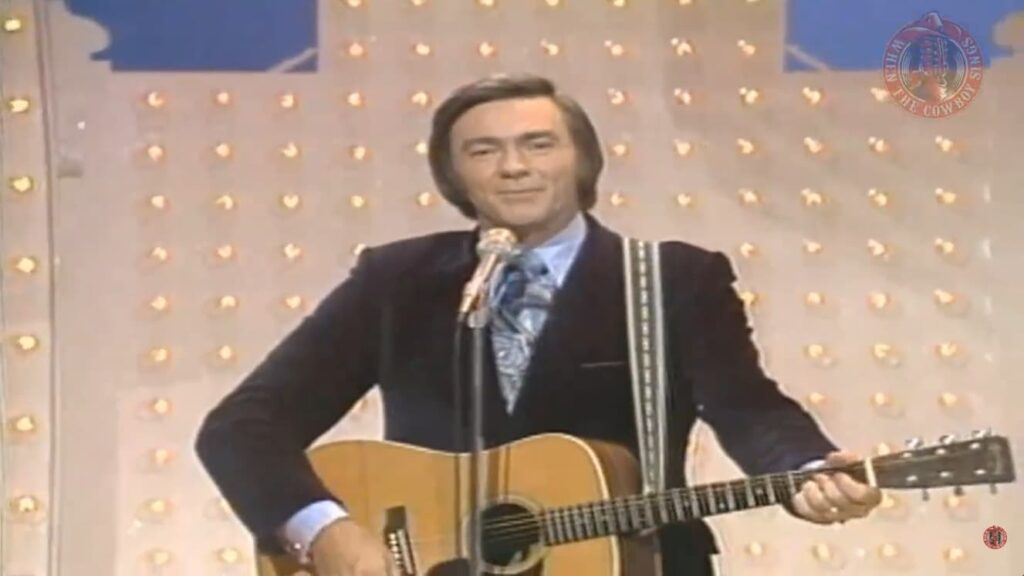
A Simple Song About Loneliness — “Pop A Top” Reveals the Honest Country Soul of Jim Ed Brown
In the long and heartfelt tradition of country music, some songs endure not because they are grand or dramatic, but because they speak quietly and truthfully about everyday emotions. “Pop A Top,” performed by Jim Ed Brown in his memorable 1974 live performance, belongs firmly in that tradition. With its gentle melody and deeply relatable lyric, the song reflects a moment many people recognize: the quiet loneliness that arrives after love has slipped away.
Originally written by songwriter Nat Stuckey, “Pop A Top” first reached country audiences in 1966 when Stuckey recorded the song himself. His version climbed to No. 4 on the Billboard Hot Country Singles chart, establishing the tune as one of the most poignant country recordings of the decade. The lyric told a simple but powerful story about a man sitting alone in a bar, opening another can of beer while trying to forget a love that continues to linger in his thoughts.
The strength of “Pop A Top” lies in its honesty. There are no dramatic confrontations or complicated metaphors. Instead, the song captures a small, intimate moment — the quiet ritual of opening a drink and listening to the sound it makes. In that brief sound, the narrator hopes to drown out memories of someone who once meant everything.
By the early 1970s, Jim Ed Brown had become one of the most respected voices in country music, and when he performed “Pop A Top” live in 1974, he brought a different emotional shade to the song. Brown’s career had already spanned more than two decades, beginning with the family trio The Browns, whose classic recording “The Three Bells” reached No. 1 on the Billboard Hot 100 in 1959 and remained there for four weeks. That remarkable crossover success introduced his warm baritone voice to a broad national audience.
As a solo artist, Jim Ed Brown continued to build a steady and respected career throughout the 1960s and 1970s. One of his most beloved recordings, “Morning,” became a major hit in 1970, climbing to No. 4 on the Billboard Hot Country Singles chart and crossing over to No. 47 on the Billboard Hot 100. The song showcased Brown’s ability to combine traditional country storytelling with the smoother production style that was becoming popular in Nashville.
When Brown approached “Pop A Top,” he brought that same vocal warmth and emotional sincerity to the performance. His voice carries a gentle steadiness that fits the song perfectly. Rather than emphasizing despair, he allows the lyric to unfold naturally, as though sharing a quiet confession rather than performing a dramatic story.
Musically, the arrangement reflects the classic Nashville Sound that defined many recordings of the era. Steel guitar lines glide softly through the background, while understated piano and rhythm guitar create a relaxed, late night atmosphere. The tempo moves slowly, giving each line of the lyric time to settle in the listener’s mind.
What makes the 1974 live performance particularly compelling is its sense of intimacy. In a live setting, Jim Ed Brown connects directly with the audience, delivering the song with calm confidence and quiet emotional depth. There is no theatrical exaggeration in the performance. Instead, the sincerity of the moment becomes the most powerful element.
Listening today, “Pop A Top” feels like a snapshot of a certain time and place. The imagery of a dimly lit bar, the soft clink of a drink being opened, and the lingering memory of lost love all evoke the reflective storytelling that country music has always done so well.
But beyond nostalgia, the song continues to resonate because its message is timeless. Heartbreak rarely arrives with dramatic speeches or sweeping gestures. More often, it appears in quiet moments of reflection, when memories return unexpectedly and the heart searches for a little peace.
Through his gentle interpretation of “Pop A Top,” Jim Ed Brown captures that quiet emotional truth with remarkable grace.
As the final note fades, the listener is left with a simple but powerful image: a solitary moment, a familiar sound, and the lingering hope that time — and perhaps one more song — might help ease the memory of a love that once felt impossible to forget.
 Oldies Songs