
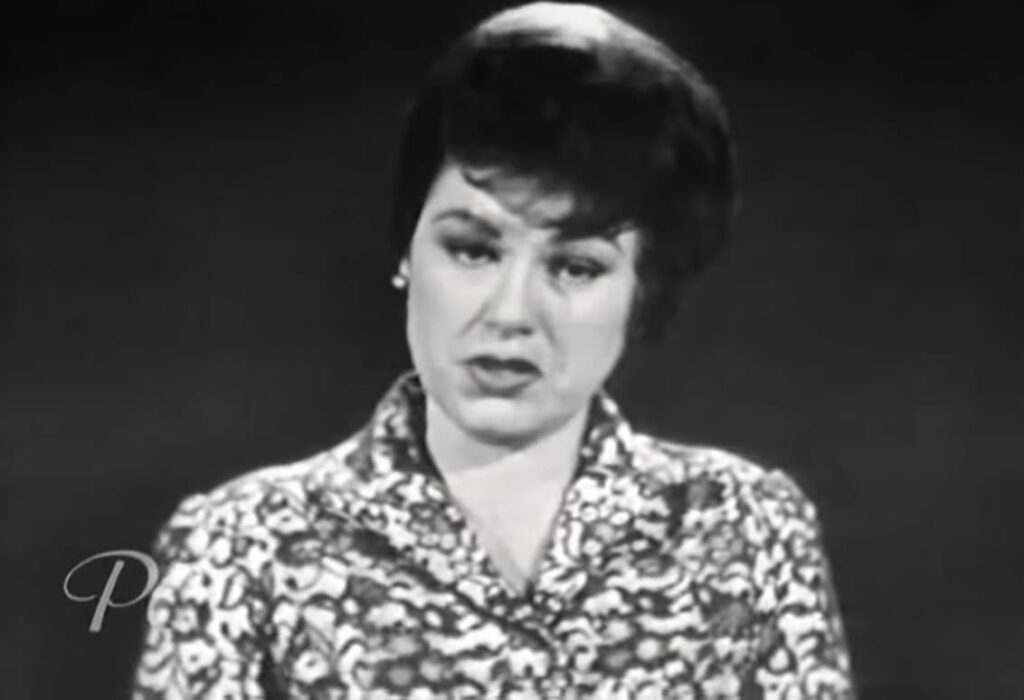
There are certain stories in American music that feel almost too dramatic to be real, and Patsy Cline’s Near Death Experience is one of them. It is not simply a chapter in a singer’s biography; it is a haunting turning point that seems to explain why her voice carried such uncommon weight. Long before she became remembered as one of the most emotionally powerful voices in country music, Patsy Cline lived through a moment that could have ended everything. Instead, it deepened the mystery around her, sharpened the tenderness in her performances, and gave listeners the sense that when she sang, she was not merely interpreting a lyric — she was testifying from the edge of life itself.
For older listeners who grew up understanding music as something more than entertainment, Patsy Cline represents a kind of truth that is increasingly rare. Her singing was polished, yes, but never cold. It had elegance without losing humanity. It had heartbreak without self-pity. And after surviving a devastating automobile accident, her music seemed to carry an even stronger awareness of time, fragility, and the quiet courage required to keep going. When we listen to her later recordings, we are not just hearing a famous voice; we are hearing a woman who had looked disaster in the face and returned with a deeper emotional language.
That is what makes Patsy Cline’s Near Death Experience so compelling. It invites us to reconsider the familiar songs not only as classics, but as personal statements shaped by pain, survival, and grace. A song like “I Fall to Pieces” no longer feels like a simple ballad of heartbreak; it feels like the sound of someone gathering herself after being broken. “Crazy” becomes more than a beautifully written melody; it becomes an expression of vulnerability sung by someone who understood how quickly life could change. Her phrasing, her pauses, her controlled ache — all of it seems touched by the knowledge that nothing is guaranteed.
Patsy Cline’s greatness was never based on volume or spectacle. It came from restraint, from timing, from the way she could hold a note and make the room feel smaller, quieter, and more honest. She did not need to overstate emotion because she carried it naturally. After her brush with death, that quality became even more powerful. Her voice seemed to stand between sorrow and strength, between memory and prophecy. Listeners could feel that she had paid a price for the beauty she gave them.
In the end, Patsy Cline’s Near Death Experience is not only a story about survival. It is a story about artistic transformation. It reminds us that some voices become unforgettable not because life spared them from hardship, but because hardship gave them a deeper truth to sing. Patsy Cline did not merely return to music after tragedy — she returned with a sound that still reaches across generations, asking us to listen more carefully, feel more deeply, and remember how fragile a human voice can be before it becomes eternal.
 Music Legend