
A Song of Endless Horizons, Where the Drifting Wind Carries Both Freedom and Solitude
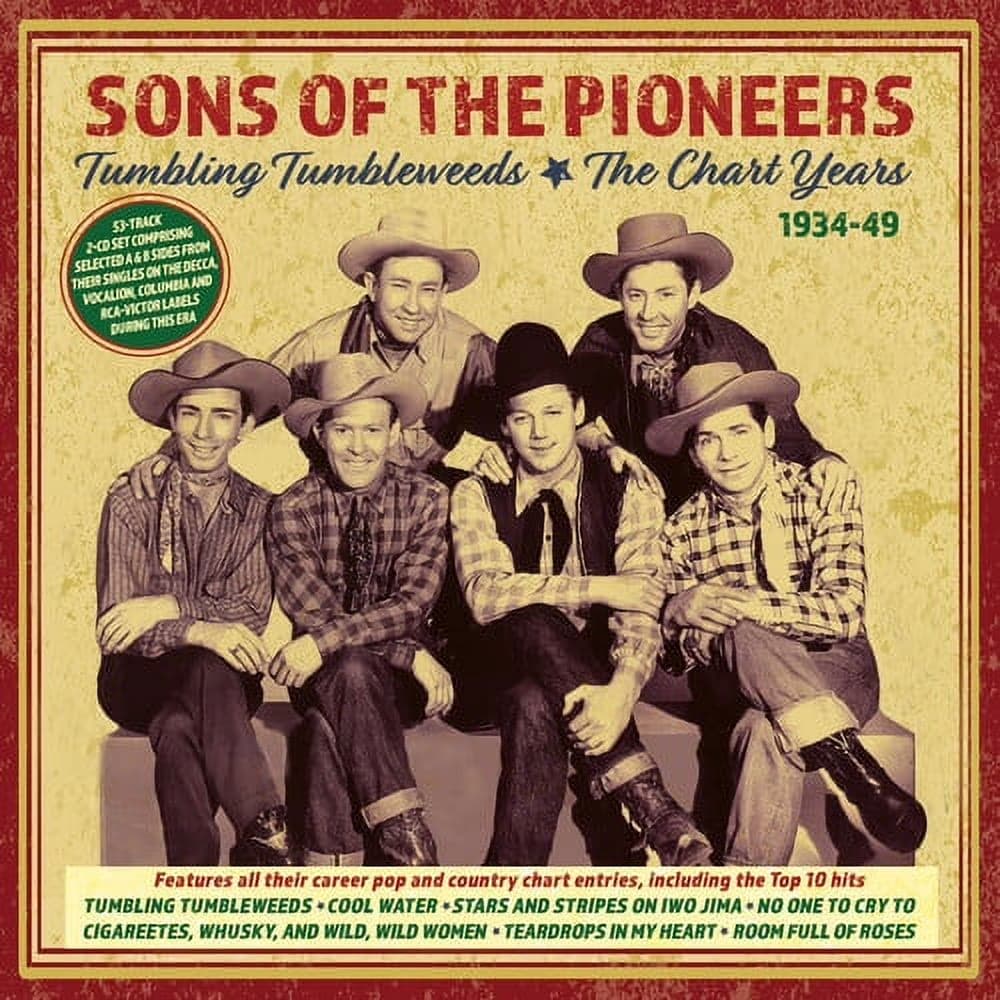
When Sons of the Pioneers first recorded “Tumbling Tumbleweeds” in 1934, they were not simply creating a song—they were defining the sound and spirit of the American West for generations to come. Written by Bob Nolan, one of the group’s founding members, the song quickly became their signature piece, establishing a musical identity that would influence country, western, and folk traditions for decades. While formal chart systems like the Billboard Hot 100 did not yet exist in the 1930s, “Tumbling Tumbleweeds” achieved widespread popularity through radio airplay, jukebox circulation, and its lasting association with western films, eventually being recognized as one of the most important songs in the western music canon.
The recording also lent its name to the 1934 album “Tumbling Tumbleweeds,” further cementing its place at the center of the group’s legacy. At a time when America was still navigating the hardships of the Great Depression, the imagery of open landscapes and drifting motion offered something quietly powerful—a sense of escape, even if only for the length of a song.
From its opening lines, “Tumbling Tumbleweeds” establishes a mood that is both expansive and intimate. The melody moves gently, almost as if guided by the same wind it describes. And at the heart of it all are the harmonies of the Sons of the Pioneers—clear, steady, and unmistakably warm. Their vocal blend does not seek to dominate; it invites the listener in, creating a sense of space that feels both vast and personal at once.
The story behind the song is rooted in Bob Nolan’s own experiences. Having spent time traveling through the American Southwest, he was struck by the sight of tumbleweeds rolling endlessly across the land—untethered, directionless, yet somehow purposeful in their movement. That image became a metaphor, not only for the physical landscape, but for a way of life defined by motion, independence, and quiet resilience.
In many ways, “Tumbling Tumbleweeds” speaks to a kind of solitude that is not entirely lonely. The narrator drifts, much like the tumbleweeds themselves, carried by forces beyond control. Yet there is no bitterness in this wandering. Instead, there is acceptance—a recognition that not all journeys are meant to have a fixed destination.
This sense of acceptance is what gives the song its enduring emotional depth. It does not tell a dramatic story. There are no sudden turns, no moments of conflict. Everything unfolds with a calm, steady rhythm, reflecting a life lived in harmony with its surroundings rather than in opposition to them.
Musically, the arrangement is deceptively simple. The instrumentation supports the vocals without drawing attention away from them, allowing the harmonies to remain the focal point. This simplicity, however, is carefully constructed. Each note, each phrase, is placed with intention, creating a sound that feels effortless but is deeply refined.
Over the years, “Tumbling Tumbleweeds” has been featured in numerous films and recordings, becoming almost synonymous with the image of the open West. Yet its meaning extends beyond geography. It speaks to anyone who has ever felt the pull of movement, the quiet urge to keep going without always knowing where the path leads.
What makes the performance by the Sons of the Pioneers so timeless is their ability to convey this feeling without exaggeration. They do not romanticize the life they describe, nor do they diminish its challenges. Instead, they present it as it is—open, uncertain, and quietly beautiful.
Listening to the song now, decades after its first recording, there is a sense that it exists outside of time. The world has changed, landscapes have shifted, yet the image of those drifting tumbleweeds remains clear. It continues to resonate, not because it belongs to a particular era, but because it captures something fundamental about the human experience.
As the final harmonies fade, there is no sense of ending—only continuation. The wind carries on, the tumbleweeds keep moving, and the song lingers, as though it too is part of that endless journey.
Because “Tumbling Tumbleweeds” was never about arriving somewhere.
It was about the quiet understanding that sometimes, the movement itself is enough.