
When Glam Rock Learned to Laugh at Itself — “Turn It Down” Captured the Playful Defiance of Sweet in the Height of the 1970s Pop Explosion
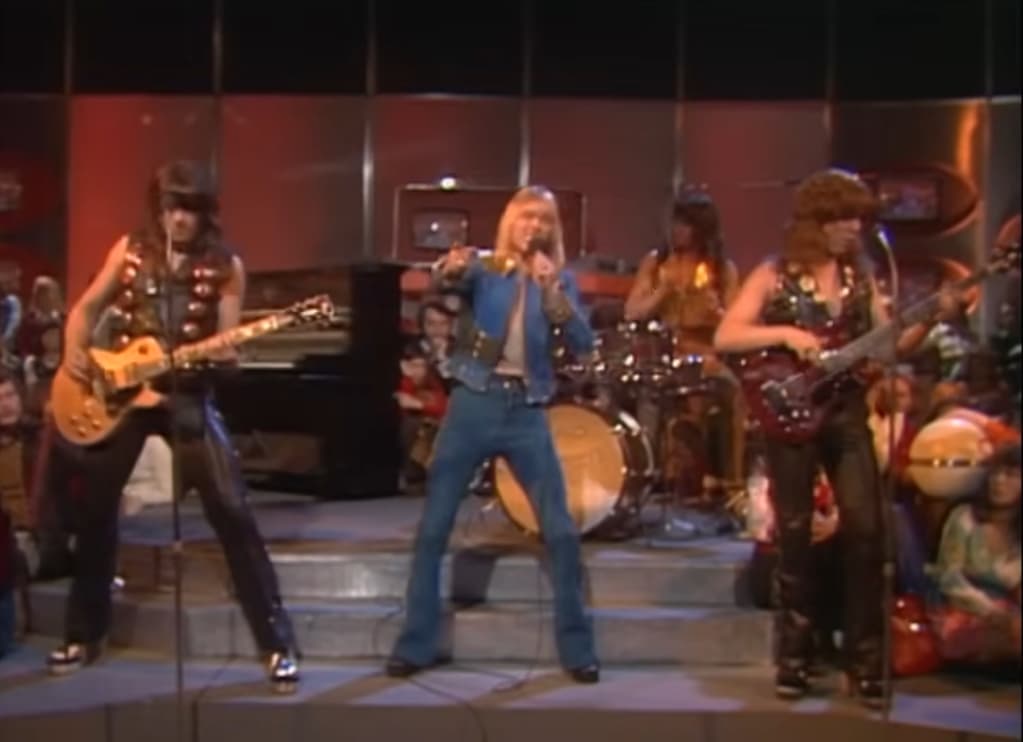
In the vibrant landscape of 1970s British pop and glam rock, few bands delivered their music with as much flamboyant energy and mischievous confidence as Sweet. Among their many chart successes, “Turn It Down” stands as a fascinating snapshot of that era, a song that combined sharp humor, rebellious spirit, and irresistible melody. When the band performed “Turn It Down” on the German television program Disco on November 23, 1974, the moment reflected both the height of their popularity and the playful edge that made their music so memorable.
Released in October 1974, “Turn It Down” quickly climbed the UK Singles Chart, reaching No. 4. At the time, Sweet were already a dominant force in European pop music, having previously scored major hits with songs such as “Block Buster!”, which reached No. 1 on the UK Singles Chart in 1973, and “Ballroom Blitz,” another massive success that climbed to No. 2 in the UK and later reached No. 5 on the Billboard Hot 100 in the United States. These records helped establish the band as one of the defining glam rock acts of the decade.
The story behind “Turn It Down” is particularly intriguing because the song is, in many ways, a playful response to criticism directed at loud rock music during the early 1970s. At the time, many older commentators complained that rock bands were becoming too noisy, too theatrical, and far too rebellious for traditional tastes. Rather than retreat from that criticism, Sweet embraced it with a wink.
Written by the prolific songwriting duo Nicky Chinn and Mike Chapman, who were responsible for many of the band’s biggest hits, “Turn It Down” cleverly turns the complaint into the song’s central theme. The lyrics describe neighbors banging on the wall and demanding that the music be turned down, while the band responds with mischievous defiance.
This humorous narrative gave the song a slightly self-aware tone. Instead of presenting rebellion as something serious or confrontational, Sweet treated it almost like a playful game. The message seemed clear: music was meant to be enjoyed loudly, joyfully, and without apology.
Musically, “Turn It Down” captures the unmistakable glam rock style that defined Sweet during the mid-1970s. The track opens with a bright guitar riff before launching into a driving rhythm that balances pop catchiness with rock energy. Brian Connolly’s lead vocal carries the melody with confident clarity, while the band’s layered backing harmonies add a sense of theatrical excitement.
One of the most distinctive elements of the song is its chorus, which practically invites listeners to join in. Like many of Sweet’s best recordings, the structure is built around a sing-along hook that lingers long after the music stops.
By the time the band appeared on Disco in November 1974, they were already one of the most visually recognizable acts in glam rock. Their flamboyant stage outfits, platform boots, and glittering style perfectly matched the larger-than-life energy of their songs. Television appearances such as this one played a crucial role in spreading the band’s popularity across continental Europe.
Watching the Disco performance today reveals just how effortlessly Sweet combined theatrical showmanship with genuine musical chemistry. The band members appear relaxed yet electrifying, delivering the song with the kind of playful confidence that defined the glam rock movement.
But beneath the colorful spectacle, “Turn It Down” also reflects something deeper about the spirit of the 1970s music scene. Rock music had become a powerful cultural force, challenging old expectations and creating space for new forms of expression. Songs like this celebrated that freedom in a way that felt joyful rather than confrontational.
Listening today, “Turn It Down” still carries the same bright energy that first made it a hit in 1974. The guitars sparkle, the rhythm pulses forward, and the chorus arrives with the same irresistible enthusiasm.
And perhaps that is the true charm of the song. Instead of worrying about whether the music might be too loud, Sweet simply invited the world to enjoy it.
After all, some songs are not meant to be played quietly. They are meant to fill a room, shake the walls, and remind us that music has always been at its most exciting when it refuses to be turned down.