
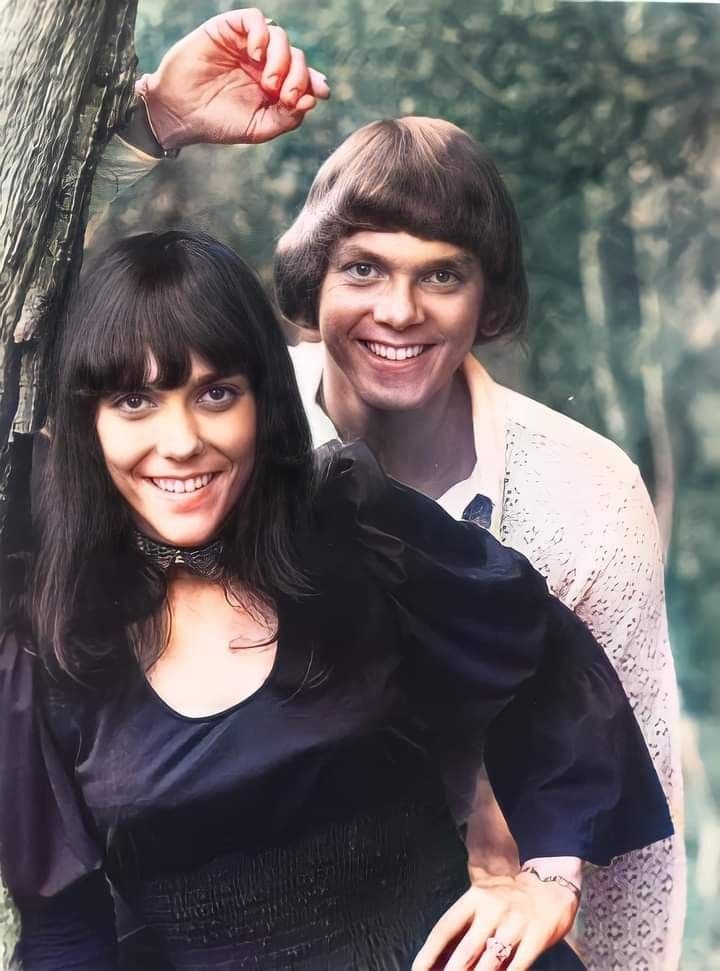
“Aurora” opens the world of Horizon like the first light of morning, a brief and haunting meditation on dreams, fading sadness, and the quiet loneliness that often lived beneath The Carpenters’ most beautiful music.
Released in 1975 as the opening track of The Carpenters’ album Horizon, “Aurora” was never intended to compete for a place on the singles charts. At just over a minute and a half, it was too brief and too atmospheric to be a conventional hit single, and it was not released separately for chart success. Yet its importance lies in the way it opens one of the most successful and artistically ambitious albums of Karen and Richard Carpenter’s career. Horizon, released by A&M Records on June 6, 1975, reached No. 1 on Billboard’s Top LPs & Tapes chart, becoming one of the duo’s greatest commercial achievements. The album also produced major hits, including “Please Mr. Postman,” which reached No. 1 on the Billboard Hot 100, and “Only Yesterday,” which climbed to No. 4. But before any of those familiar melodies arrive, there is “Aurora,” a quiet musical doorway into the world of the album. Written by Richard Carpenter and John Bettis, the song begins with an atmosphere that feels almost cinematic, as though the listener has stepped into a room before sunrise and is waiting for the first traces of daylight to appear.
The title itself is significant. Aurora is the Latin word for dawn, and the song unfolds like a small awakening. John Bettis’s lyrics are filled with images of morning, shadows, windows, bells, and dreams slowly emerging from the grey. It is a song about that strange moment between darkness and daylight, when the mind is still caught between memory and reality. The sadness described in the song does not disappear dramatically. Instead, it seems to fade slowly as the morning begins to take shape. The narrator hears the world awakening around him, yet there is still uncertainty in the air. Dreams are slipping away, and the final thought connects those dreams directly to music. It is a remarkably poetic idea for such a short recording, suggesting that perhaps the dreams we lose in life are the very things artists try to preserve in songs.
That sense of quiet melancholy was one of the great strengths of The Carpenters, although their enormous commercial success sometimes overshadowed just how carefully constructed their recordings could be. Richard Carpenter was responsible for the song’s composition, arrangement, and production, while Karen Carpenter was credited as associate producer on the album. By 1975, the duo had access to more advanced recording technology at A&M Studios, including 24 track recording, which allowed Richard to create a richer and more spacious sound than the group had used on some of their earlier albums. The production of Horizon is therefore filled with detail, atmosphere, and carefully layered instruments. “Aurora” may be brief, but it establishes the emotional colour of the entire record before the listener reaches the first major song.
What makes “Aurora” particularly fascinating is its relationship with the final track on the album, “Eventide.” The two pieces act almost like musical bookends. “Aurora” represents the beginning of the day, while “Eventide” suggests the coming of evening. Between those two quiet moments lies the emotional journey of Horizon, with songs about love, hope, longing, loneliness, memory, and separation. Richard Carpenter was not simply arranging ten unrelated songs. He was creating a carefully shaped listening experience, beginning with dawn and ending with the approach of night. This gives “Aurora” a deeper purpose than its short running time might suggest.
The placement of the song also reveals something important about the artistic confidence of The Carpenters in 1975. They could easily have opened the album with the familiar commercial strength of “Only Yesterday” or another potential hit. Instead, they chose a small, reflective composition that asks the listener to slow down. There is no immediate chorus designed to capture the radio. No dramatic introduction. No rush toward commercial excitement. The song simply creates a mood and invites the listener inside.
That restraint feels even more meaningful when heard today. Karen Carpenter’s voice remains one of the most recognisable and emotionally expressive voices in popular music, yet the Carpenters’ recordings were never only about the beauty of her singing. Richard understood how to build a musical environment around that voice, often using arrangements that could be warm and comforting on the surface while carrying a deeper sadness underneath. “Aurora” belongs completely to that world. It is gentle, beautiful, and slightly mysterious, with the feeling that something has happened during the night but cannot quite be explained in the morning.
There is also a subtle sadness in the knowledge of what listeners now understand about Karen Carpenter’s life. Richard later reflected that although Karen was already struggling with anorexia during the making of Horizon, he believed she had never been in better voice. That knowledge cannot be separated entirely from the album today, although it should not be forced onto every song. “Aurora” was written as a poetic reflection on dawn and dreams, not as a prophecy of what was to come. Still, the fragile atmosphere of the recording now carries an additional emotional weight because the voice and music of The Carpenters have become inseparable from memory itself.
Perhaps that is why “Aurora” has remained quietly cherished by listeners despite never becoming a hit single. It is one of those recordings that can easily be overlooked until one listens to Horizon from beginning to end. Then its purpose becomes clear. Before the great songs arrive, before the familiar melodies take over, The Carpenters ask us to pause for a moment and listen to the morning.
In that brief space between night and day, “Aurora” gives us something The Carpenters understood better than almost anyone: the feeling of a memory beginning to wake.