
A Song About Pride, Regret, and the Quiet Humiliation of Loving Too Much
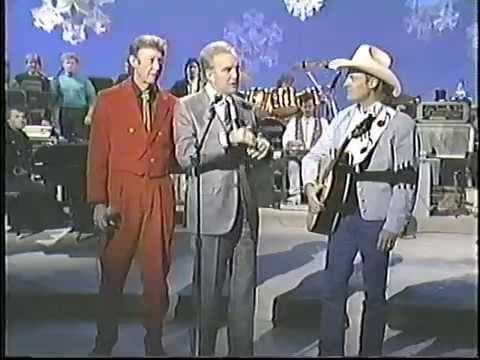
When “Statue of a Fool” resurfaced in 1989 through a shared performance by Ricky Van Shelton and Jack Greene on The Ralph Emery TV Show, it was not simply a nostalgic moment. It was a rare meeting of two eras of country music. One voice belonged to the man who made the song famous two decades earlier. The other belonged to an artist who, by the late 1980s, was helping traditional country reclaim its emotional gravity in a changing industry.
Originally written by Jan Crutchfield, “Statue of a Fool” was first recorded and immortalized by Jack Greene in 1969. Upon its release, the song reached No. 1 on the Billboard Hot Country Singles chart, becoming one of the defining records of Greene’s career and a cornerstone of classic country storytelling. Its success was immediate and enduring, not because of production flourishes, but because of its emotional honesty. At a time when country music was balancing polish with pain, this song leaned unapologetically into quiet devastation.
At its core, “Statue of a Fool” tells the story of a man frozen in the aftermath of lost love. The title itself is a devastating metaphor. The narrator stands still, outwardly composed, inwardly shattered, reduced to an object of silent endurance while the world moves on. There is no dramatic confrontation, no explosive heartbreak. Instead, the song dwells in something far more familiar and painful. The humiliation of loving someone who no longer loves back, and the dignity of bearing that loss without spectacle.
Jack Greene delivered the song with a voice that sounded weary but controlled, a baritone shaped by years of singing about consequences rather than fantasies. His interpretation gave the song its authority. It felt lived in. It felt like a confession that had been rehearsed too many times to be dramatic anymore. By 1969, Greene was already known as a master of emotional restraint, and “Statue of a Fool” fit perfectly into that legacy.
Fast forward twenty years, and Ricky Van Shelton emerged as one of the leading voices of the neotraditional country movement. His success in the late 1980s was built on respect for classic country values. Clear vocals, narrative songs, and emotional sincerity. By 1989, Shelton had already scored multiple No. 1 hits and was widely seen as a bridge between generations. His decision to perform “Statue of a Fool” alongside Jack Greene was not accidental. It was an act of musical continuity.
The performance on The Ralph Emery TV Show carried symbolic weight. Ralph Emery himself was a long standing guardian of traditional country culture, and the program often served as a meeting ground between legends and contemporary artists. Seeing Greene and Shelton share the song was like watching time fold in on itself. One voice carried the original sorrow. The other carried reverence. Together, they underscored how little the song had aged.
What makes “Statue of a Fool” endure is its understanding of pride. The narrator does not beg. He does not rage. He simply stands there, emotionally immobilized, knowing that his love has turned him into something less than he once was. The song recognizes that heartbreak often strips people of movement, not just joy. That stillness is what gives the song its haunting quality.
Musically, the arrangement remains understated. Gentle steel guitar, restrained rhythm, and space for the vocal to breathe. Nothing distracts from the story. This simplicity allows the lyrics to carry their full emotional weight, making each line feel heavier than the last.
In the 1989 performance, Ricky Van Shelton approached the song with humility. He did not attempt to modernize it or outshine its originator. Instead, he stepped into the song as a listener first, a singer second. That choice honored the tradition from which the song came and reinforced its timelessness.
“Statue of a Fool” endures because it speaks to an experience that never leaves. Love remembered too late. Pride that keeps the pain quiet. The realization that some wounds do not scream. They stand still, waiting.
 Music Legend