
A Quiet Line Drawn Between Love and Letting Go, Where Maturity Replaces Possession
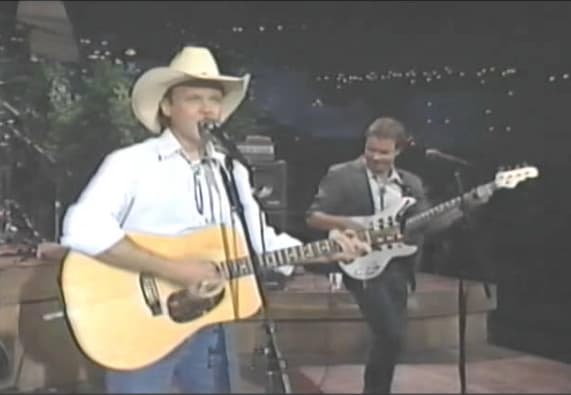
When Ricky Van Shelton stepped onto the stage of Austin City Limits on November 24, 1987, he was still at the beginning of a remarkable ascent. His debut album Wild-Eyed Dream had been released only weeks earlier, and its singles were already reshaping the sound of late-1980s country music. Yet on that evening, one of the most revealing moments did not come from a chart-bound hit. It came from a song he wrote himself and performed without armor or spectacle: She’s Not Your Baby Anymore.
The song was never released as a commercial single, and it did not enter the Billboard country charts. That absence, however, is part of its meaning. In an era driven by radio metrics and industry momentum, She’s Not Your Baby Anymore existed outside the machinery of success. It was offered as a statement rather than a product, a personal truth set gently in melody. Performed live with his touring band that night including Drake Leonard, Mike Blasucci, Tommy Hannum, and Billy Goodness, the arrangement was restrained, almost conversational. Nothing rushed. Nothing insisted.
At its core, She’s Not Your Baby Anymore is a song about emotional adulthood. It addresses a moment many recognize but few articulate with such clarity: the realization that love cannot be preserved through control. The narrator is not raging, nor pleading. He is observing. He understands that the woman in question has grown beyond the role he once knew, beyond dependency, beyond the safety of being “someone’s baby.” What makes the song resonate is the absence of accusation. There is no villain here. Only time, change, and the quiet cost of accepting both.
This perspective aligned closely with Ricky Van Shelton’s artistic identity at the time. Unlike many of his contemporaries, his voice carried a calm gravity. He sang as someone who had already lived with consequences. When he delivered lines from She’s Not Your Baby Anymore, it did not sound like performance. It sounded like recognition. The phrasing was careful, the pauses deliberate, as if he were allowing the weight of each realization to settle before moving on.
The Austin City Limits performance is especially significant because of what it reveals about Shelton as a songwriter. While he would become best known for interpreting material by others, this song demonstrated his ability to write with emotional precision. There is no clever twist, no dramatic climax. The power lies in restraint. The song trusts the listener to understand what is left unsaid. That trust is rare, and it is why the performance still feels intimate decades later.
Musically, the arrangement reinforces the theme. Drake Leonard’s steel guitar does not weep; it hovers, offering space rather than commentary. The rhythm section, anchored by Tommy Hannum and Billy Goodness, keeps time without drawing attention to itself. Mike Blasucci’s keyboard textures add warmth, not sentimentality. Together, they create a setting where the lyric can breathe.
In the broader context of Shelton’s career, She’s Not Your Baby Anymore functions almost like a private chapter left open for anyone willing to listen closely. It sits alongside his better-known recordings as a reminder that country music, at its most honest, is not always about triumph or heartbreak in grand terms. Sometimes it is about standing still long enough to admit that something has changed and that love, to remain dignified, must change with it.
That is why this song endures quietly. It does not demand rediscovery. It waits. And when heard again, it does not feel dated. It feels patient, thoughtful, and resolutely human.
 Music Legend