
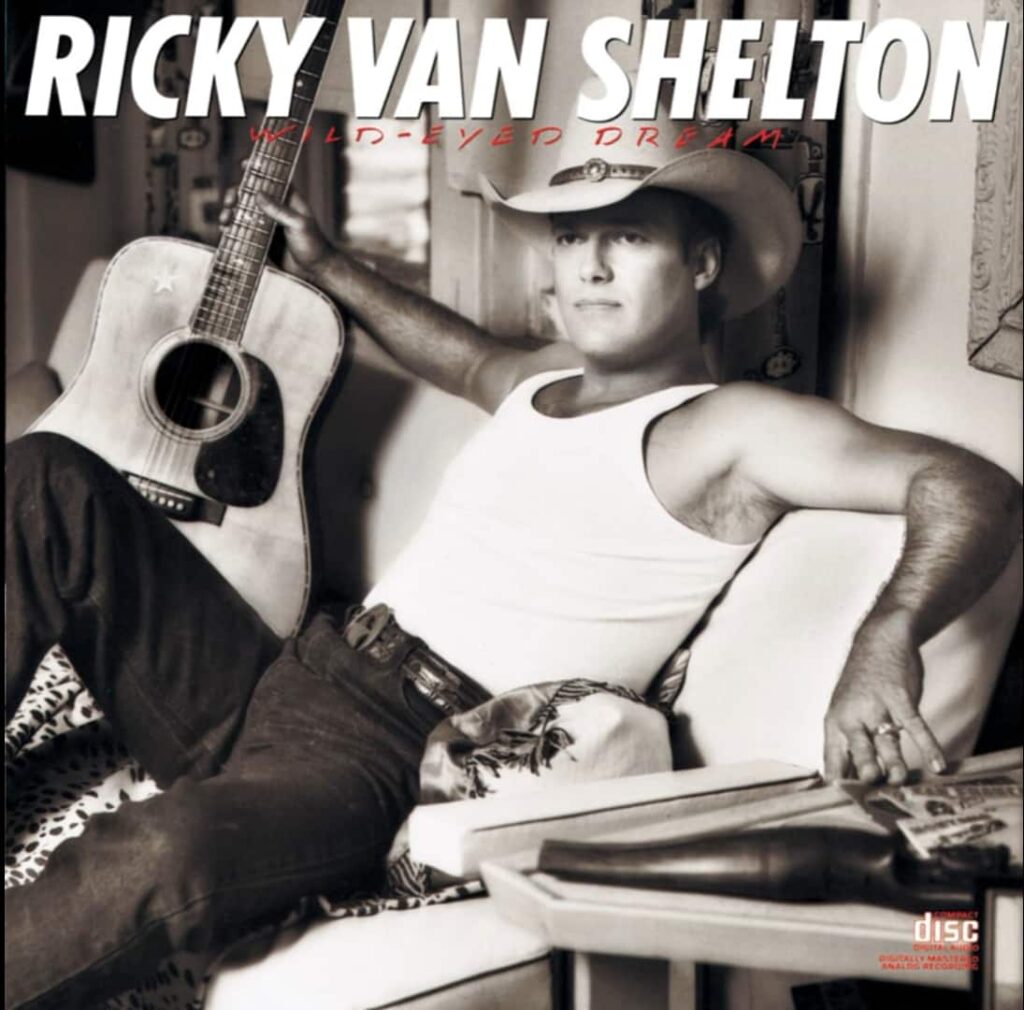
A Young Man’s Reckless Longing Set to a Fading Honky-Tonk Glow
When Ricky Van Shelton released “Wild-Eyed Dream” in 1987, he was not yet a household name, but the song quietly announced that a traditionalist had arrived. Issued as the third single from his debut album Wild-Eyed Dream, it climbed to No. 24 on the Billboard Hot Country Singles chart. That modest chart peak tells only part of the story. In truth, the record helped lay the foundation for one of the most significant neo-traditional country careers of the late 1980s.
By the time the single gained traction, Shelton was already riding the momentum of his breakthrough hit “Somebody Lied,” which had reached No. 1 earlier that year. Yet “Wild-Eyed Dream” offered something more revealing than a chart-topping anthem. It introduced listeners to a quieter, more vulnerable emotional register. The song carries the ache of youthful restlessness, the kind that sends a young man chasing illusions across dusty highways and neon-lit dance halls.
Written by John Jarvis, the song tells the story of a dreamer who confuses desire with destiny. The narrator is captivated by a woman who embodies escape, glamour, and possibility. But beneath the honky-tonk rhythm and the steel guitar flourishes lies a sobering recognition. Dreams fueled by impulse often leave behind consequences. Shelton’s interpretation does not judge the character. Instead, he inhabits him with a mixture of tenderness and regret.
Musically, the production stands as a hallmark of late 1980s country’s return to traditional roots. The arrangement leans on fiddle, steel guitar, and a steady two-step rhythm. In an era when country music was flirting with pop gloss, Ricky Van Shelton aligned himself with artists such as George Strait and Keith Whitley, who were restoring clarity and authenticity to the genre. Shelton’s baritone voice, warm yet edged with steel, carries the melody with controlled restraint. He never oversings. He allows the lyric to breathe.
There is a particular sincerity in his phrasing that suggests lived experience. Before fame, Shelton worked various blue-collar jobs while playing clubs around Virginia and Tennessee. That background gave his delivery credibility. When he sings about longing and miscalculation, it does not sound theatrical. It feels remembered.
The late 1980s were a pivotal period for country music. Audiences were responding again to songs grounded in story and emotional truth. Wild-Eyed Dream, the album, ultimately produced four Top 40 country hits and established Shelton as a leading voice of the neo-traditional movement. Within a year, he would achieve multiple No. 1 singles and become one of the genre’s most reliable hitmakers.
Yet there is something enduring about this particular track. “Wild-Eyed Dream” captures that fragile moment between innocence and understanding. It reminds listeners of a time when ambition felt limitless and heartbreak felt survivable. The melody lingers like the echo of a jukebox in a nearly empty bar. The lyric speaks of choices made too quickly, hopes invested too deeply.
In hindsight, the song also mirrors Shelton’s own early career trajectory. He arrived in Nashville with big hopes and little guarantee of success. That leap of faith could itself be called a wild-eyed dream. Fortunately for country music, his gamble paid off.
Listening now, decades removed from its original release, the song carries a patina of memory. It belongs to a chapter when country radio still favored storytelling, when voices like Ricky Van Shelton felt grounded and unpretentious. The chart position may have been modest, but the emotional resonance remains substantial.
In the end, “Wild-Eyed Dream” is not merely about youthful infatuation. It is about the human tendency to chase what glitters, only to discover that wisdom arrives through missteps. Shelton’s performance preserves that lesson with dignity and grace, leaving behind a recording that continues to whisper its truth long after the neon lights fade.
 Music Legend