
A Promise of Steadfast Devotion in an Unsteady World
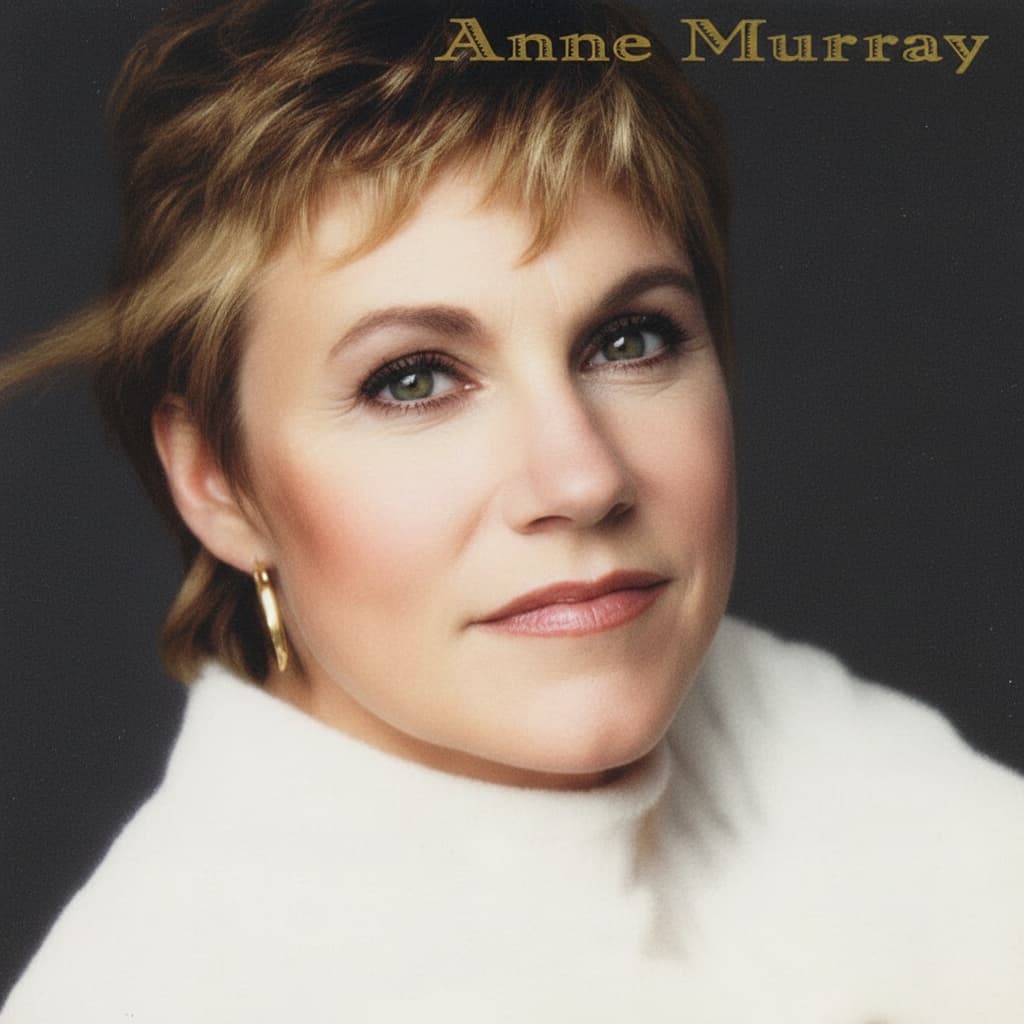
When Anne Murray released “That’s What My Love Is For” in 1996, she was not chasing trends or reinvention. Instead, she offered something far rarer in a rapidly changing musical landscape: reassurance. The duet, recorded with Aaron Neville, appeared on her self titled 1996 album Anne Murray and climbed to No. 15 on the Canadian Adult Contemporary chart that same year. At a time when pop radio was leaning toward youth driven sounds and glossy production, Murray chose intimacy, lyrical clarity, and emotional maturity. The result was a song that felt less like a commercial single and more like a vow spoken quietly across a kitchen table late at night.
Written by Amy Sky and Dave Pickell, the song is constructed with elegant restraint. There is no theatrical climax, no vocal acrobatics designed to impress. Instead, the arrangement leans on warm instrumentation and gentle phrasing, allowing the message to stand at the forefront. When Murray and Neville sing together, their voices do not compete. They converse. Neville’s tremulous tenor brings a fragile tenderness, while Murray’s steady alto provides grounding and calm assurance. The pairing is not dramatic in the conventional sense. It is deeply human.
By 1996, Anne Murray had long established herself as one of Canada’s most successful recording artists. With four Grammy Awards and dozens of charting hits across country and adult contemporary formats, she had already proven her ability to cross stylistic boundaries. Yet “That’s What My Love Is For” does not feel like a career statement. It feels personal. The album itself marked a period in which Murray was reaffirming her place within adult contemporary music rather than chasing country’s more polished Nashville trends of the mid 1990s. The production reflects that choice. It is measured, unhurried, and emotionally centered.
Lyrically, the song addresses a weary heart. “Baby, it’s a cruel world when luck won’t run your way,” Murray begins, immediately acknowledging life’s disappointments. This is not youthful infatuation. It is love after disillusionment. The lines speak to those who have experienced betrayal, exhaustion from romantic games, and the fatigue that comes from knocking on doors that never open. In response, the narrator offers constancy rather than fireworks. “If you want somebody to take you as you are, that’s what my love is for.” That line becomes the emotional anchor of the song.
There is a subtle but powerful shift in the second half of the lyric. The promise extends beyond comfort. It allows for independence. “If someday you feel the need to spend time on your own, go and sail your ship away from shore.” This is love without possession. It suggests confidence strong enough to withstand distance. The metaphor of a lighthouse in the dark is particularly resonant. A lighthouse does not chase ships. It remains steady, visible, reliable. In that image lies the heart of the song’s meaning. Love here is not control. It is guidance and presence.
The duet format reinforces this interpretation. Rather than presenting love as one sided devotion, the shared vocal lines imply reciprocity. The repetition of “These arms are gonna hold you every night so faithfully” becomes less a declaration and more a mutual understanding. The phrasing is direct, almost plainspoken, which is precisely why it resonates. There are no clever metaphors or poetic puzzles. The power lies in sincerity.
In retrospect, “That’s What My Love Is For” may not be counted among Murray’s most commercially dominant singles, but it stands as one of her most emotionally articulate recordings of the 1990s. It captures a phase of life where love is defined not by excitement but by endurance. In an era increasingly drawn to spectacle, Murray and Neville offered something quietly radical: unwavering commitment.
Listening today, the song feels like a reminder of a different tempo in both music and relationships. It recalls evenings when the radio played softly in the background and lyrics mattered enough to be memorized. It evokes a time when duets were built on harmony rather than contrast, and when adult contemporary music embraced maturity without apology.
In its calm assurance and honest simplicity, “That’s What My Love Is For” continues to glow like the lighthouse it describes. It does not demand attention. It earns it.
 Music Legend