
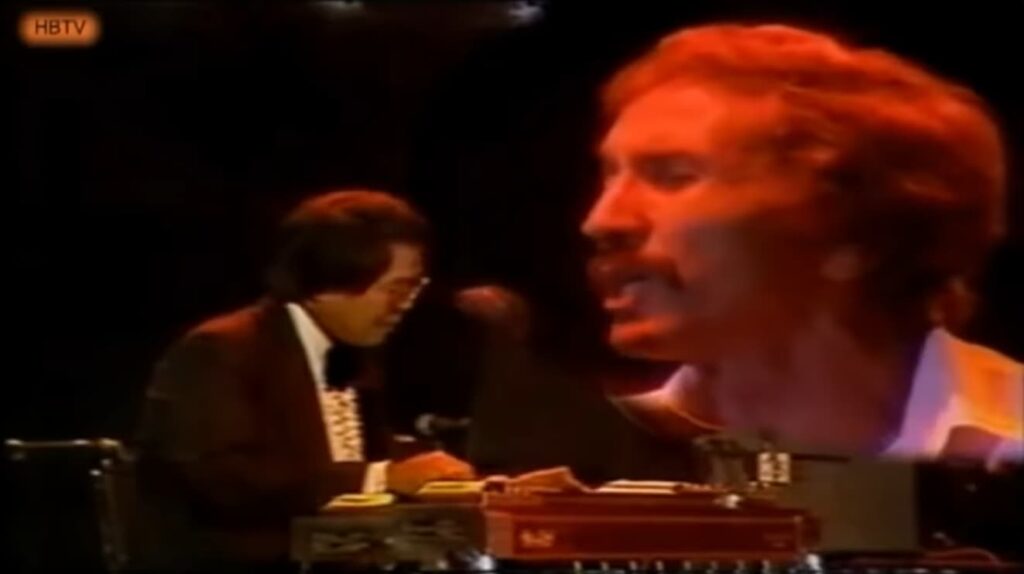
A Final Song Beneath the Opry Lights — Marty Robbins’ Last Concert Became a Quiet Farewell to One of Country Music’s Most Storytelling Voices
On the night of December 2, 1982, the stage of the Grand Ole Opry in Nashville witnessed a moment that would later carry deep historical meaning. That evening marked the final concert appearance of Marty Robbins, one of the most distinctive voices in the history of country music. At the time, the audience could not have fully realized that the man standing beneath the Opry’s warm stage lights was nearing the closing chapter of a remarkable career that had shaped American music for nearly three decades.
By 1982, Marty Robbins had already become a legendary figure in country music. His career began in the early 1950s, and over the following years he built a catalog filled with songs that blended storytelling, western imagery, and emotional sincerity. Among his most celebrated recordings was “El Paso,” released in 1959. That dramatic ballad about love and fate on the Texas border became one of the most iconic songs in country music history. It reached No. 1 on the Billboard Hot 100 in 1960, a rare achievement for a country recording at the time, and also topped the Billboard Country chart. The song later won the Grammy Award for Best Country & Western Recording in 1961.
Throughout the 1960s and 1970s, Marty Robbins continued to explore different musical styles. His albums often moved effortlessly between traditional country, western ballads, and even elements of pop and folk. Songs like “Don’t Worry,” “Devil Woman,” and “My Woman, My Woman, My Wife” demonstrated the range of his musical storytelling. The latter became another milestone, reaching No. 1 on the Billboard Hot Country Songs chart in 1970 and earning Robbins a Grammy Award for Best Country Song.
Yet beyond the chart positions and awards, Robbins possessed a rare gift for narrative songwriting. His voice carried the tone of a storyteller who understood the quiet drama of ordinary lives. In songs like “Big Iron” and “Running Gun,” he transformed western legends into vivid musical scenes that listeners could almost see unfolding in front of them.
By the early 1980s, Robbins remained deeply connected to the Grand Ole Opry, the institution that had long served as the heart of country music. Performing there was never just another show for him. The Opry represented tradition, community, and the long history of country storytelling that had shaped his own career.
During that December 2, 1982 performance, Robbins appeared as he often had throughout the years: calm, confident, and fully at home on the stage. His voice still carried the same smooth clarity that had defined his recordings since the 1950s. There was no dramatic announcement that night, no sense of finality in the air. It was simply another evening of music at the Opry.
Only days later, however, Robbins suffered a heart attack and underwent surgery. He passed away on December 8, 1982, at the age of 57. In hindsight, that quiet performance at the Opry became his farewell to the stage that had welcomed him so many times before.
Looking back today, the image of Marty Robbins performing at the Grand Ole Opry in those final days carries a deep emotional resonance. The moment feels less like an ending and more like the closing scene of a long musical journey.
His songs remain vivid pieces of storytelling, echoing through country music history. From the desert drama of “El Paso” to the reflective tenderness of “My Woman, My Woman, My Wife,” Robbins left behind a body of work that continues to shape how country music tells its stories.
That final appearance beneath the Opry lights reminds listeners of something important about great artists. Their voices may eventually fall silent on stage, but the stories they told in song continue to travel far beyond that final note.
And in the enduring recordings of Marty Robbins, those stories still ride across the open landscape of American music.