
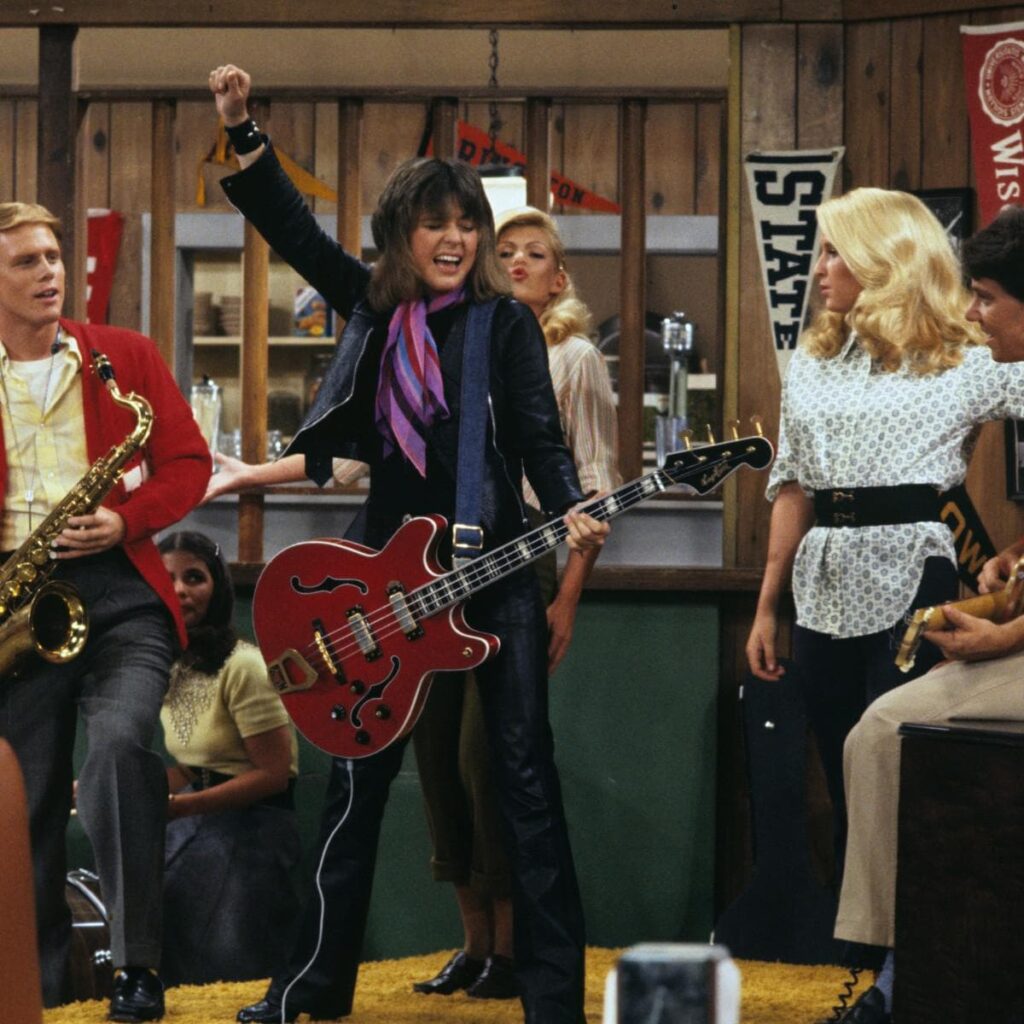
From chart-topping hits to cultural icon—her journey as a groundbreaking female rock artist
In the landscape of 1970s rock music, few artists stood out as boldly and unapologetically as Suzi Quatro. At a time when the industry largely confined women to the role of vocalists, Quatro shattered expectations and carved her own identity—not just as a singer, but as a powerful bassist and bandleader.
Born Susan Kay Quatro in Detroit, Michigan, she grew up surrounded by music. Her family encouraged performance and creativity, allowing her to develop her passion from an early age. Inspired by the raw energy of Elvis Presley and the rapidly evolving rock and roll scene, Quatro picked up the bass guitar as a teenager. It wasn’t long before she developed a commanding stage presence that would later become her signature.
Her rise to international fame came quickly. With explosive hits like Can the Can, 48 Crash, and Devil Gate Drive, Quatro dominated charts across Europe and Australia. These songs were not just commercial successes—they were statements. They introduced the world to a new kind of female artist: bold, fearless, and unapologetically in control.
What truly set Quatro apart was her refusal to conform. In an era when female musicians were rarely seen handling instruments—especially in rock bands—she proudly took center stage with her bass guitar. Dressed in her iconic leather outfits and backed by electrifying performances, she proved that women could command the rock stage with the same intensity and authority as their male counterparts.
Beyond music, Quatro expanded her influence into television. Her role as Leather Tuscadero on the popular series Happy Days introduced her to an even wider audience, blending her rock persona with mainstream entertainment. Yet, even as her acting career flourished, music remained at the heart of everything she did.
As the decades passed, Quatro continued to evolve. She experimented with softer rock styles and collaborated with other artists, showing her versatility while staying true to her energetic roots. Her career longevity speaks not only to her talent but also to her resilience in an ever-changing industry.
Today, Suzi Quatro’s legacy is undeniable. She didn’t just succeed in rock music—she changed it. By challenging norms and breaking barriers, she paved the way for countless female musicians who followed. More than just a star of the 1970s, she remains a symbol of confidence, independence, and the enduring power of rock and roll.