
A quiet confession of love and loss, where memory becomes the only language left between two hearts that no longer understand each other
Few songs in the folk canon carry the emotional weight and poetic clarity of “If You Could Read My Mind” by Gordon Lightfoot. Released in 1970 as part of the album Sit Down Young Stranger—later reissued under the song’s name due to its success—the track became a defining moment not only in Lightfoot’s career but in the broader landscape of introspective songwriting. It climbed to No. 5 on the Billboard Hot 100 in the United States and reached No. 1 on the Canadian charts, solidifying its place as one of the most beloved ballads of its era.
But statistics alone cannot capture what this song truly represents. At its core, “If You Could Read My Mind” is not simply about heartbreak—it is about the quiet unraveling of a relationship, the kind that fades not with anger, but with a weary understanding that something once beautiful has slipped beyond repair. Written during a deeply personal period in Lightfoot’s life, the song reflects the emotional aftermath of his first marriage. It is, in many ways, a confession—gentle, restrained, yet devastatingly honest.
What makes the song so enduring is its lyrical sophistication. Lightfoot does not rely on clichés or dramatic declarations. Instead, he paints with images—ghosts in wells, castles dark and abandoned, paperback novels where the ending is already known. These metaphors are not ornamental; they are essential. They allow the listener to step inside a mind caught between memory and resignation. Lines like “I never thought I could feel this way” resonate not because they are grand, but because they are painfully familiar.
Musically, the arrangement is understated, almost fragile. The soft acoustic guitar, Lightfoot’s warm yet slightly weathered voice, and the subtle orchestration create a space where every word matters. There is no urgency here, no attempt to impress—only a quiet invitation to listen, to reflect, perhaps even to remember. It is this restraint that gives the song its power. In a decade increasingly defined by bold experimentation and louder sounds, Lightfoot chose intimacy—and in doing so, created something timeless.
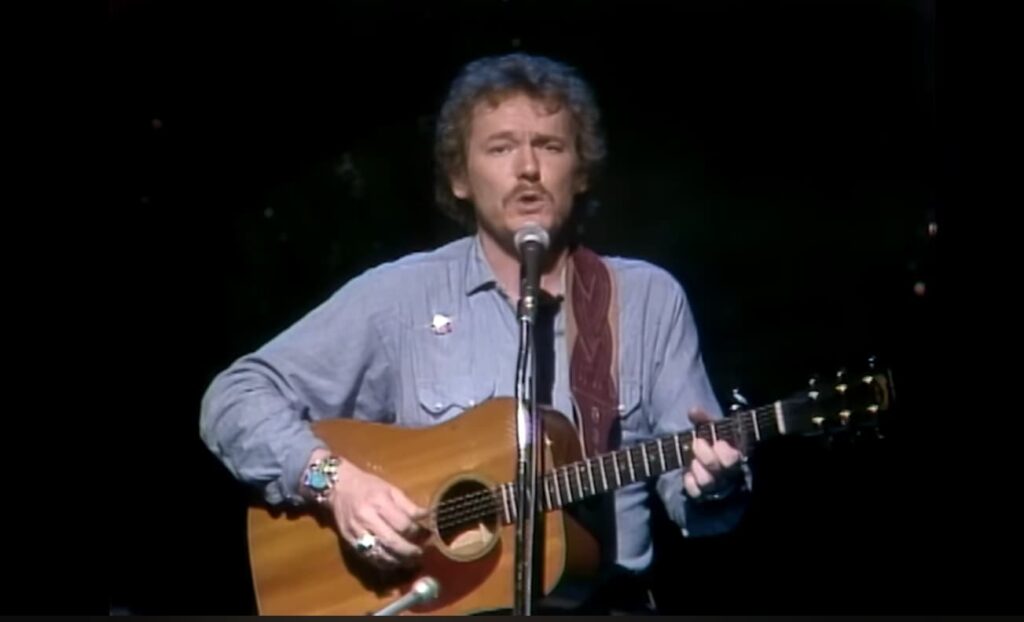
The song gained even wider recognition when Gordon Lightfoot performed it on The Midnight Special, a television program that brought live music into homes across America during the early 1970s. Those performances carried a certain authenticity that studio recordings sometimes lack. Watching him sit with his guitar, delivering the song without embellishment, one could sense that this was not merely a performance—it was a moment of truth, shared quietly with anyone willing to listen.
Over the years, “If You Could Read My Mind” has been covered by numerous artists, each bringing their own interpretation, yet none quite capturing the original’s delicate balance of vulnerability and control. That is perhaps the mark of a truly great song—it resists imitation, because its essence is so deeply tied to the voice and experience that created it.
There is something profoundly human in this piece. It does not offer resolution, nor does it attempt to heal. Instead, it acknowledges the complexity of love—the way it can linger even after it has ended, the way words can fail when they are needed most. And in that acknowledgment, it offers a quiet kind of comfort.
Decades later, the song remains as poignant as ever. It speaks to anyone who has ever looked back on a relationship and wondered what went wrong, or wished, even for a fleeting moment, that another person could truly understand what lay hidden beneath the surface. In the end, Gordon Lightfoot did what few songwriters can do—he turned a private sorrow into a shared experience, and in doing so, gave it a kind of lasting grace.