
A Bright Invitation to Joy That Carries the Echo of Youth, Even as Time Quietly Moves On
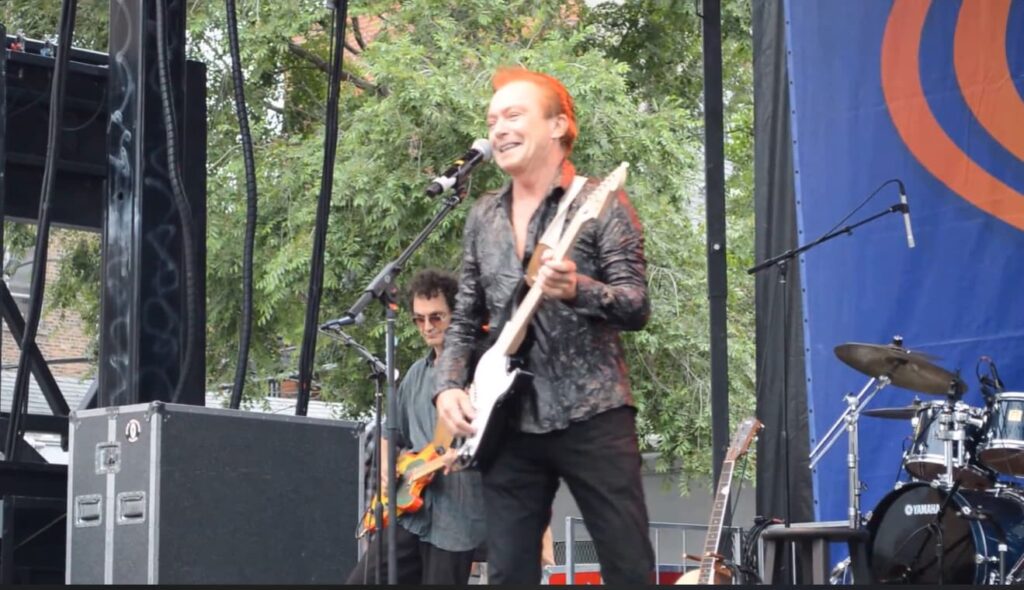
There is something unmistakably timeless about “Come On Get Happy”, especially when it is carried by the voice of David Cassidy. Though the song itself first gained prominence in 1970 as the theme for the television series The Partridge Family, it found renewed emotional depth decades later in performances like the one recorded on August 11, 2013, in Chicago. By then, the song was no longer just a cheerful anthem—it had become a reflection, a memory, and in many ways, a conversation between past and present.
Originally written by Wes Farrell and Danny Janssen, “Come On Get Happy” was never released as a conventional charting single in the United States during its initial run. As a result, it did not occupy a formal position on the Billboard Hot 100. However, its cultural impact was undeniable. The associated album, “The Partridge Family Album” (1970), achieved commercial success, and the show itself turned David Cassidy into one of the most recognizable pop figures of the early 1970s. The song became inseparable from that moment in time—a kind of musical shorthand for optimism, youth, and the promise of something brighter just ahead.
But to understand the significance of the 2013 Chicago performance, one must look beyond the song’s origins.
By the time David Cassidy stepped onto that stage, decades had passed since the height of his fame. The audiences who once screamed his name had grown quieter, their lives shaped by years that moved far beyond the innocence of early television pop. And yet, when the opening notes of “Come On Get Happy” began, something remarkable happened. The song did not feel dated. It felt familiar—like a photograph rediscovered, still holding the warmth of the moment it captured.
Cassidy’s voice, naturally altered by time, carried a different kind of weight. Where the original recording was bright and effortless, the live performance revealed something more layered. There was a gentleness in his delivery, a subtle awareness of everything that had come before. He was no longer simply inviting the audience to “get happy”—he was reminding them of what that happiness once meant, and perhaps what still remained of it.
The lyrics themselves are deceptively simple. They speak of leaving worries behind, of stepping into a lighter state of mind, of choosing joy even when it feels distant. In youth, those words can feel like a promise. In later years, they take on a different meaning—they become a choice.
Musically, the arrangement remained faithful to its roots, retaining the upbeat tempo and bright instrumentation that defined its original charm. Yet in a live setting, especially one shaped by the passage of time, those elements took on a new dimension. The rhythm felt less like a push forward and more like a gentle return—a way of revisiting something that had never truly been lost, only set aside.
There is also something deeply human in the way David Cassidy approached the song in his later years. He did not attempt to recreate the past exactly as it was. Instead, he allowed the performance to exist as it was in that moment—imperfect, sincere, and undeniably real. That honesty gave the song a quiet dignity, transforming it from a piece of entertainment into something closer to reflection.
For those who listened, the experience was not just about the music. It was about memory—the kind that does not arrive all at once, but slowly, carried by familiar melodies and long remembered words. “Come On Get Happy” became a bridge between then and now, connecting moments that might otherwise have remained separate.
And perhaps that is why the song continues to endure.
Not because it promises happiness in the way it once did, but because it reminds us that such moments existed—and that, in some small way, they still do.