
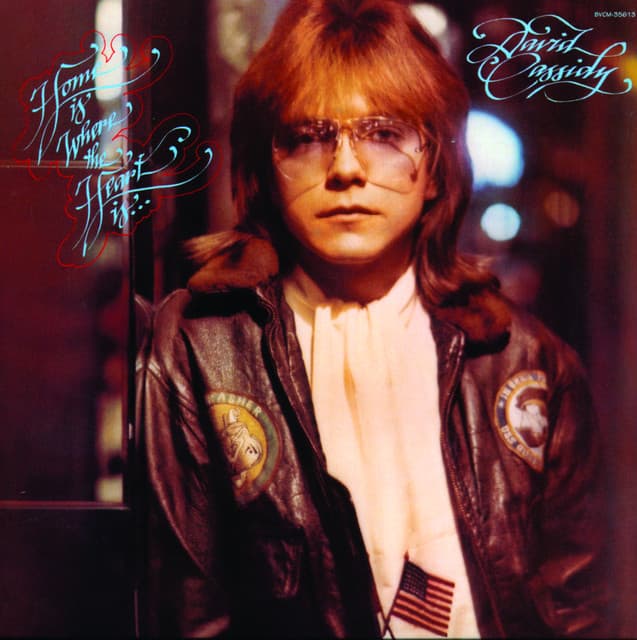
A plea for devotion and vulnerability, where youthful passion meets the quiet weight of emotional surrender
Released in 1972, “Take This Heart” stands as one of the most emotionally revealing recordings in David Cassidy’s solo career. At a time when his voice was already inseparable from a generation’s memories, this song offered something deeper and more exposed. “Take This Heart” climbed to No. 5 on the Billboard Hot 100, confirming its commercial success, while also establishing itself as a defining moment of artistic sincerity. The song was featured on Cassidy’s second solo album, Rock Me Baby, a record that signaled a gradual shift from teen phenomenon toward a more personal musical expression.
What makes “Take This Heart” endure is not merely its chart position, but the emotional honesty that runs through every line. The song does not posture or perform romance. Instead, it unfolds like a confession. The narrator offers love not as conquest or certainty, but as risk. To give one’s heart fully, without guarantee, is the song’s central truth. This vulnerability resonated powerfully at the time of its release and continues to echo decades later.
Musically, “Take This Heart” is rooted in the polished pop craftsmanship of the early 1970s, yet it avoids excess. The arrangement is warm and restrained, built around gentle guitar lines, soft percussion, and subtle orchestration that never overwhelms the vocal. This careful balance allows David Cassidy’s voice to remain the emotional center. His performance is earnest and controlled, revealing longing without melodrama. There is a sense of quiet intensity in the way he phrases each lyric, as though the words themselves carry personal consequence.
The song was written by David Blume, whose compositional style favored emotional clarity over lyrical complexity. That simplicity works beautifully here. Lines are direct, almost conversational, reinforcing the feeling that this is not a performance for an audience but a moment shared privately. The absence of irony or detachment gives “Take This Heart” a timeless quality. It belongs to an era, yet it never feels dated.
The album Rock Me Baby represented an important stage in David Cassidy’s career. While he remained immensely popular, there was a growing desire to be heard as more than a symbol of youth culture. “Take This Heart” became one of the clearest expressions of that ambition. It showed a willingness to slow down, to explore emotional fragility rather than excitement. In doing so, Cassidy connected with listeners on a more enduring level.
At the time of its release, the song also benefited from strong radio support, particularly on stations that favored melodic, emotionally driven pop. Its success on the charts reflected not only Cassidy’s popularity, but the song’s ability to speak across generational lines. It carried a maturity that suggested love as commitment rather than fantasy, an idea that felt especially meaningful amid the cultural shifts of the early 1970s.
The meaning of “Take This Heart” lies in its acknowledgment of emotional risk. It recognizes that love is not safe, yet insists that it is worth offering fully. There is no promise of permanence, only sincerity. This perspective gives the song its quiet power. It does not demand reassurance. It simply asks to be trusted.
Looking back, “Take This Heart” remains one of David Cassidy’s most respected recordings, often cited as an example of his ability to convey depth and nuance beyond his public image. It captures a moment when pop music allowed space for reflection, when vulnerability could exist without apology.
Today, the song feels like a letter written in careful handwriting, its edges softened by time. It reminds the listener that love, when offered honestly, leaves a lasting impression even when circumstances change. Through “Take This Heart”, David Cassidy left behind more than a hit record. He offered a moment of emotional truth that continues to resonate, quietly and persistently, long after the final note fades.