
A quiet meditation on illusion and truth—“Don Quixote” reflects the fragile line between what we believe in and what the world quietly takes away
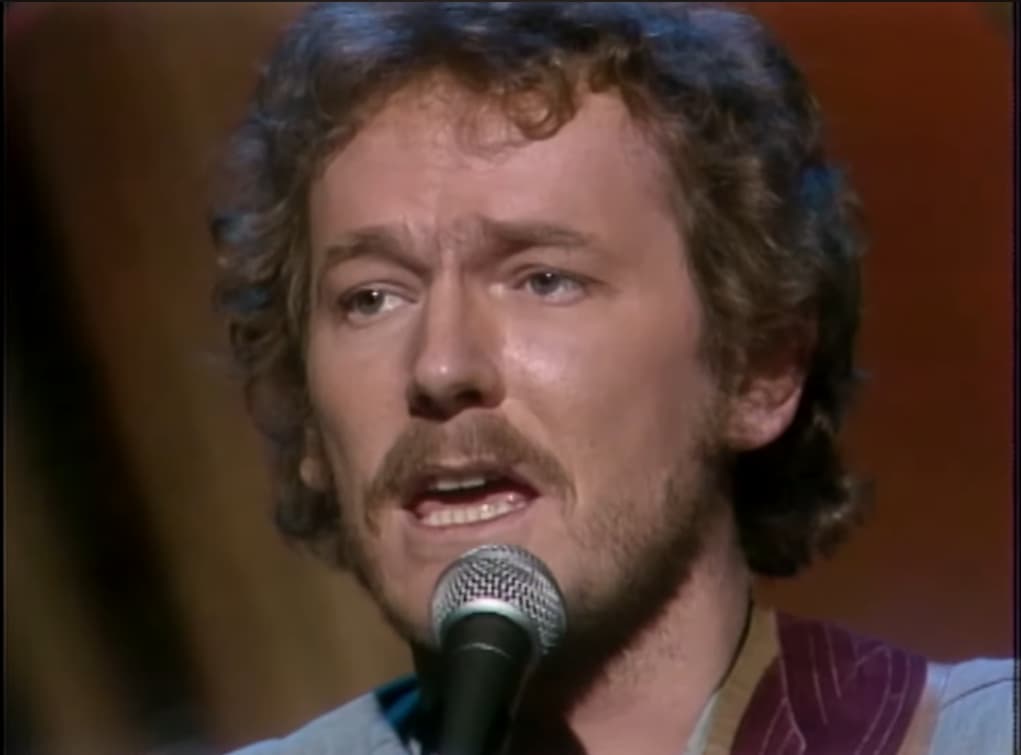
When Gordon Lightfoot performed “Don Quixote” on The Midnight Special on February 22, 1974, he was presenting a song that had already begun to define a more introspective phase of his writing. Originally released in 1972 as the title track of the album Don Quixote, the song itself was not issued as a major charting single, yet the album reached No. 42 on the Billboard 200 and earned critical recognition for its depth and cohesion. In many ways, “Don Quixote” stands as one of Lightfoot’s most revealing compositions—not because of commercial success, but because of what it chooses to explore.
The song draws its inspiration, at least in name, from the literary figure created by Miguel de Cervantes, a man who famously mistook windmills for giants and lived within a world shaped as much by imagination as by reality. But Lightfoot does not retell that story. Instead, he uses it as a quiet framework—a way of examining the distance between how things appear and how they truly are.
By the time of the 1974 television performance, Lightfoot had refined a style that relied less on ornament and more on atmosphere. His presence on stage is calm, almost reserved. There is no attempt to dramatize the narrative, no visible effort to command attention. And yet, the stillness itself becomes the focal point. It invites the listener to lean in, to listen more closely, to follow the song not as entertainment, but as reflection.
Lyrically, “Don Quixote” unfolds with a subtle tension. There is admiration for the dreamer—the one who continues to believe despite evidence to the contrary. But there is also an undercurrent of quiet resignation, a recognition that belief alone cannot alter reality. Lightfoot’s words do not dismiss the dream. They simply observe its limits.
The arrangement mirrors this emotional balance. Built around gentle acoustic guitar and minimal accompaniment, the song leaves space—space for thought, for interpretation, for the kind of silence that often carries more meaning than sound. There is a deliberate pacing here, unhurried and steady, allowing each line to settle before the next begins. It is a style that resists urgency, choosing instead to move at the pace of reflection.
In the context of early 1970s music, this approach stands in contrast to many of the dominant trends. While other artists leaned toward complexity, experimentation, or spectacle, Gordon Lightfoot remained committed to clarity and restraint. His songs did not seek to overwhelm. They sought to endure.
What gives “Don Quixote” its lasting resonance is its universality. The figure at its center is not confined to literature. It appears in everyday life—in moments when hope persists beyond reason, when belief continues despite quiet evidence to the contrary. The song does not judge these moments. It simply acknowledges them, recognizing both their beauty and their inevitability.
The Midnight Special performance captures this duality with remarkable precision. There is a sense that Lightfoot understands exactly what the song represents, yet chooses not to explain it. He allows it to exist on its own terms, trusting the listener to find meaning within it. This trust is part of what defines his work. He does not guide the emotional response. He creates the space for it.
Over time, “Don Quixote” has come to feel less like a portrait of a fictional character and more like a quiet reflection on the human condition itself. The ideals we hold, the realities we face, and the space between them—this is where the song lives. Not in resolution, but in recognition.
In the end, Gordon Lightfoot offers no answers, no clear conclusions. He simply presents the question, gently and without insistence: what remains when the illusion fades, and what part of us continues to believe anyway?