
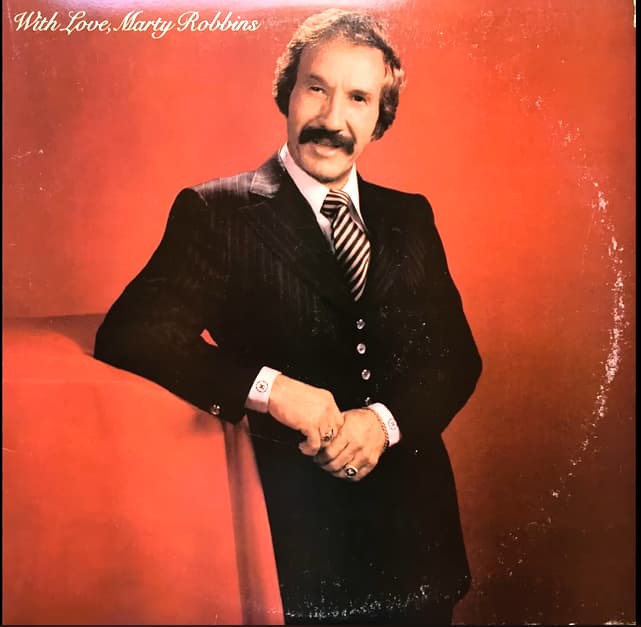
Marty Robbins – The Final Sunset of 1982: When the West’s Greatest Storyteller Left the Stage
The winter of 1982 remains etched in the hearts of music lovers as a season of profound quietude, a time when a towering pillar of the American songbook finally found rest. On December 8, Marty Robbins—the man who breathed life into the “Gunfighter,” the “Gentle Giant” who conquered both the Grand Ole Opry and the asphalt of NASCAR—passed away at the age of 57. It was a departure that felt like the closing of an entire chapter of our history. For the sophisticated listener who grew up under the spell of his “Velvet Voice,” that cold December didn’t just mark the end of a career; it marked the silence of a narrator who had spent three decades making the vast, dusty trails of the West feel as intimate as a conversation across a kitchen table.
The “backstory” of those final months was a testament to Marty’s unyielding spirit. Despite suffering from a series of severe cardiovascular challenges dating back to 1969, he never retreated. Just weeks before his passing, he was inducted into the Country Music Hall of Fame, a fitting “ranking” for a man who had charted 94 hits and won two Grammy Awards. His final single, “Honkytonk Man,” was climbing the charts that very winter, proving that even as his heart grew weary, his artistry remained as sharp as a desert horizon. He left the stage not as a fading star, but as a titan at the peak of his emotional powers
A Legacy of “Passion and Danger” and the Ultimate Foundation
For those of us who have lived through the many winters since 1982, reflecting on Marty Robbins is a journey through the duality of the human soul. He was a man who lived for the “Passion and Danger” of life—whether it was the high-stakes drama of “El Paso” or the terrifying speeds of Talladega. Yet, he was also the man who penned “My Woman, My Woman, My Wife,” a song that prioritized the “foundation” of home and the eternal love of his wife, Marizona, above all else.
“Lord, give her my share of Heaven if I’ve earned any here in this life…”
As we navigate our later years, these words carry a weight that only time can provide. Marty’s music was a “souvenir” of a time when masculinity was defined by both rugged independence and tender devotion. He showed us that a man could be a “Titan” and still be vulnerable enough to admit his dependence on those he loved. In the winter of 1982, we didn’t just lose a singer; we lost a companion who had harmonized with our own lives, from the “desert dust” of our struggles to the “happy homes” of our triumphs.
The Eternal Echo of the “Gentle Giant”
As the curtain fell on that December night, the legacy of Marty Robbins transitioned from the airwaves into the eternal. He remains a monolith of authenticity because he never stopped being the boy from Glendale, Arizona, who looked at a barren landscape and saw a world of stories. He taught us that “Mother Knows Best,” that “Hawaii” is a state of mind, and that the “fuzz” of life’s mistakes can be turned into the “epic ballads” of our memories.
His voice remains a sanctuary—a place where the “Country Gentleman” still sings for the working class, the dreamers, and the ones who still believe in the power of a story well-told. That final goodbye in 1982 was merely the beginning of his immortality.
 Music Legend