
Marty Robbins – “The Cinematic Voyager”: Where the Desert Dust Meets the Silver Screen of Sound
In the grand gallery of 20th-century music, Marty Robbins stands not merely as a singer, but as a master director of the ear. Every track he recorded—particularly during his golden era with Columbia Records—was more than a melody; it was a widescreen, Technicolor experience. He possessed the unique ability to take the “desert dust” of his Arizona upbringing and refine it into a cinematic journey that transported the listener from the comfort of their living room to the high-stakes drama of the West Texas frontier. Whether he was crooning a smooth pop-country crossover or narrating a life-or-death struggle, Marty ensured that every note carried the weight of a movie scene.
The “ranking” of Marty Robbins as a cinematic visionary was solidified with his 1959 magnum opus, Gunfighter Ballads and Trail Songs. At a time when the industry favored the “three-minute radio edit,” Marty pushed for sprawling, narrative-driven epics. He understood that the human spirit craves a saga. By blending his “Velvet Voice” with the rhythmic gallop of Spanish-style guitars and the haunting whistles of the trail, he created a genre that was as much visual as it was auditory. He didn’t just sing about the “Gunfighter”; he placed you in the dusty street at high noon, the smell of sagebrush and the tension of the draw hanging heavy in the air.
The Architecture of the Epic Ballad
For the sophisticated listener who has spent decades appreciating the finer points of storytelling, Marty’s work is a masterclass in pacing and atmospheric detail. He used his voice as a camera, zooming in on the “foundation” of a character’s heart before panning out to the “passion and danger” of their surroundings. In his most famous cinematic journey, “El Paso,” he achieved what few artists ever have: a song that feels like a full-length feature film.
“I see the white puff of smoke from the rifle… I feel the bullet go deep in my chest.”
With these words, Robbins utilized a “first-person” perspective that was revolutionary. He forced the listener to inhabit the protagonist’s final moments, making the “farewell” feel visceral and real. This wasn’t just “entertainment”; it was a “souvenir” of the human condition—a reminder that our lives are often defined by the bold, sometimes tragic, journeys we take for love and honor.
A Legacy of Technical Brilliance and Emotional Depth
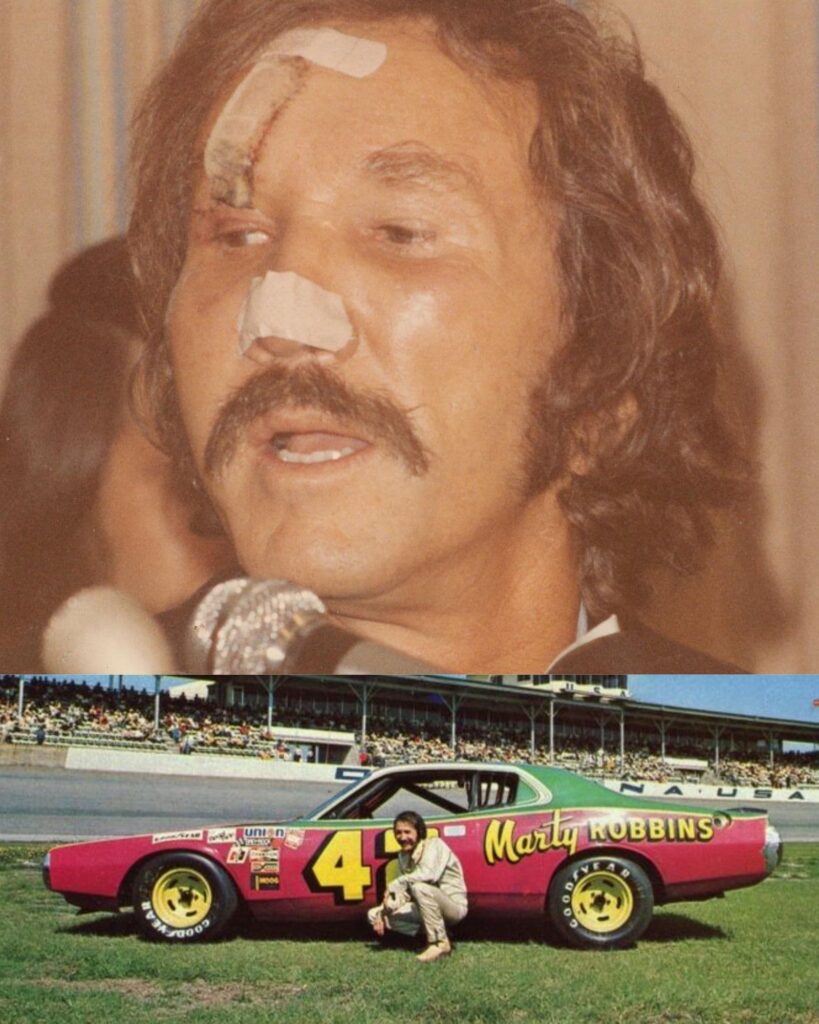
What made Marty’s cinematic journeys so enduring was his refusal to be a “one-note” artist. He was a “Titan” of versatility. He could transition from the gritty, “fuzz-guitar” realism of “Don’t Worry” to the swaying, lush scenery of “Hawaii” or the sentimental warmth of “My Woman, My Woman, My Wife.” For our generation, his music represents a time when an artist was expected to be a polymath—a racecar driver, a storyteller, a pilot, and a poet.
As we look back at the landscape of his career, we see a man who took the “working class” ethos of his youth and elevated it to the level of myth. He taught us that every life is a cinematic journey worth chronicling, and every heart has a “happy home” it is searching for. Marty Robbins remains the ultimate guide through these musical landscapes, his voice a steady hand on the reins as we ride through the canyons of his imagination.
 Music Legend