
A Voice Steeped in Heartache — Vern Gosdin and the Timeless Loneliness of Country Soul
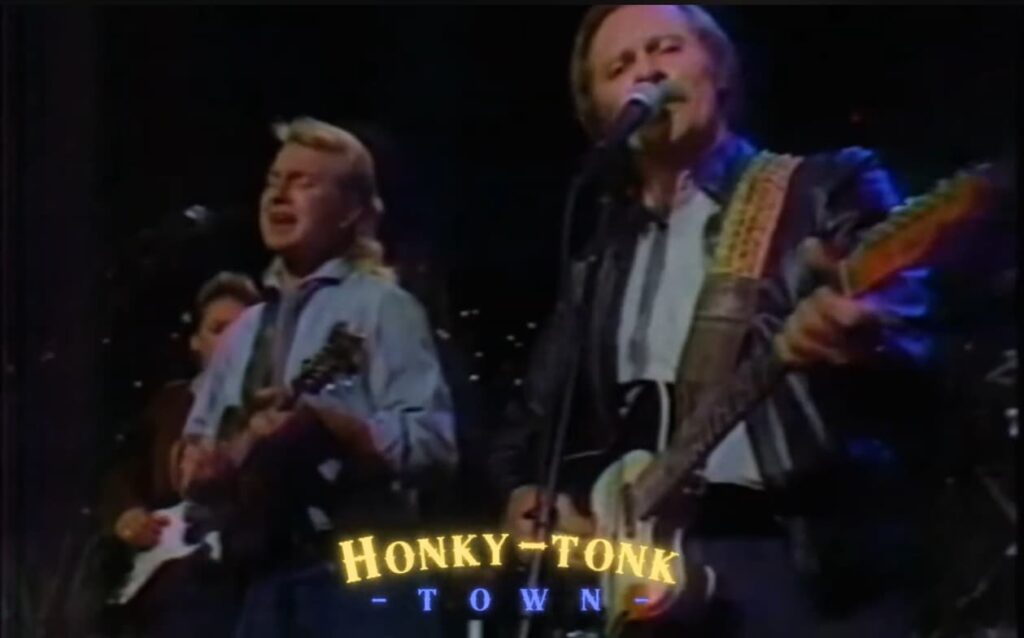
There are voices in country music that do more than sing — they linger, they ache, they tell truths too heavy for ordinary conversation. Vern Gosdin possessed one of those rare voices. His appearance on Austin City Limits (1986) stands as a quiet, deeply affecting reminder of what country music was always meant to be: honest, unvarnished, and profoundly human.
By 1986, Vern Gosdin was not a newcomer chasing recognition; he was already revered within the industry as “The Voice.” Though mainstream chart dominance came slightly later, his steady climb through the late 1970s and early 1980s had established him as a songwriter and performer of exceptional emotional depth. Around this period, songs like “If You’re Gonna Do Me Wrong (Do It Right)” (which reached No. 5 on the Billboard Hot Country Singles chart in 1983) and “Slow Burnin’ Memory” (No. 10 in 1984) had solidified his presence. Not long after, his defining hit “Chiseled in Stone” would earn the CMA Song of the Year in 1989, forever linking his name to country music’s most sorrowful storytelling traditions.
But the Austin City Limits performance in 1986 captures something even more intimate than chart success. It reveals an artist in his purest form — standing under modest stage lights, letting the weight of each lyric settle gently into the silence between notes. There is no excess, no theatrical distraction. Just a man, his voice, and stories that feel lived rather than written.
The significance of Austin City Limits as a platform cannot be overstated. Since its debut in 1974, the program became a sanctuary for authenticity, favoring substance over spectacle. For Gosdin, this setting was ideal. His music never demanded attention; it earned it. And in that 1986 performance, one can sense an unspoken understanding between artist and audience — a shared familiarity with love lost, chances missed, and memories that refuse to fade.
What makes Vern Gosdin so enduring is not simply his vocal ability, though it was extraordinary. It is the emotional precision he brought to every line. His songs often revolve around heartbreak, but not in a dramatic or exaggerated way. Instead, they unfold like quiet confessions. There is dignity in his sorrow, restraint in his delivery — a kind of emotional maturity that resonates long after the final chord.
The stories behind his songs are often rooted in real experience. Before achieving solo success, Gosdin spent years navigating the industry, including time with his brother Rex in The Gosdin Brothers, even briefly intersecting with the early California country-rock scene. These years of struggle and observation shaped his songwriting, giving it a grounded authenticity that could not be manufactured.
Watching Vern Gosdin – Austin City Limits (1986), one is struck by how little has aged. The arrangements remain simple, the themes universal. There is no attempt to chase trends, no concession to changing tastes. And perhaps that is why it feels so timeless. In an era when country music was beginning to lean toward a more polished, commercial sound, Gosdin remained firmly rooted in tradition.
The meaning behind this performance goes beyond any single song. It represents a philosophy of music — one where honesty outweighs innovation, where feeling matters more than form. It reminds us that great music does not need to be loud to be powerful. Sometimes, it only needs to be true.
There is a certain stillness in revisiting this performance today. A sense of stepping into a quieter world, where emotions are not hurried, where every lyric is given room to breathe. Vern Gosdin does not ask for attention; he invites reflection. And in doing so, he leaves behind something far more lasting than a hit record — he leaves a feeling.
In the end, that is what Austin City Limits (1986) preserves so beautifully: not just the sound of a remarkable artist, but the soul of country music itself.
 Oldies Songs