
A fleeting pop dream wrapped in innocence and longing, “La La La (If I Had You)” captures the fragile optimism of young love at its most sincere.
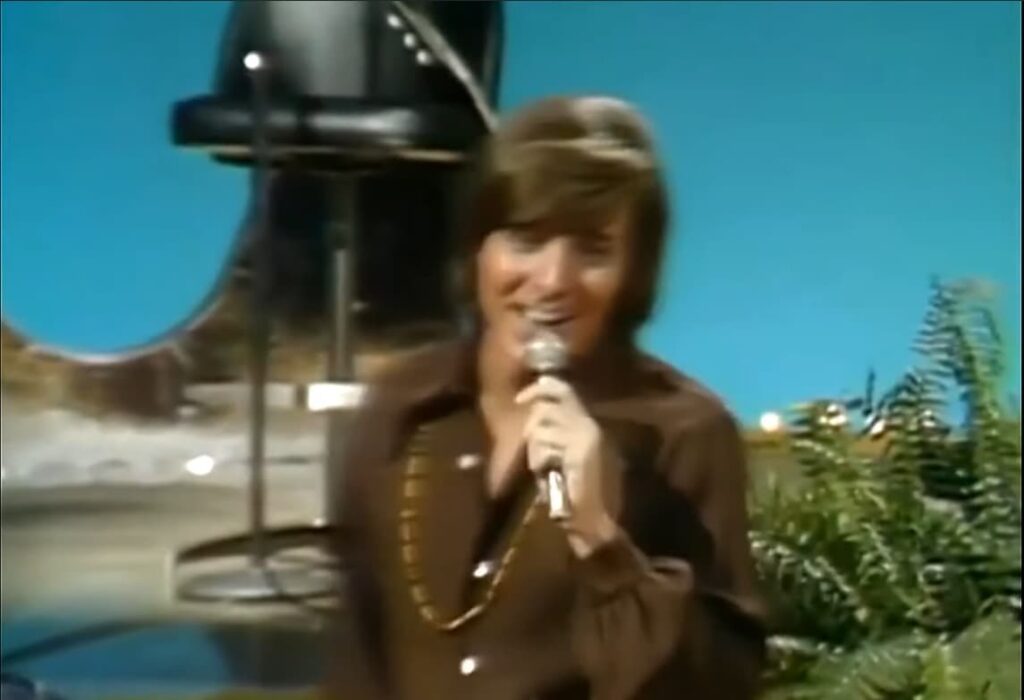
When Bobby Sherman performed “La La La (If I Had You)” live on April 11, 1971, he was standing at a very particular crossroads in popular music history—where teen idol charm, television fame, and melodic pop craftsmanship converged into something both ephemeral and unforgettable. Originally released in 1969 as part of his album “Here Comes Bobby”, the song became one of the defining pieces of his early career, reaching No. 9 on the Billboard Hot 100 and climbing even higher to No. 3 on the Cash Box Top 100. It also secured a notable place on the Adult Contemporary chart, peaking at No. 14—an early sign that Sherman’s appeal stretched beyond the teenage audience that first embraced him.
There is something deceptively simple about “La La La (If I Had You)”. Written by the prolific songwriting duo André Popp and Jack Fishman, the melody leans on a gentle, almost nursery-like repetition—“la la la”—that might, in less capable hands, feel trivial. But in Sherman’s voice, it becomes something else entirely: a quiet confession, a soft ache wrapped in sweetness. His delivery is never overworked; instead, it carries a kind of restrained yearning, as though the words themselves are too fragile to be pushed too hard.
The live performance in April 1971, preserved in stereo, offers a particularly revealing glimpse into Sherman’s artistry. By that time, he was already a household name thanks to television appearances on shows like “Here Come the Brides” and his regular presence on music variety programs. Yet on stage, stripped of studio polish, his voice retained a sincerity that was often overlooked by critics who dismissed him as merely a teen idol. Listening closely, one hears not just a performer, but a young man trying to hold onto a feeling that cannot quite be defined—hope, perhaps, or the idea of love before it has been tested by time.
The song’s meaning unfolds gently. At its core, “La La La (If I Had You)” is about longing—not the dramatic, world-shattering kind, but the quiet, persistent kind that lives in everyday moments. It speaks of imagining a life that feels just out of reach, where happiness depends on a single missing piece: “if I had you.” There is no bitterness here, no accusation. Only a wistful acceptance that some dreams exist more vividly in the heart than in reality.
What makes this song endure, decades after its chart success, is precisely that emotional restraint. In an era that would soon give way to more complex and often darker expressions of love, Sherman’s recording stands as a reminder of a more innocent emotional vocabulary. It belongs to a time when pop music could still afford to be tender without irony, when a simple melody could carry the weight of genuine feeling.
And perhaps that is why the 1971 live rendition resonates so deeply. There is a sense, listening now, that the moment itself was fleeting—even then. The early 1970s would soon move on, tastes would change, and the bright, polished world of late-60s pop idols would begin to fade. But in those few minutes, as Bobby Sherman sings “La La La (If I Had You)”, time seems to pause. The audience hears not just a song, but a memory in the making.
In retrospect, Sherman’s career may often be framed through the lens of nostalgia, but songs like this deserve more than that. They are small, carefully crafted reflections of human emotion—uncomplicated, yes, but never shallow. And in their quiet way, they remind us that sometimes the simplest expressions are the ones that linger the longest, echoing softly long after the final note has faded.