
“Amanda” is a song about love, regret, aging, and the quiet realization that time has changed everything
There are country songs that tell a story, and then there are songs that seem to open an old photograph album and leave it on the table. “Amanda” belongs to the second kind. When The Highwaymen, the legendary quartet of Johnny Cash, Willie Nelson, Waylon Jennings, and Kris Kristofferson, performed the song together, they were not presenting a new hit to the world. They were bringing an older, deeply personal country ballad into the company of four voices whose own lives had already become part of American musical history. The Highwaymen’s live recording of “Amanda”, captured at Nassau Coliseum in Uniondale, New York, in March 1990, was later released on the 2016 album Live: American Outlaws. It is important to make one distinction clear: this Highwaymen performance did not have a new 1990 chart debut. The song’s major chart success came earlier through Waylon Jennings’ 1979 recording, which reached No. 1 on Billboard’s Hot Country Singles chart and remained at the top for three weeks. (Spotify)
The story of “Amanda” begins with songwriter Bob McDill, whose writing often had a remarkable ability to make ordinary lives feel worthy of a novel. The song was first recorded as a single by Don Williams in 1973. Williams’ version reached No. 33 on the Billboard Hot Country Singles chart, but the song found its definitive commercial identity through Waylon Jennings. Jennings had actually recorded “Amanda” in 1974 for his album The Ramblin’ Man, but it was not released as a single at the time. More than four years later, Jennings returned to the recording, added new overdubs, and included it on his Greatest Hits album. The single was released in April 1979 and quickly became one of the defining country records of that year.
The chart story is extraordinary. Waylon Jennings’ “Amanda” climbed to No. 1 on the Billboard Hot Country Singles chart, where it stayed for three weeks. On Billboard’s 1979 year end country chart, it ranked No. 3. In Canada, it also reached No. 1 on the RPM Country Tracks chart. At the 1979 Country Music Association Awards, “Amanda” was nominated for Single of the Year, while Bob McDill received the nomination for Song of the Year as its songwriter.
Yet the numbers only explain why the song was successful. They do not explain why “Amanda” has endured. The emotional center of the song is a man looking backward. He has reached middle age and suddenly sees himself differently. The mirror is no longer simply a mirror. It has become an unwelcome witness. His hair, his eyes, his clothes, his guitar, and the years behind him all tell him that time has been moving while he was busy living. He remembers getting his first guitar at fourteen, and now he is past forty, still wearing jeans and still living the life of a musician.
That detail is crucial. “Amanda” is not really a conventional romantic love song. It is a song about the distance between the life a man chose and the life he might have had. The singer loves Amanda deeply, yet he also believes she deserved something different, perhaps something more respectable and secure. The repeated thought that fate should have made her a gentleman’s wife carries both tenderness and pain. There is no bitterness toward Amanda. There is no accusation. Instead, there is a strange mixture of devotion, guilt, gratitude, and resignation.
That is precisely why Waylon Jennings was such a natural voice for the song. His outlaw country identity gave the lyrics an additional layer of authenticity. The narrator is not an imaginary romantic hero. He is a working musician who has spent decades on the road, chosen guitars and stages over conventional respectability, and finally paused long enough to wonder what those choices cost the person he loved.
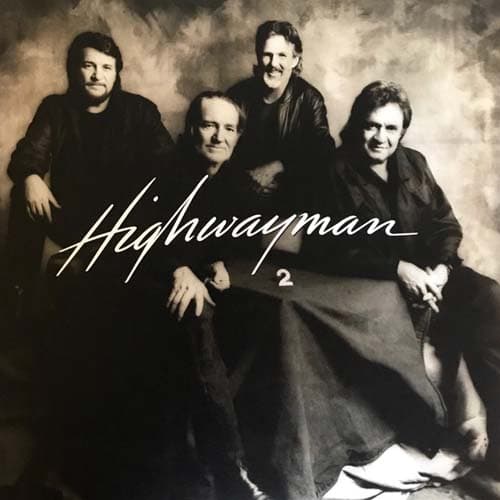
By the time The Highwaymen gathered around the same microphones, the song had acquired another dimension. Johnny Cash, Willie Nelson, Waylon Jennings, and Kris Kristofferson were no longer young men trying to prove themselves. Their voices carried years of touring, success, disappointment, friendship, marriages, mistakes, and survival. The Highwaymen had formed in the mid 1980s and released their landmark debut album Highwayman in 1985. That album reached No. 1 on the Billboard Top Country Albums chart, while the title track became a No. 1 country single.
There is something especially affecting about hearing “Amanda” within that quartet. Each voice seems to bring a different piece of the song’s history. Jennings carries the intimate connection because he had already made the song his own. Nelson brings his familiar looseness and weathered tenderness. Cash contributes the gravity of a voice that had spent decades singing about consequence, loneliness, faith, and redemption. Kristofferson, himself one of country music’s great storytellers, gives the performance another sense of lived experience.
The live recording from March 1990 at Nassau Coliseum was eventually issued decades later on Live: American Outlaws, released May 20, 2016. The album preserves a remarkable set of songs from the Highwaymen’s concert repertoire, including “Highwayman,” “Mammas Don’t Let Your Babies Grow Up to Be Cowboys,” “Good Hearted Woman,” “Ring of Fire,” “Folsom Prison Blues,” “Blue Eyes Crying in the Rain,” and “Amanda.”
Listening to “Amanda” in that setting changes the feeling of the song. In Jennings’ 1979 recording, the listener hears a country singer confronting his own aging. In the Highwaymen performance, the passage of time feels much larger. These four men are singing about a life that has already accumulated history. The words about getting older, looking into the mirror, and wondering about the road not taken inevitably carry the weight of their own careers.
That is perhaps the quiet power of “Amanda.” It does not need a dramatic betrayal, a tragic death, or a spectacular ending. Its sadness comes from something much more familiar: the realization that life cannot be lived twice. A person can love someone sincerely and still wonder whether he gave that person the life they deserved. A musician can be proud of the road he travelled and still recognize the sacrifices hidden along the way.
And when the four voices of The Highwaymen sing the song together, the years seem to gather around them. The guitars, the worn voices, the simple country melody, and the name Amanda create the feeling of an evening when the past suddenly feels very close. It is the kind of performance where the spaces between the words matter almost as much as the words themselves, because every voice sounds as though it knows something about the cost of time.
“Amanda” remains one of those rare country songs that grows older without growing old. Written by Bob McDill, first recorded by Don Williams, transformed into a major hit by Waylon Jennings, and later carried into the Highwaymen’s live repertoire, it became more than a successful country song. It became a meditation on the years that disappear quietly, the choices that cannot be reversed, and the people we sometimes understand most clearly only after much of the journey has already passed.