
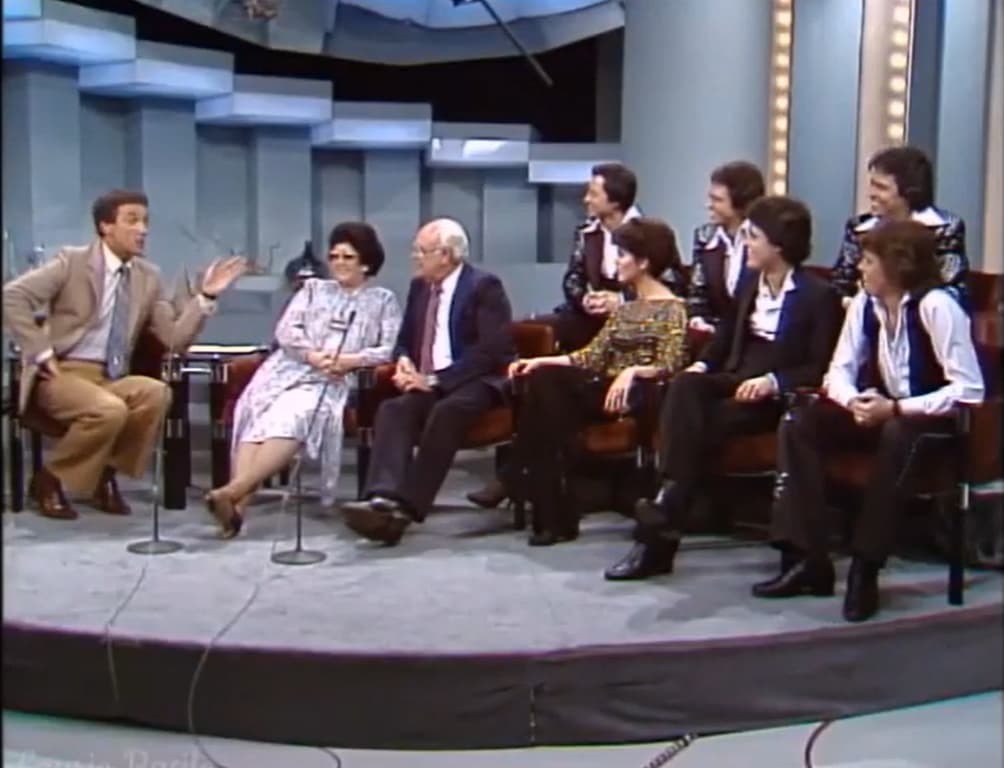
A rare moment of reflection from The Osmonds reveals the quiet strength of family, faith, and enduring harmony beyond the spotlight.
In 1980, when The Osmonds appeared on Australian television alongside their parents, the world was already well acquainted with their polished harmonies, bright smiles, and chart-topping success. Yet this particular interview offered something far more intimate than a performance—it revealed the human fabric behind the music, the values that sustained a family through the dizzying heights of fame and the inevitable shifts of public taste.
By that time, The Osmonds had already carved their place in popular music history. Throughout the early 1970s, they dominated charts across multiple countries. Songs like “One Bad Apple” reached No. 1 on the Billboard Hot 100 in 1971, while “Love Me for a Reason” climbed to No. 10 in the United States and even higher internationally. Their albums, including “Phase III” and “Crazy Horses”, showcased a group evolving musically—from bubblegum pop to something more ambitious, even daring. But by 1980, the musical landscape had shifted dramatically. Disco had waned, new wave was rising, and many acts from the previous decade found themselves reflecting on their journey rather than leading the charts.
This is precisely what makes the Australian television interview so compelling. It captures The Osmonds not at their commercial peak, but at a moment of quiet reckoning. Sitting together with their parents, George and Olive Osmond, the conversation drifts gently between memories of early struggles, the discipline required to succeed, and the unwavering importance of family unity. There is a sincerity in their words that no stage performance could replicate.
One cannot overlook the role of their parents in shaping both their music and their character. George Osmond, often seen as the guiding force behind the group’s early career, emphasized hard work and humility. Olive, with her calm presence, embodied warmth and emotional grounding. During the interview, their influence becomes unmistakably clear. The success of The Osmonds was never portrayed as an individual triumph, but rather as a collective journey—one rooted deeply in shared belief and mutual support.
What resonates most profoundly in this conversation is the absence of bitterness. By 1980, many artists in similar positions might have expressed frustration over changing trends or fading commercial dominance. Yet The Osmonds speak instead with gratitude. They reflect on their global tours, the fans who embraced them, and the opportunities that allowed them to grow not only as performers but as individuals. There is a quiet dignity in their acceptance of time’s passage—a recognition that music, like life, moves in seasons.
Listening closely, one begins to understand that their legacy extends far beyond chart positions or record sales. It lies in the emotional honesty of their journey. The interview becomes, in essence, a bridge between eras: a reminder of a time when family groups carried not just melodies, but values onto the stage. Their harmonies were not merely musical—they were symbolic of something deeper, something increasingly rare.
In retrospect, the 1980 Australian television appearance stands as a poignant snapshot. It is not about nostalgia alone, but about continuity—the enduring thread that connects youthful ambition with mature reflection. For those who remember their rise, it rekindles a sense of warmth, a return to simpler emotional truths. For others, it offers a lesson in resilience and grace.
Ultimately, The Osmonds remind us that while fame may ebb and flow, the essence of artistry—rooted in sincerity, discipline, and connection—remains timeless. And perhaps that is their most lasting harmony of all.