
“Tulsa Time” Was Never Really About Tulsa. It Was About Discovering That What We Leave Behind May Matter More Than What We Chase Ahead.
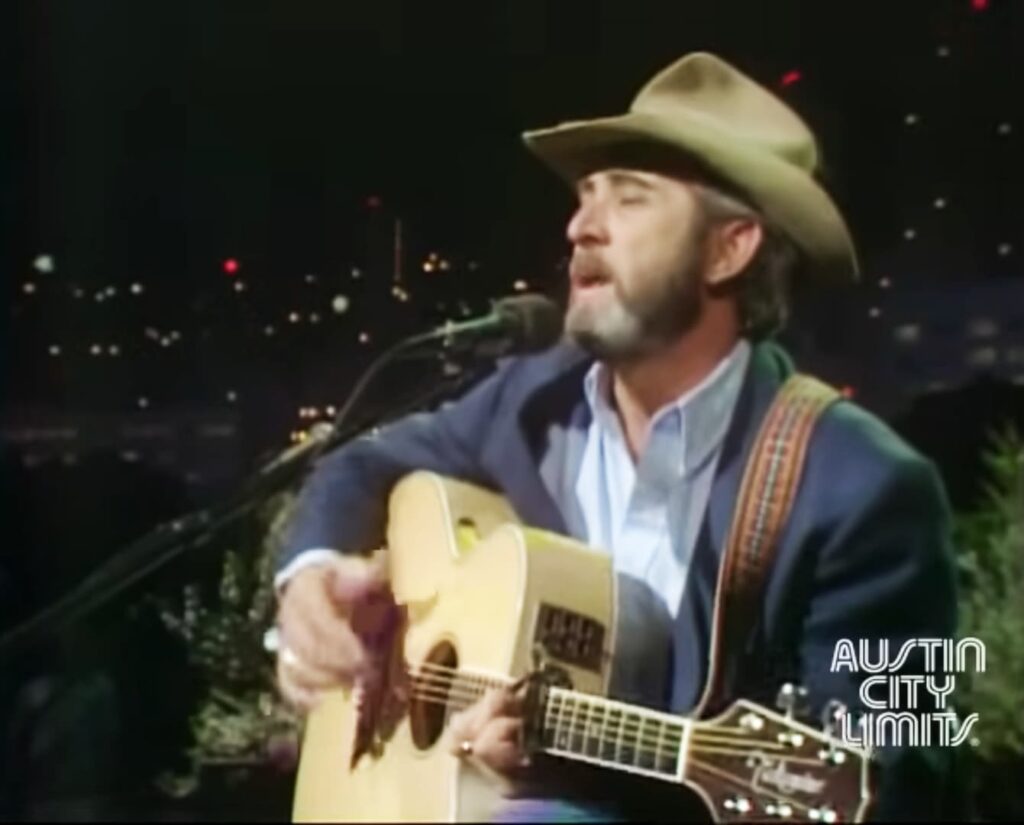
In 1983, Don Williams returned to the stage of Austin City Limits for his second appearance on the iconic television series and delivered a performance that remains as meaningful today as it was more than four decades ago. Standing calmly before the audience, accompanied by a relaxed groove and his unmistakably warm voice, Williams performed “Tulsa Time,” one of the most beloved songs ever associated with his career.
At first glance, “Tulsa Time” sounds like a simple country tune about a man leaving Oklahoma in search of a better life. The song’s narrator climbs into a Pontiac, heads west toward Arizona and California, and dreams of proving everyone wrong. His mother calls him lazy. His sweetheart thinks he is crazy. He is determined to show them that success is waiting somewhere beyond the horizon.
Yet the deeper message of the song has little to do with the city of Tulsa itself.
Written by Danny Flowers and made famous by Williams in 1978, “Tulsa Time” is really a story about home, identity, and the realization that success is not always found where we expect it to be. The narrator leaves behind familiar roads and familiar faces believing happiness exists elsewhere. When he finally reaches Hollywood, however, reality arrives with quiet honesty.
“They don’t need me in the movies, and nobody sings my songs.”
There is no dramatic heartbreak in that moment. No villain. No great tragedy. Just a simple truth that many people eventually encounter. The world is often different from the dreams we build in our minds.
That is what has allowed “Tulsa Time” to endure across generations. It tells a story shared by countless people who have left home chasing opportunity, only to discover that fulfillment is not always measured by fame, money, or recognition.
One of the song’s most memorable lines arrives in the chorus when the narrator declares that he is going to “set my watch back to it.” On the surface, he is adjusting his watch to Tulsa’s time zone. Symbolically, he is resetting something much deeper. He is recalibrating his values, his priorities, and his understanding of what truly matters.
Perhaps that message resonated even more powerfully coming from Don Williams himself. Known throughout country music as “The Gentle Giant,” Williams never relied on flashy performances or dramatic gestures. His gift was making every song feel like a conversation between old friends. Even when singing about disappointment, he sounded reassuring rather than defeated.
That quality is evident throughout this Austin City Limits appearance. By 1983, Williams was already one of country music’s biggest stars, enjoying tremendous commercial success. Yet here he was singing about a man who leaves home searching for greatness and eventually discovers that home may have been the answer all along.
There is also a touch of humor woven into the song. Lines such as “My mama called me lazy” and “My baby said I was crazy” add a human warmth that keeps the story grounded. The song never becomes bitter. Instead, it smiles knowingly at life’s lessons.
More than forty years after this performance, “Tulsa Time” continues to feel remarkably relevant. The places may change. The dreams may change. But the questions remain the same. How far must we travel before we understand where we belong? And is success found in reaching a destination, or in recognizing the value of the place we once left behind?
Watching Don Williams perform “Tulsa Time” on Austin City Limits in 1983, the answer seems quietly clear. Sometimes the longest journey is the one that leads us back home.