
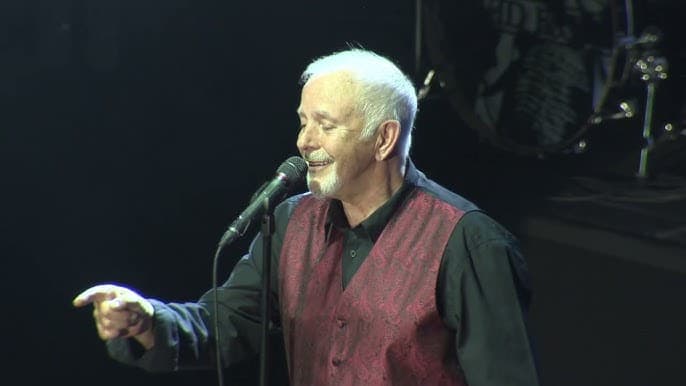
A quiet promise of hope whispered through uncertainty and time
It’s Gonna Be Alright by David Essex arrived at a moment when popular music was learning to speak softly again. Released in 1975, the song reached No. 13 on the UK Singles Chart, a respectable and telling position that reflected not chart domination but emotional connection. By this point in his career, David Essex was no longer simply the fresh faced phenomenon behind Rock On or Gonna Make You a Star. He had matured into an artist willing to trade spectacle for sincerity, and It’s Gonna Be Alright stands as one of the clearest examples of that transition.
From its opening bars, the song feels like a conversation rather than a performance. The arrangement is gentle and unforced, built around warm acoustic textures and a steady, reassuring rhythm. There is no urgency in the music, no attempt to overwhelm. Instead, David Essex sings as if he is sitting across the table, speaking quietly but with conviction. That intimacy became the song’s greatest strength.
Lyrically, It’s Gonna Be Alright is deceptively simple. The words do not promise miracles or easy resolutions. They offer something more realistic and perhaps more valuable: reassurance without illusion. The song acknowledges uncertainty, emotional fatigue, and the weight of lived experience, yet insists that survival itself carries meaning. In the mid 1970s, when many listeners were navigating social change, economic unease, and personal crossroads, this message resonated deeply.
What sets It’s Gonna Be Alright apart from typical optimism anthems is its restraint. David Essex does not shout reassurance. He offers it gently, almost cautiously, as if aware that comfort must be earned rather than declared. His vocal delivery is measured and reflective, carrying traces of vulnerability that make the message believable. This is not hope as fantasy, but hope as endurance.
The song emerged during a productive and creatively confident period for David Essex. He was balancing music, film, and stage work, including his celebrated role in That’ll Be the Day, which had already cemented his reputation as a storyteller as much as a singer. That narrative instinct carries directly into It’s Gonna Be Alright. The song unfolds like a short monologue, shaped by pauses, emphasis, and emotional shading rather than dramatic turns.
Chart wise, the No. 13 position may seem modest compared to his earlier hits, but it tells a more meaningful story. By 1975, David Essex was no longer chasing chart supremacy. His audience had grown with him, responding not just to hooks, but to honesty. It’s Gonna Be Alright found its place because it spoke to listeners who understood that reassurance matters most when it is quiet and sincere.
The cultural significance of the song lies in its universality. It does not anchor itself to a specific relationship or event. Instead, it addresses moments when confidence falters and the future feels indistinct. The song’s power comes from its refusal to dramatize those moments. It accepts them as part of the human rhythm, much like the steady pulse of the music itself.
Listening now, It’s Gonna Be Alright feels timeless. Its message has not aged, because uncertainty has not disappeared. If anything, the song feels even more relevant in hindsight. The production remains uncluttered, allowing space for reflection, while David Essex’s voice carries a warmth that feels increasingly rare in modern recordings.
Within his broader catalogue, It’s Gonna Be Alright may not be the song most frequently cited, but it is one of the most emotionally honest. It reflects an artist confident enough to lower his voice and trust the listener. That confidence, paradoxically, is what gives the song its enduring strength.
In the end, It’s Gonna Be Alright is less about reassurance and more about companionship. It does not stand above the listener offering answers. It stands beside them, acknowledging doubt while quietly insisting that endurance itself is a kind of victory. Through this song, David Essex reminds us that sometimes the most powerful promises are the ones spoken without drama, carried gently through melody and time.