
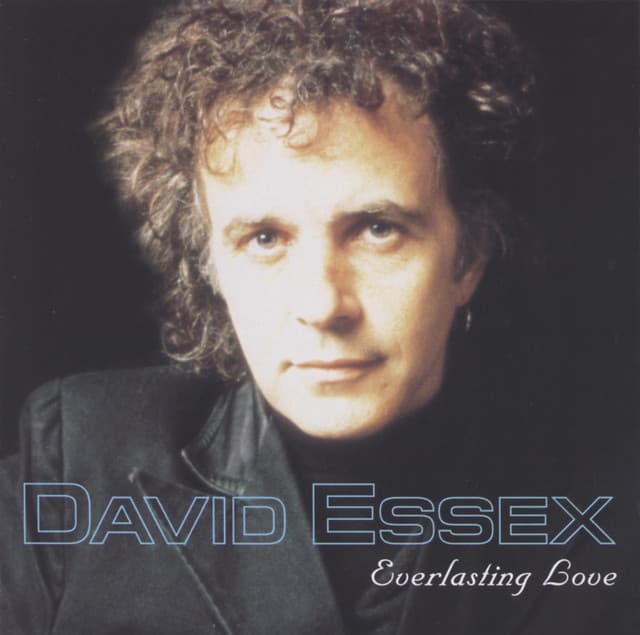
A quiet meditation on emotional distance, where love is felt most strongly through uncertainty and restraint
In the early 1970s, David Essex was emerging as one of Britain’s most distinctive singer songwriters, an artist whose work often lived between theatrical storytelling and intimate confession. “Love Is A Stranger” belongs to that quieter, more reflective side of his catalogue. Unlike the explosive success of “Rock On”, which reached No. 1 on the UK Singles Chart in 1973 and later topped the Billboard Hot 100 in the United States, “Love Is A Stranger” was not positioned as a major hit single. Instead, it appeared as an album track, valued less for commercial impact and more for its emotional atmosphere and lyrical depth. Its absence from the charts has, in many ways, allowed the song to age with dignity, untouched by the expectations of radio formulas or chart rivalry.
The song is most closely associated with David Essex’s early 1970s period, when his writing leaned toward introspection and emotional ambiguity. During this time, Essex was balancing multiple identities. He was a chart topping pop star, a respected stage actor, and a songwriter deeply interested in the psychology of love and isolation. “Love Is A Stranger” reflects this tension. It does not celebrate romance as fulfillment. Instead, it presents love as something distant, elusive, and quietly unsettling.
Musically, the arrangement is restrained and atmospheric. There is no dramatic chorus designed to demand attention. The melody unfolds slowly, carried by gentle instrumentation that allows space between the notes. This sense of space is crucial to the song’s emotional meaning. Silence becomes as important as sound, suggesting the unspoken distance between two people who feel connected yet remain emotionally apart. David Essex’s vocal delivery is measured and thoughtful, avoiding theatrical excess. He sings as if he is discovering the truth of the song while performing it, rather than declaring it with certainty.
The story behind “Love Is A Stranger” lies not in a specific publicized event, but in a broader emotional landscape. In the early 1970s, popular music was beginning to move away from idealized love stories toward more complex emotional realities. Divorce rates were rising, social roles were shifting, and certainty in relationships was no longer assumed. Essex absorbed these changes into his writing. The song speaks of attraction without familiarity, closeness without understanding. Love is present, yet it remains unknowable, almost foreign.
Lyrically, “Love Is A Stranger” explores emotional detachment rather than heartbreak. There is no dramatic ending, no betrayal, no resolution. The narrator recognizes love as something powerful but distant, something that cannot be fully possessed. This perspective gives the song its lasting resonance. It acknowledges that love does not always arrive with clarity or comfort. Sometimes it exists as a question rather than an answer.
Within David Essex’s body of work, this song represents a moment of quiet honesty. While many of his contemporaries relied on grand romantic gestures, Essex often chose understatement. He trusted the listener to recognize the emotional weight carried in small observations. “Love Is A Stranger” benefits from this trust. It does not explain itself. It simply invites reflection.
Over time, the song has come to be appreciated as part of the emotional architecture of Essex’s early albums, a reminder that his success was built not only on chart triumphs, but on songs that dared to linger in uncertainty. Its lack of chart placement does not diminish its importance. On the contrary, it highlights a different kind of achievement, one rooted in emotional authenticity rather than commercial validation.
Today, “Love Is A Stranger” feels like a late night conversation remembered years later. Its power lies in what it leaves unsaid. Through this song, David Essex captured a truth that remains quietly relevant. Love can be close and distant at the same time, deeply felt yet never fully understood. In giving voice to that paradox, he created a song that continues to resonate long after the era that produced it has faded into memory.