
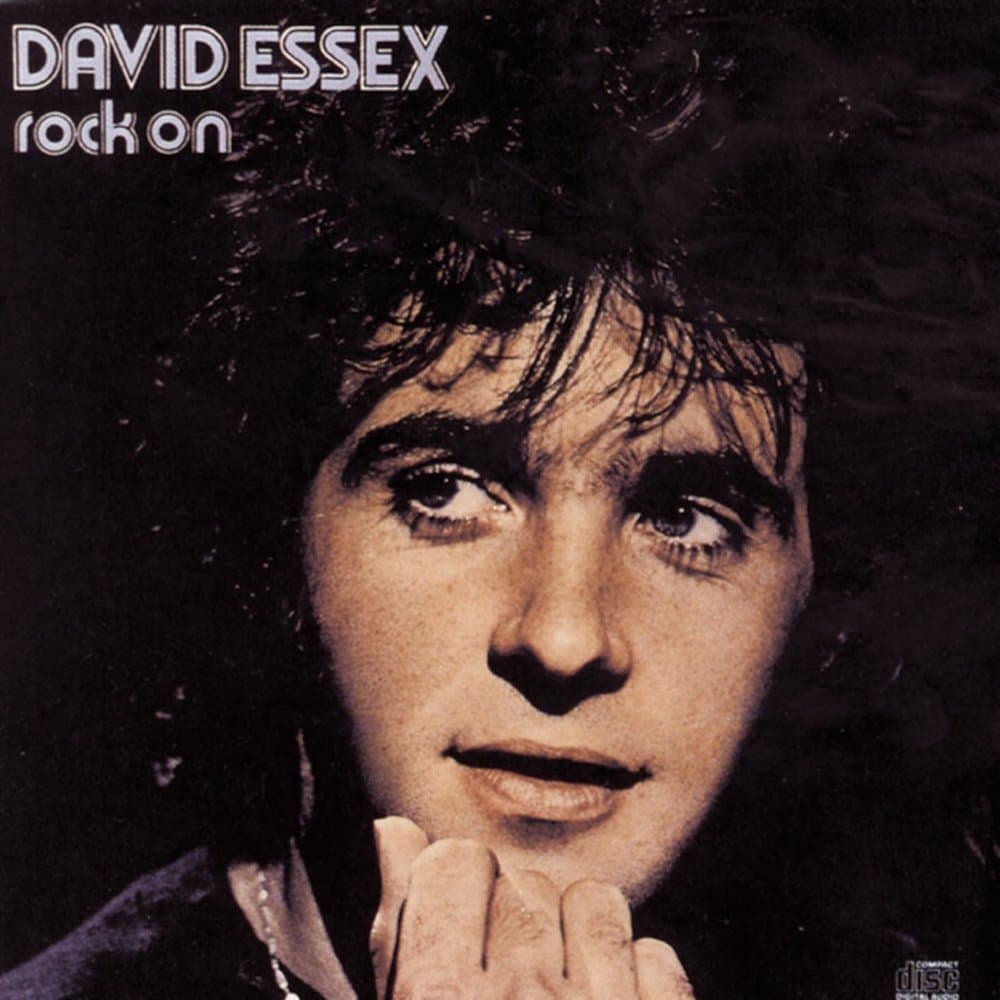
A song that stood still in time, listening to its own echo while the world hurried past
When Rock On was released in the spring of 1973, it did not behave like a conventional hit record. It drifted rather than charged forward, whispered rather than shouted, and yet it climbed steadily to the very top. The single reached number one on the UK Singles Chart in July 1973 and later crossed the Atlantic to peak at number five on the Billboard Hot 100 in the United States. For David Essex, this was not simply a commercial breakthrough. It was the moment when his quiet, introspective instincts found mass resonance, when understatement proved more powerful than spectacle.
At the time of its release, popular music was loud with certainty. Glam rock glittered, progressive bands stretched songs into grand statements, and radio was filled with confident voices declaring their place in the moment. Rock On felt oddly detached from all of that. Written by Essex himself, the song sounded like it was coming from another room, or perhaps from another time altogether. Its famous spoken style vocal, delivered in a half dream half memory tone, immediately set it apart. This was not a song demanding attention. It assumed it, gently, almost apologetically.
The story behind Rock On begins with Essex’s fascination with memory and distance. He has often described the song as being inspired by old rock and roll records heard through walls, radios playing late at night, and the strange way music can feel closer than the people around you. The lyrics do not follow a clear narrative. Instead, they circle around images of radios, shadows, and echoes, creating the sensation of listening back to something already fading. The repeated phrase rock on is not a command. It feels more like a reassurance whispered to oneself.
Musically, the track is remarkably sparse. The rhythm moves slowly, almost cautiously, anchored by a deep pulsing bass line. There are no dramatic chord changes, no soaring chorus in the traditional sense. Instead, tension builds through repetition and restraint. Essex’s vocal never fully rises. It stays low, intimate, conversational. This approach was risky in an era that favored bold hooks, but it proved irresistible. Listeners leaned in rather than sitting back.
The meaning of Rock On has often been debated, but its emotional truth is unmistakable. At its heart, the song is about standing slightly outside the present moment. It speaks to the experience of watching trends come and go, of sensing that what truly matters often lingers quietly beneath the surface. There is nostalgia here, but not the sentimental kind. It is reflective, even a little lonely. The past is not glorified. It is simply remembered, like a familiar voice heard through static.
For David Essex, the success of Rock On redefined his career. Until then, he was known primarily as a stage performer, particularly for his role in the musical Godspell. This song revealed him as a songwriter with a unique internal compass. He was not chasing charts. He was listening inward, and somehow the charts followed. The fact that Rock On became an international hit only deepened its mystique. A song so understated had crossed borders without ever raising its voice.
Over time, Rock On has taken on a life beyond its era. It has been covered, sampled, and rediscovered by new generations, yet the original recording remains definitive. There is something unrepeatable about its mood, its patience, its refusal to explain itself. It captures a moment when popular music allowed space for ambiguity, when a hit song could feel like a private thought accidentally shared.
Listening to Rock On today, one is struck by how little it has aged. Trends have shifted countless times since 1973, but the song remains suspended, untouched by urgency. It does not belong to a season or a movement. It belongs to a feeling. A quiet room, a distant radio, and a voice reminding us that even as time moves on, some sounds never truly disappear.