
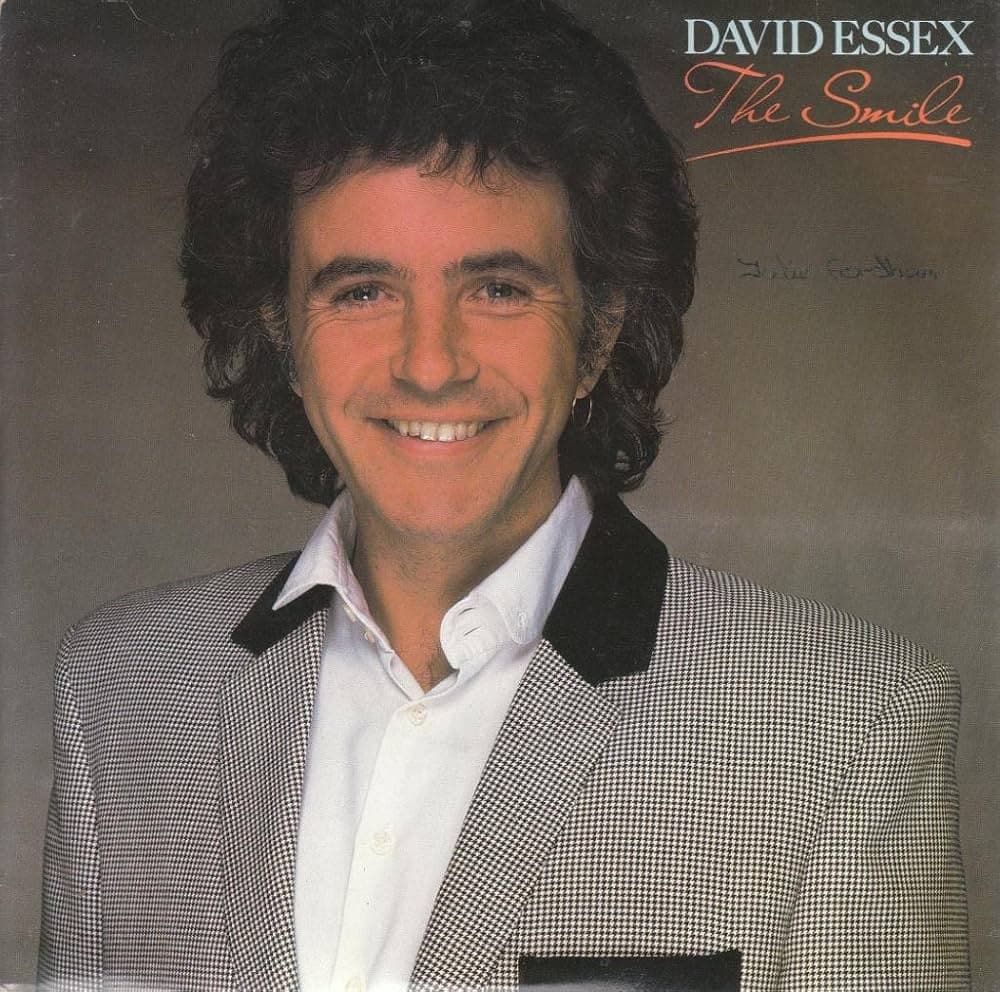
A quiet confession carried on the edge of breath, where love speaks not in declarations but in secrets meant for the heart alone
Released in early 1976, “The Whisper” remains one of the most intimate and emotionally restrained recordings in David Essex’s career. Upon its release, the song rose swiftly to No. 2 on the UK Singles Chart, confirming Essex’s rare ability to balance commercial success with emotional subtlety. At a time when popular music often leaned toward bold statements and theatrical delivery, “The Whisper” stood apart. It spoke softly, trusting silence as much as sound. The song was drawn from his 1975 album All the Fun of the Fair, an album that marked a turning point in Essex’s artistic maturity and his growing interest in inward looking storytelling.
By the mid 1970s, David Essex was already a familiar figure in British popular culture. He had achieved striking success with earlier hits that carried youthful confidence and dramatic flair. Yet “The Whisper” revealed a different kind of artist. Here was a songwriter and performer less concerned with being heard than with being felt. The single arrived during a reflective phase in his career, when fame no longer felt new and emotional complexity had begun to replace youthful certainty.
Musically, “The Whisper” is built on restraint. The arrangement is deliberately sparse, allowing space for breath, hesitation, and suggestion. Gentle piano lines anchor the song, while subtle orchestration drifts in and out like memory itself. There are no grand crescendos, no dramatic flourishes. Instead, the song unfolds gradually, inviting the listener closer rather than pushing emotion outward. This careful balance gives the track its enduring power.
Lyrically, “The Whisper” explores a form of love that exists almost entirely beneath the surface. It is not about pursuit or conquest, but about emotional proximity. The central image of a whisper suggests intimacy, trust, and vulnerability. Words spoken too loudly might lose their meaning. Essex understands this instinctively. His lyrics suggest that the most important feelings are often the ones shared quietly, perhaps even uncertainly, in moments when the world feels distant.
The story behind the song reflects David Essex’s growing fascination with emotional nuance. At this stage in his life, he was increasingly aware that relationships are shaped as much by what remains unsaid as by what is spoken aloud. “The Whisper” does not offer resolution. There is no promise of permanence or closure. Instead, it lingers in the space between desire and doubt, capturing a moment when emotion is real but fragile.
Essex’s vocal performance is central to the song’s effect. He sings with remarkable control, allowing small inflections to carry meaning. His voice rarely rises above a conversational tone, reinforcing the song’s theme of intimacy. It feels less like a performance and more like a private admission overheard accidentally. This approach was unusual for chart music of the time, yet it resonated deeply, as reflected in the song’s strong chart performance.
Within the context of All the Fun of the Fair, “The Whisper” serves as one of the album’s emotional anchors. The album itself is often regarded as one of Essex’s most cohesive and thoughtful works, blending pop sensibility with reflective songwriting. “The Whisper” embodies that balance perfectly. It does not seek attention, yet it commands it through sincerity.
Over time, the song has taken on a quiet timelessness. Its themes do not belong to any specific decade. The experience of holding something precious without knowing how long it will last remains universal. “The Whisper” understands that love is not always loud or certain. Sometimes it exists only in fleeting moments, in shared glances, in words spoken softly enough to be almost lost.
Today, David Essex’s “The Whisper” endures not because it tried to define an era, but because it trusted emotion over fashion. It remains a reminder that music does not need to shout to leave a lasting impression. Some songs stay with us precisely because they arrive gently, settle quietly, and continue to echo long after the sound has faded.