
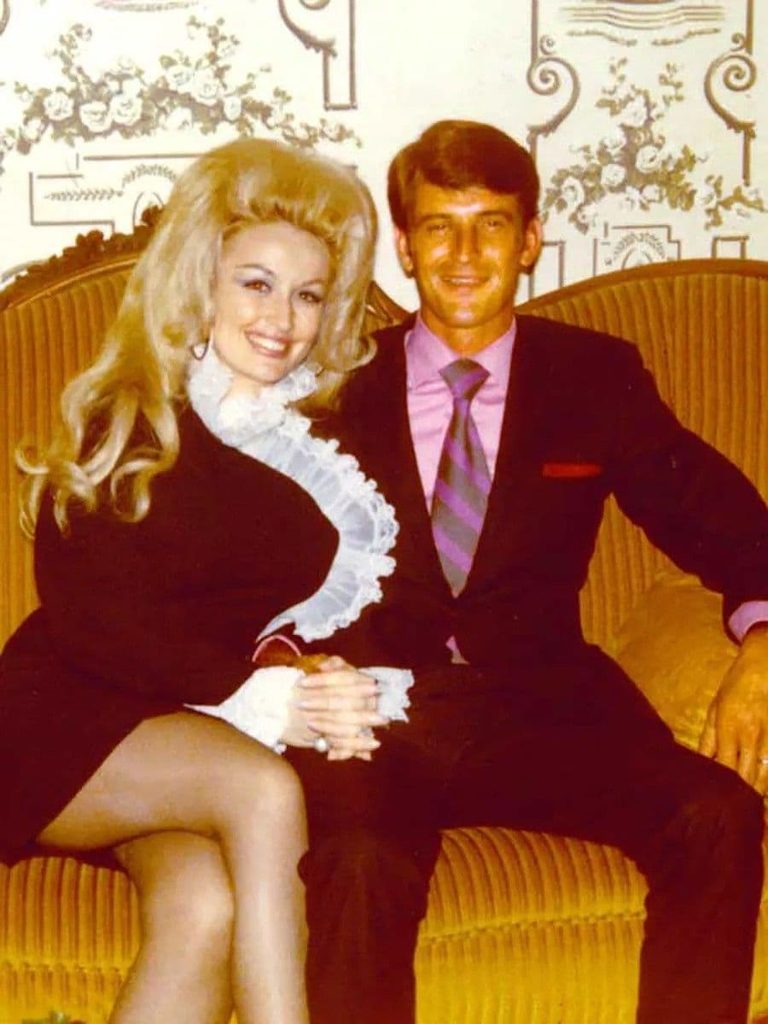
“If You Hadn’t Been There” is Dolly Parton’s deeply personal farewell to Carl Dean, a song that turns nearly sixty years of private love into a simple and heartbreaking expression of gratitude.
When Dolly Parton released “If You Hadn’t Been There” on March 7, 2025, the song arrived not as a routine new single, but as a message from the most private corner of her life. It was released just days after the death of her husband, Carl Dean, who died on March 3, 2025, at the age of 82. The couple had been together for six decades, married for nearly sixty years, yet Carl had spent almost his entire life deliberately avoiding the spotlight that followed his famous wife everywhere. In this new song, Dolly did something extraordinary. She brought that quiet, largely unseen love story into the open, not through interviews or photographs, but through the language she has always understood best: music.
The song immediately became a remarkable chart success. “If You Hadn’t Been There” debuted at No. 1 on Billboard’s Country Digital Song Sales chart, giving Dolly her first No. 1 on that particular Billboard ranking. It also entered the all genre Digital Song Sales chart at No. 3, becoming one of her strongest modern chart performances. In the United Kingdom, the song reached No. 21 on both the Official Singles Sales Chart and the Official Singles Downloads Chart. These numbers were especially meaningful because this was not a carefully planned commercial comeback. The song was released in a moment of grief, and listeners responded to the honesty of what they heard.
The story behind the song reaches back to 1964, when an eighteen year old Dolly Parton arrived in Nashville with dreams of becoming a country music star. On her very first day in the city, she met Carl Dean outside the Wishy Washy laundromat. He saw her, stopped to speak with her, and a relationship began that would quietly survive the extraordinary changes ahead. Dolly would become one of the most famous women in the world. Carl, meanwhile, would remain almost completely outside the entertainment industry, running his own asphalt paving business and choosing a life far removed from cameras and red carpets. They married on May 30, 1966, and while the world came to know Dolly Parton, Carl Dean remained the person waiting at home.
That history gives “If You Hadn’t Been There” its extraordinary emotional weight. Dolly does not sing about fame, awards, hit records, or the enormous life she built. Instead, she looks behind all of it and asks a far more personal question: who would she have become without the person who believed in her before the rest of the world did? The song is built around gratitude. She remembers the encouragement, the trust, and the emotional security Carl gave her throughout the years. The central thought is simple but devastating: she would not be where she is if he had not been there.
Dolly had actually spoken about the song before Carl’s death. It had been written for Dolly: An Original Musical, and she described it as one of her personal favourites, explaining that it was intended as a song about the important people who had shaped her life, while also carrying a spiritual meaning connected to God. But after Carl died, the song took on an entirely different meaning. Dolly chose to dedicate it specifically to him, transforming a broader reflection on love and gratitude into a final musical tribute to the man she had loved since she was eighteen.
Musically, “If You Hadn’t Been There” is restrained and deeply emotional. The arrangement centres on piano and strings, allowing Dolly’s voice and the message of the lyrics to remain at the heart of the recording. There is no attempt to turn grief into a dramatic spectacle. The song grows gently, supported by a choir, before ending with a quiet emotional finality. That restraint makes the recording even more powerful. Dolly has written countless songs about love, heartbreak, faith, loss, and survival, but this one feels different because there is no character standing between the songwriter and the listener.
This is Dolly speaking directly.
Perhaps the most moving part of the story is the contrast between Carl Dean’s life and the song now bearing his memory. For decades, he was famous for not wanting fame. There were years when rumours even circulated that Dolly’s husband was almost mythical because he was so rarely seen in public. But Dolly often spoke about how much she valued that difference between them. She belonged to the world of concerts, cameras, television, interviews, and endless public attention. Carl belonged to a quieter world, and perhaps that was one of the reasons their relationship endured.
In announcing the song, Dolly wrote that she had fallen in love with Carl when she was eighteen and that they had shared “60 precious and meaningful years together.” She also wrote that great love stories do not simply end because a life ends. They continue in memory and in song. It was a thought that could have come from one of her greatest compositions, but this time it was not a lyric written for someone else. It was her own life speaking.
“If You Hadn’t Been There” therefore stands apart from Dolly Parton’s enormous catalogue. It may not become another “Jolene,” “Coat of Many Colors,” or “I Will Always Love You.” Yet it carries something those songs, however brilliant, could never fully possess: the final weight of a life actually lived. Behind every line is the knowledge of a young woman arriving in Nashville with dreams, a man who believed in her, a marriage that lasted through fame beyond imagination, and a private love story that quietly endured while the world watched everything except the man at its centre.
With “If You Hadn’t Been There,” Dolly Parton did not simply write a song about losing Carl Dean. She thanked him for helping her become Dolly Parton. And perhaps that is why the song feels so deeply personal. After all the awards, the No. 1 hits, the films, the stages, and the decades of applause, she returned to one simple truth: before the world knew her name, there was someone who was there.