
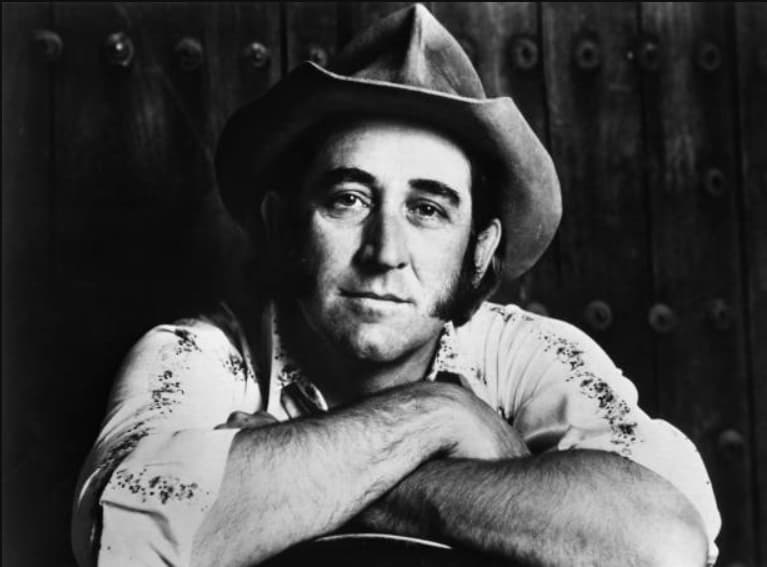
Video Don Williams – Storybook Children: The Gentle Giant’s Lament for a Love That Grew Up Too Fast
To hear the smooth, profound voice of Don Williams is to feel a calmness settle over the soul, and few songs exemplify his nickname, “The Gentle Giant,” quite like his heartfelt rendition of “Storybook Children.” This track, known for its wistful, melancholic reflection on a lost, simpler love, is a powerful example of how Don Williams could take a pre-existing song and imbue it with an unforgettable depth of feeling, making it entirely his own.
A critical point of history for this song is that Don Williams‘ version is a cover, showcasing his incredible ear for a powerful lyric. The song was originally written by Billy Vera and Chip Taylor and became a groundbreaking R&B/Soul hit in 1968 for the interracial duo Billy Vera and Judy Clay. While Williams’ version was not a major chart single, it was included on his 1975 album, Heroes of the Big Country, and has become a beloved deep cut for his dedicated fanbase, who appreciate his unique ability to strip away the flash and deliver the raw, tender emotion of a lyric. The song’s power in his hands rests on his steady, warm bass-baritone voice, which gives the words a sense of resigned wisdom that deeply resonates with older listeners.
The Meaning: The Tyranny of the Grown-Up World
The brilliance of “Storybook Children” lies in its central metaphor: the sad, inevitable collision between the carefree, fantastical world of childhood romance and the harsh, complicated realities of adulthood. The narrator mourns a relationship that was pure and uncomplicated—a love “running through the rain hand in hand across the meadow”—but was ultimately unable to survive the cynicism and compromises of the “grown up world.”
The most piercing lyrics are those that capture the heartbreaking finality of the situation:
“You’ve got your world and I’ve got mine and it’s a shame. Two grown up worlds that will never be the same. Why can’t we be like storybook children… In a wonderland where nothing’s planned for tomorrow.”
The lament is not just about losing a partner; it’s about losing an ideal. It’s the realization that while two people can genuinely love each other, the baggage of responsibilities, external pressures, and the simple passage of time can create separate realities that are impossible to merge. The song touches on a profound truth for those who have lived long enough to accumulate years and responsibilities: that the innocence and reckless abandon of youthful love are often the very qualities that allow it to flourish, and their loss can signal the end of the magic.
For listeners who came of age during the 1960s and 70s, Don Williams‘ calming delivery offered a gentle form of catharsis. He presents the loss not as a sudden, angry explosion, but as a slow, inevitable fading—a truth delivered with a comforting, almost fatherly acceptance. His approach transforms the song from a plea into a reflective acknowledgment that some beautiful things are simply not meant to last in the complexity of the adult world. It’s a nostalgic look back at a time when love was an adventure, a fantasy, before it became a compromise.
Don Williams’ version of “Storybook Children” endures because it speaks to the enduring human desire to escape back to that innocent, uncomplicated time, recognizing the wistful sadness that we never truly can. It’s a quiet song of reflection, perfect for remembering the sweet, simple loves that paved the way for the complicated life we live now.
 Oldies Songs