
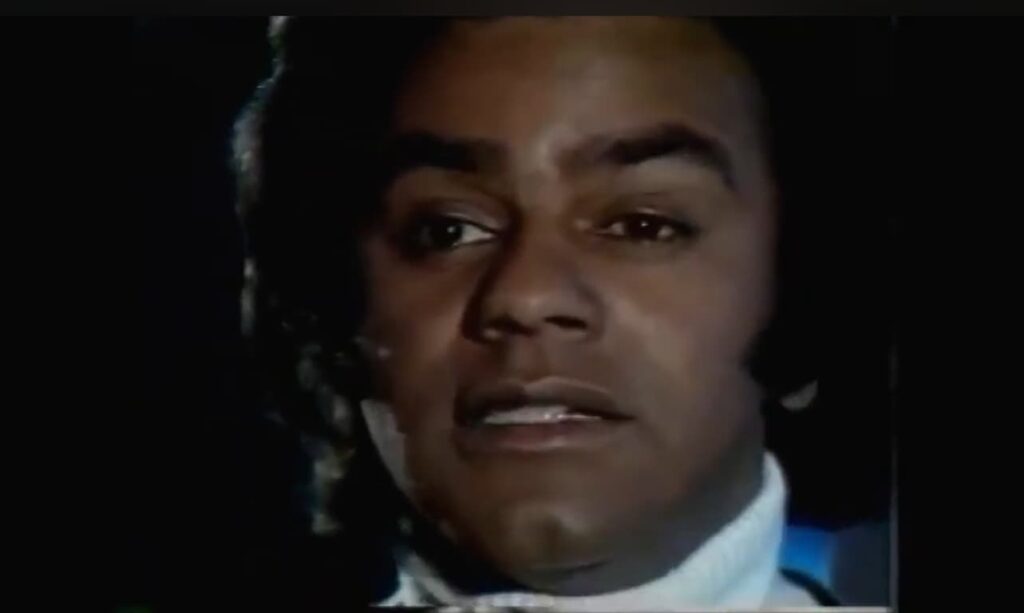
Two songs of patience and promise—“Nice To Be Around” and “Our Day Will Come” remind us that love is often quiet, waiting not for perfection, but for the right moment to arrive
When Johnny Mathis brings together “Nice To Be Around” and “Our Day Will Come” in performance, he is not simply revisiting two well-known compositions—he is tracing a single emotional thread that runs gently through decades of popular music. Both songs, though written in different eras and under different circumstances, share a common language: one of patience, tenderness, and the quiet belief that something lasting can emerge from time and care.
“Nice To Be Around,” composed by John Williams with lyrics by Paul Williams, was written for the 1973 film Cinderella Liberty. The song received an Academy Award nomination for Best Original Song, a recognition that speaks to its understated elegance rather than commercial force. It was never a chart-dominating single, yet its melody carries a reflective softness that has allowed it to endure in more intimate settings, particularly in the hands of vocalists who understand restraint.
In contrast, “Our Day Will Come,” originally recorded by Ruby & the Romantics, achieved significant chart success upon its release in 1963, reaching No. 1 on the Billboard Hot 100 and No. 1 on the R&B chart. Written by Bob Hilliard and Mort Garson, the song became a defining expression of optimism during a period marked by both cultural change and personal longing. Its message was simple, yet deeply resonant: that hope, when held onto with sincerity, eventually finds its moment.
When Johnny Mathis interprets these two songs together, the effect is not contrast, but continuity. His voice—remarkably consistent across decades—serves as a bridge between them, smoothing the differences in origin and style into a single, cohesive experience. There is no attempt to modernize or reframe the material. Instead, he allows each song to remain true to its character, while subtly guiding them toward a shared emotional center.
What stands out immediately is the way Mathis approaches phrasing. In “Nice To Be Around,” he leans into the song’s introspective nature, allowing each line to unfold with a gentle deliberation. There is a sense of stillness here, as though the song exists in a space untouched by urgency. The melody does not push forward; it lingers, inviting reflection rather than reaction.
As the performance transitions into “Our Day Will Come,” the emotional tone shifts slightly, but without disruption. The optimism of the song is present, yet it is tempered by experience. Where earlier versions may have carried a youthful certainty, Mathis introduces a quiet understanding—that hope is not always immediate, and that its fulfillment often comes later than expected.
This subtle reinterpretation transforms the meaning of the song. It becomes less about anticipation and more about endurance. The phrase “our day will come” no longer feels like a promise waiting to be fulfilled; it feels like something that has been carried forward over time, sustained by belief rather than guaranteed by circumstance.
The orchestration in these performances remains understated, allowing the voice to remain central. Soft arrangements provide support without distraction, creating an atmosphere in which the emotional nuances of each song can be fully realized. There is a careful balance here—nothing is overstated, nothing is diminished.
For Johnny Mathis, whose career has long been associated with clarity and control, this balance is essential. He does not seek to reinterpret these songs dramatically. Instead, he reveals what has always been present within them, bringing forward details that may have gone unnoticed in earlier recordings.
Listening to these performances, there is a sense that time itself has become part of the music. The songs are no longer confined to their original moments of release. They have evolved, shaped by the years that separate their beginnings from this interpretation.
And in that evolution, something quietly profound emerges. The themes of companionship and hope, once expressed with simplicity, now carry a deeper resonance. They reflect not only the emotions of the moment in which they were written, but the understanding that comes with time.
As the final notes settle, there is no need for resolution. The songs do not demand it. They exist comfortably within their own openness, allowing their meaning to remain fluid, to shift gently depending on the listener’s perspective.
In bringing together “Nice To Be Around” and “Our Day Will Come,” Johnny Mathis does something subtle yet lasting. He reminds us that some songs are not defined by their chart positions or their immediate impact, but by their ability to remain relevant long after their moment has passed.
And in that quiet relevance, they continue to speak—softly, patiently, and with a kind of enduring grace that never asks for attention, yet never fades.