
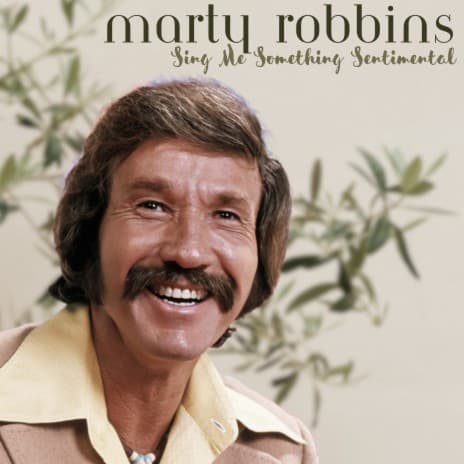
Marty Robbins – “Passion and Danger”: The High-Stakes Paradox of Music’s Greatest Polymath
To look into the eyes of Marty Robbins was to see a reflection of the dualities that define the human spirit: the yearning for a peaceful home and the unquenchable thirst for the adrenaline of the unknown. He was a man who lived at the intersection of “Passion and Danger,” a true polymath of the mid-20th century who could move from the tender embrace of a love ballad to the bone-rattling velocity of a NASCAR superspeedway without missing a beat. This wasn’t a curated image; it was the raw, beating heart of a legend who refused to be a spectator in his own life. From his early days at Columbia Records to his final laps at Talladega, Robbins proved that a life well-lived is one that embraces both the softest whisper and the loudest roar.https://youtu.be/zzICMIu5zFY?si=isTW7XLJvx5_Hib-
The “ranking” of Marty Robbins‘s courage cannot be measured solely by his 94 charted hits or his 16 number-one singles. Instead, it is found in the dirt and oil of the racetrack. Marty wasn’t just a “celebrity driver”; he was a legitimate competitor in the NASCAR Winston Cup Series, earning six top-ten finishes over his career. He stared down danger at 200 miles per hour, surviving horrific crashes that would have ended the careers of lesser men. Yet, just days after a brush with death on the asphalt, he would stand on the stage of the Grand Ole Opry, his “Velvet Voice” as steady and soulful as ever. This paradox—the “Gentle Giant” with a lead foot—is what made him a titan to those of us who grew up admiring his fearless versatility.
The Art of High Stakes: Storytelling in the Shadow of the Grave
For the listener who has navigated the “mountain climbs” and “valleys” of their own decades, Marty’s obsession with “Passion and Danger” resonates with a profound truth: you cannot have one without the risk of the other. In his songwriting, especially in the 1959 masterpiece “El Paso,” he explored this theme with a literary depth that was revolutionary for country music. The protagonist’s passion for Feleena is so all-consuming that he willingly walks into the “danger” of a gunfighter’s end.
“My love is strong and it pushes me onward… down to the West Texas town of El Paso.”
This wasn’t just a cowboy story; it was a reflection of Marty‘s own philosophy. Whether he was chasing a melody or a checkered flag, he understood that the most meaningful rewards require the greatest stakes. For our generation, his music serves as a “souvenir” of an era when men were allowed to be both sensitive poets and rugged adventurers. He showed us that a man could sing “My Woman, My Woman, My Wife” with tears in his eyes and then climb into a racecar with fire in his soul.
A Legacy of Fearless Authenticity
As we look back at the grand legacy of Marty Robbins, we see a man who lived multiple lifetimes in his fifty-seven years. He was the “Poet of the Desert,” the “King of the Western Ballad,” and the “Daredevil of the Track.” He taught us that “passion” is the fuel for life, but “danger” is often the crucible that makes that life worth remembering. He never took the safe path, and in doing so, he created a body of work that feels as vibrant and essential today as it did on a Saturday night in 1960.
He remains a monolith of authenticity because he never pretended to be anything other than what he was: a man in love with the world and all its thrills. To listen to him is to be reminded that we are all a collection of contradictions, and that there is beauty in embracing every side of who we are.
 Music Legend