
A wistful hymn to a dream in the wide open: “A Hundred and Sixty Acres” by Marty Robbins
In “A Hundred and Sixty Acres,” Marty Robbins gently summons the longing for a simple, sunlit homestead—a place of freedom, peace, and belonging.
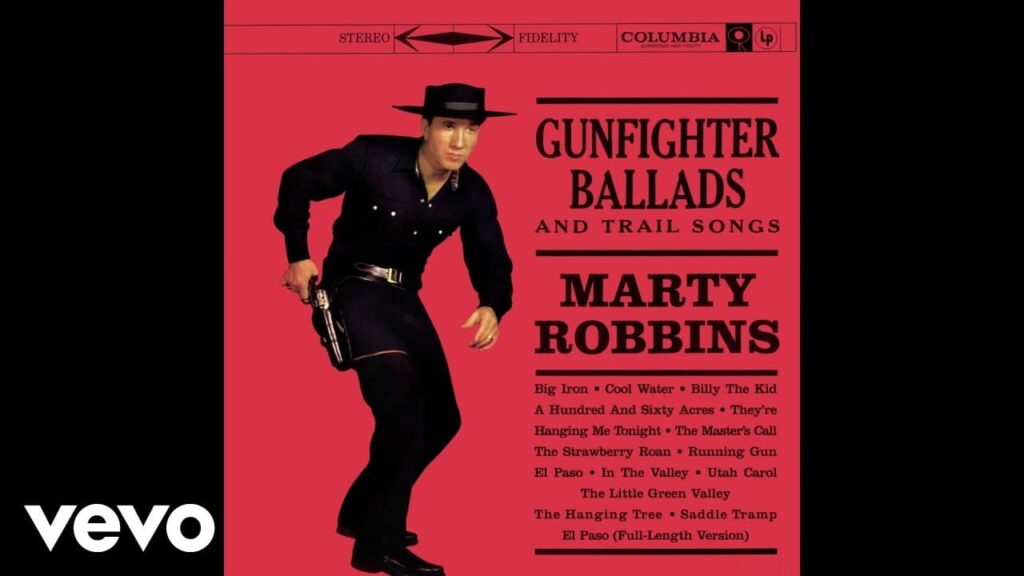
The song appears on Robbins’ seminal 1959 album Gunfighter Ballads and Trail Songs, a masterwork of Western storytelling. While Gunfighter Ballads made a tremendous impact—earning critical acclaim and securing its place as one of Robbins’ signature records — “A Hundred and Sixty Acres” itself was not released as a standalone chart-topping single, so there is no independent peak on Billboard charts attributed solely to it.
What lies behind these 160 acres is not just a patch of land, but a quietly defiant dream. Written by David Kapp (not Robbins himself), the lyrics paint a vivid scene of a man who owns a modest plot “in the valley,” enough to feed himself, to rest, and to let worry fade under a vast sky. Robbins sings of waking at dawn to greet the sun, of returning home each evening with “my pocket money jinglin’ in my jeans,” and of feeling like a ruler of his own modest domain, “on the hundred and sixty acres that I love.”
This is not a grand saga of gunfights or border battles, as many of Robbins’ western ballads are. Rather, it is an intimate celebration of quiet labor, of hard-won stability, and of contentment rooted in simplicity. The “old paint hoss” that carries him reminds us of a life paced by nature and by work—not by ambition or violence.
Musically, the arrangement is spare and sincere: Robbins’ warm, steady voice carries the weight of the song’s hope without melodrama, backed by clean guitars and subtle rhythm that conjure wide landscapes and quiet mornings. According to Shazam’s credits, the track features The Glaser Brothers as background vocals, plus guitarists Grady Martin and Jack Pruett, and Bob Moore on bass—produced by Don Law.
The meaning of the song is deeply nostalgic, but not bitter. It speaks to the universal longing for a place of one’s own, a place where “care or worry” seem distant, and where joy is tied to the land and its simple rhythms. The narrator’s pride in his little domain is tempered by humility—he doesn’t yearn for more than what he can call his own, and that makes the dream all the more precious.
For listeners who remember a time when country music was a storyteller’s domain, this song feels like a conversation by lantern light: a man looking back on what he holds dear, not with regret, but with tender clarity. It evokes evenings when the turntable spun softly, when a record like Gunfighter Ballads was more than an album—it was a window into a way of life, a piece of myth made real, where dreams and hardship walked hand in hand.
In the arc of Marty Robbins’ career, “A Hundred and Sixty Acres” occupies a gentle, reflective space. While songs like El Paso or Big Iron erupt with drama and danger, this one rests quietly in his catalog, reminding us that Robbins was not only a balladeer of high-stakes conflict, but also a poet of the heart, deeply attuned to the quieter struggles and small victories of the frontier.
Listening to this song now, decades later, is like visiting an old homestead in memory: you can almost feel the dust under your boots, hear the wind across the fields, and sense that in some corner of the world, a simple dream of sunlight and stars still lives on. “A Hundred and Sixty Acres” isn’t just a song—it’s a monument to the enduring yearning for a place to call home.