
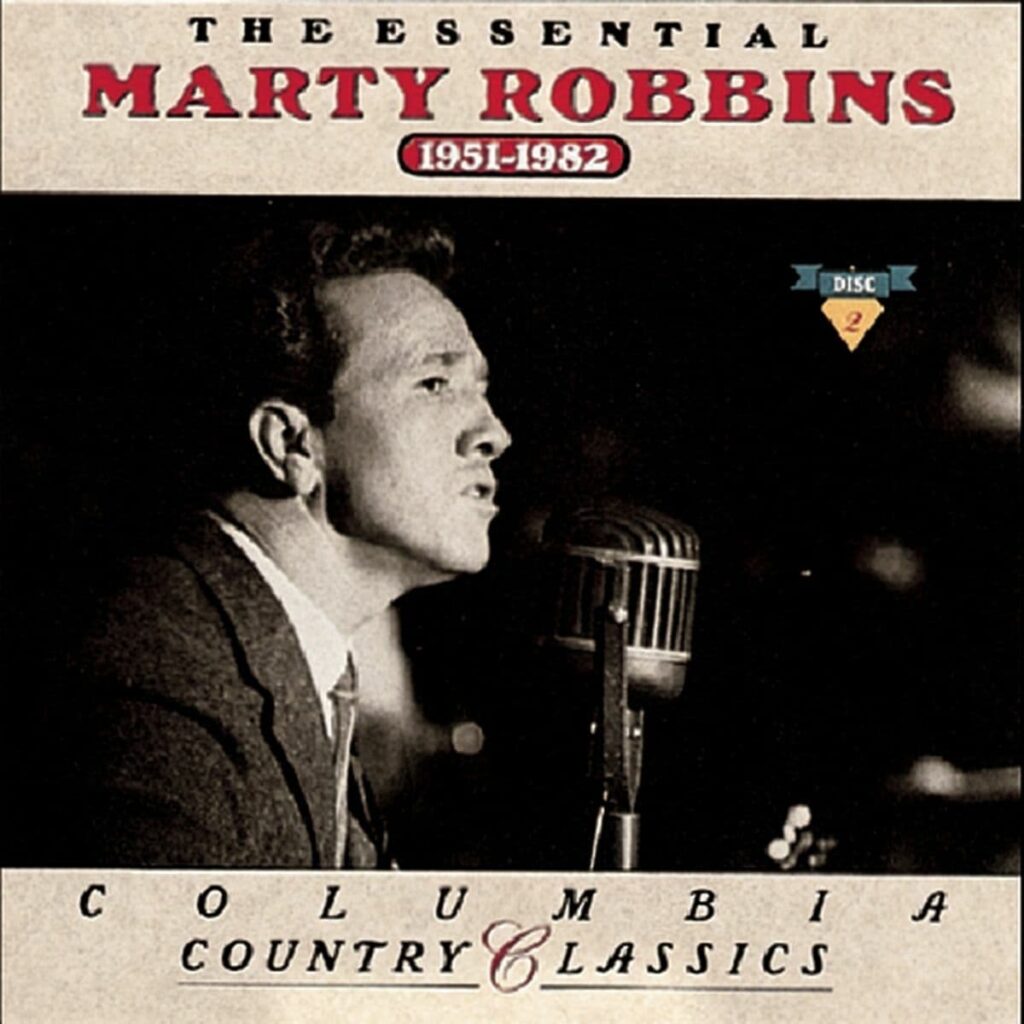
Marty Robbins – Change That Dial: The Bittersweet Radio of the Heart
In the mid-1960s, as the world was rapidly changing, Marty Robbins remained a steadfast anchor of emotional storytelling. “Change That Dial,” a hidden gem from his 1964 album R.F.D., captures a specific, technological kind of heartbreak that resonates deeply with our generation. While the album itself was a major success, reaching Number 4 on the Billboard Country Albums chart, this track stands out as a poignant reminder of a time when the radio was our constant companion—and sometimes, our most painful reminder of what we had lost.
To remember “Change That Dial” is to recall the ritual of the airwaves. When Marty performed this, he tapped into the universal experience of hearing “our song” at exactly the wrong moment. The story behind this recording is one of mid-century realism. By 1964, Marty was moving into a more mature, “country-folk” sound. Working with the lush but restrained production style of the era, he created a song that feels as intimate as a late-night drive, where the glow of the radio dial is the only light on a lonely road.
The story within the lyrics is a relatable drama of avoidance and memory. The narrator is trying to go about his life, but every station he turns to seems to be playing a melody that carries the ghost of a former love. It is a narrative of the sensory trigger. He begs the invisible hand to “change that dial” because he can’t bear to hear the lyrics that mirror his own pain. It is the story of a man who is literally trying to tune out his own heartache, only to find that the memories are broadcast on every frequency.
The profound meaning of this ballad strikes a deep chord with those of us who grew up in the era of transistor radios and late-night DJs:
- The Soundtrack of our Lives: It acknowledges that music is the ultimate “time machine.” For us, a few bars of a certain song can instantly transport us back to a specific dance, a specific car, or a specific person.
- The Vulnerability of the Unsuspecting: The song honors the “ambush” of memory. You can be having a perfectly fine day until a mechanical voice or a familiar guitar riff brings the walls of your resolve crashing down.
- The Loneliness of the Modern World: In 1964, the radio was a lifeline to the world, but as Marty shows, it can also be a mirror of our isolation. There is a nostalgic beauty in the narrator’s struggle to find a “safe” station—a place where the music won’t hurt.
Marty Robbins delivers this performance with a voice that is as smooth as velvet but carries a weary, rhythmic urgency. His signature vibrato is used to mimic the “static” of an emotional breakdown, making the request to “change that dial” feel like a matter of survival. The arrangement is quintessential mid-60s Marty—featuring a steady, “shuffling” beat, a clean electric guitar, and a warm, resonant bassline that feels like the hum of a dashboard. For our generation, “Change That Dial” is a timeless masterpiece; it reminds us that while we can change the station, we can never truly tune out the songs that the heart has already learned by heart.
 Music Legend