
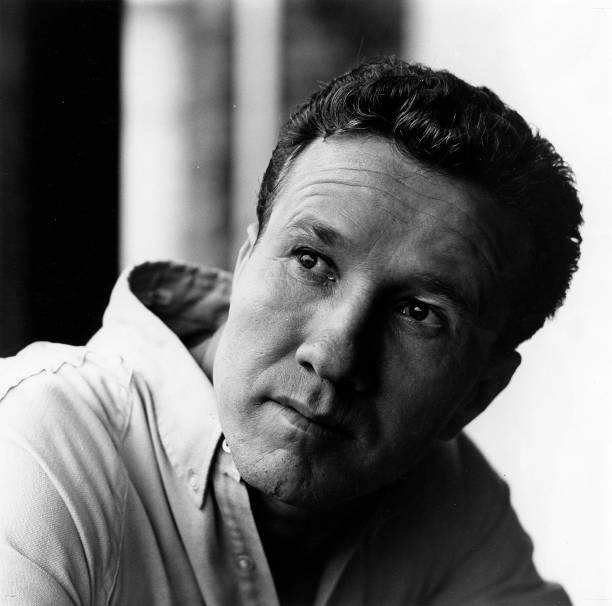
Marty Robbins – I’d Trade All Of My Tomorrows: A Heartbreaking Inventory of Regret
In the vast and storied catalog of Marty Robbins, there are songs that feel like epic movies and songs that feel like intimate confessions. “I’d Trade All Of My Tomorrows (For Just One Yesterday)” falls squarely into the latter. It is a devastatingly simple and soul-baring look at the weight of past mistakes and the impossible price we would pay to undo them. When Robbins sings this, his voice carries a specific kind of world-weariness—the sound of a man who has finally realized that the future holds nothing as precious as the love he once walked away from.
While this song is a cornerstone of mid-century country music, it was actually written by the pioneering female songwriter Jenny Lou Carson (the first woman to write a Number 1 country hit). It was first made famous by the legendary Eddy Arnold in the late 1940s, and later covered by icons like Merle Haggard. However, Marty Robbins included it in his 1963 album Portrait of Marty, which peaked at Number 7 on the Billboard Top Country Albums chart. For Robbins, recording this song was an act of honoring the roots of country music while adding his own signature “Nashville Sound” polish—turning a raw folk sentiment into a smooth, resonant masterpiece of sorrow.
The story of the song is a mental calculation of loss. The narrator is standing at a crossroads, looking at a future that feels empty and gray. He isn’t interested in what “tomorrow” has to offer because he knows he left his happiness in the “yesterday” he shared with a lost love. He is literally offering a lifetime of potential—all his future days, his hopes, and his time—in exchange for just twenty-four hours back in the arms of the person he lost. It is a desperate, illogical, and deeply human trade.
The profound meaning of this ballad resonates with anyone who has lived through the “if onlys” of life:
- The Deceptive Value of Time: The song highlights a cruel irony: we often spend our “tomorrows” chasing things that don’t matter, only to realize too late that we would give them all back for one moment of a past we took for granted.
- The Weight of Accountability: The narrator doesn’t blame fate or the world; there is a sense that the loss was within his control, which makes the yearning even more painful. It is the anthem of the self-inflicted heartbreak.
- The Finality of Choice: By offering to trade “all” of his tomorrows, he is admitting that without this love, his future has no value. It is an ultimate statement of devotion, even if it comes far too late to change the outcome.
Marty Robbins delivers the lyrics with an exquisite, soaring sadness. Unlike his more rhythmic cowboy songs, here he allows his voice to linger on the vowels, stretching out the syllables of “yesterday” as if he’s trying to hold onto the word itself. His version is lush and orchestral, yet his vocal performance remains intensely personal, making the listener feel like they are eavesdropping on a private prayer. It remains a nostalgic pillar for our generation—a song that understands that sometimes, the most expensive thing in the world is a single moment that has already passed.
 Music Legend