
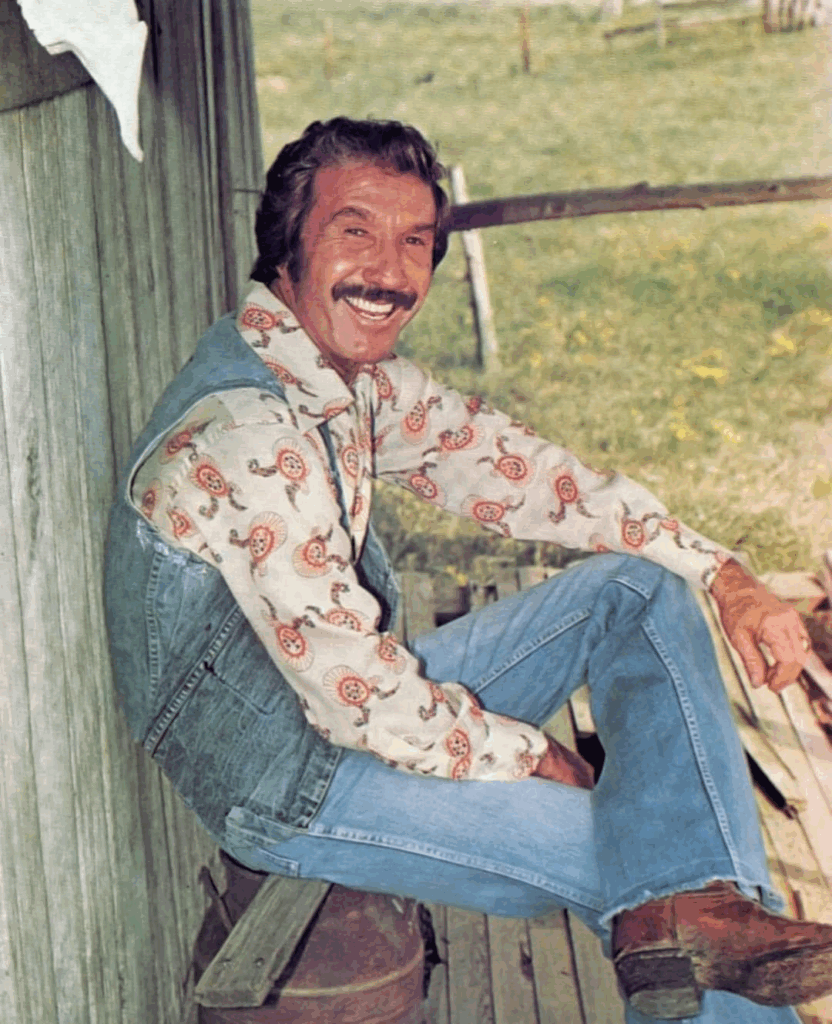
Marty Robbins – Lonely Street: A Velvet-Lined Walk Through the Desolate Neighborhoods of a Broken Heart
In the autumn of 1959, while the world was still reeling from the dusty gunsmoke of his Western sagas, Marty Robbins retreated into the neon-lit shadows of the city to record one of the most atmospheric ballads of his career. Released on the iconic album The Song of Robbins, his rendition of “Lonely Street” is a haunting masterclass in “Country-Pop” intimacy. While Andy Williams and Kitty Wells also made their mark with this track, it was Marty who managed to infuse it with a specific brand of “Gentle Balladeer” vulnerability that felt less like a song and more like a private confession. Peaking at No. 10 on the Billboard Hot Country Singles chart, this recording remains a sacred text for anyone who has ever found themselves wandering the silent avenues of grief.
For the reader who has navigated the long, often solitary stretches of a lifetime, this song resonates with the stark clarity of a midnight bell. Marty Robbins, with a voice that possessed the smooth texture of fine bourbon and the transparency of a tear, captures the physical reality of heartbreak. For the mature listener, “Lonely Street” isn’t just a place on a map; it is a mental state where we go when the one we love is gone. There is a deep, evocative nostalgia in hearing Marty’s voice echo through the “alleys of regret,” reminding us of the times we’ve stood on our own metaphorical street corners, waiting for a light that would never turn back on. It is a song that honors the dignity of sorrow.
The story behind the song is a classic piece of Nashville lore. Written by Kenny Sowder, Carl Belew, and W.S. Stevenson, it was a quintessential “torch song” designed to showcase a singer’s emotional range. When Marty approached it in 1959, he was at the absolute zenith of his powers. He understood that to make the listener feel the “loneliness,” he had to pull back, using silence and space as effectively as he used his notes. In the transition between the raw honky-tonk of the early fifties and the lush “Nashville Sound” of the sixties, Marty stood as a bridge, proving that a country singer could be every bit as sophisticated and soulful as a jazz crooner in a New York lounge.
The lyrical depth of “Lonely Street” lies in its personification of misery. The narrator describes a place where “the broken-hearted people” go, a street where the sun never shines and the wind always blows cold. For those of us looking back through the lens of our own decades, the song captures the “isolation” that often follows a great loss. When Marty sings the refrain, his signature controlled vibrato quivers with a genuine sense of despair—yet it remains impeccably beautiful. He isn’t just describing a location; he is inviting us to walk with him through the “darkness of the night,” proving that there is a certain companionship to be found in shared sorrow.
Musically, the track is a hallmark of Mid-Century Melancholy. It features:
- The “Ticking” Acoustic Rhythm: A soft, percussive guitar style that sounds like the relentless ticking of a clock in an empty room.
- Mournful Steel Guitar Swells: Providing a distant, crying backdrop that feels like a train whistle fading in the distance.
- Marty’s Crystalline Tenor: His phrasing is slow and deliberate, lingering on words like “blue” and “lonely” as if he is reluctant to let them go.
To listen to this track today is to appreciate the sheer “atmosphere” that Marty Robbins could create with nothing but a microphone and a broken heart. He reminds us that while we all eventually have to take a walk down Lonely Street, we don’t have to do it without a melody to keep us company. It is a song that celebrates the beauty found in the shadows and the quiet resilience of those who continue to walk, even when the road is dark.
 Music Legend