
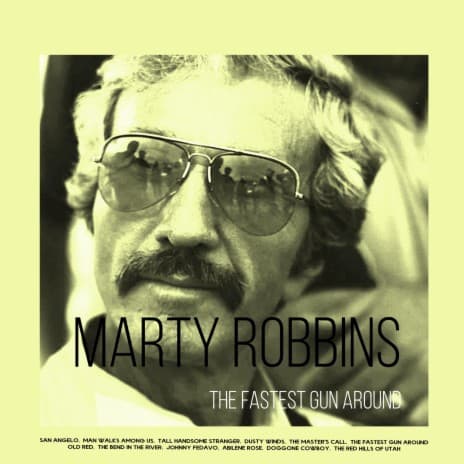
Marty Robbins – This Peaceful Sod: A Reverent Hymn to the Sacred Silence of the Fallen
In the profound silence that followed the epic storytelling of his Western sagas, Marty Robbins often turned his gaze toward the hallowed grounds of history and the quiet dignity of sacrifice. Released on his 1966 masterpiece The Drifter, “This Peaceful Sod” stands as one of the most moving and contemplative tracks in his entire discography. While the album itself was a poetic departure that focused on the lone wanderer and the weight of the human soul, this particular song serves as a spiritual eulogy for those who have found their final rest in the earth they once defended. It is a song for the veteran, the historian, and the survivor, offering a moment of deep, unhurried reflection on the price of the “peace” we often take for granted.
For the reader who has lived through the turbulent decades of the 20th century, this song resonates with a frequency that is both heartbreaking and healing. Marty Robbins, with a voice that possessed the clarity of a church bell ringing across a quiet valley, speaks directly to the experience of loss and the sacredness of memory. For the mature listener, the “peaceful sod” is more than just a burial ground; it is a symbol of the ultimate quietude that awaits us all, and the honor we owe to those who paved the way. There is a powerful, nostalgic weight in hearing Marty’s smooth, respectful tenor—a voice that feels like a steady hand on a shoulder—as he navigates the solemnity of a soldier’s resting place.
The story behind the song is a testament to Marty’s deep-seated patriotism and his ability to find the “human” heart within the grand scale of history. Written by Marty himself, the song reflects his preoccupation with the Civil War and the frontier, themes he explored with unmatched sensitivity. In 1966, as the world was once again embroiled in conflict, Marty’s decision to release such a contemplative, anti-war-in-spirit ballad was a significant artistic choice. He wasn’t interested in the politics of battle; he was interested in the “lonely cross” and the “green grass” that grows over the scars of the past. He understood that his audience, many of whom had seen the “white crosses” of their own generation, needed a song that honored the silence.
The lyrical depth of “This Peaceful Sod” lies in its stark, beautiful imagery. The narrator stands over a grave, noting that the “bugle calls” and the “thunder of the cannons” have long since faded, replaced by the gentle rustle of the wind. For those of us looking back through the lens of a long life, the song speaks to the transition from the “noise” of our struggles to the “quiet” of our legacy. When Marty sings the refrain, his voice carries a hushed, reverent quality; he treats every word as if he is treading softly on holy ground. It is a song that reminds us that the earth beneath our feet is filled with the stories of the brave, and that our greatest duty is to remember.
Musically, the track is a masterclass in “The Drifter” Aesthetic. It features:
- Muted Acoustic Guitars: Creating a soft, rhythmic texture that mimics the steady, slow beat of a respectful heart.
- Sparse, Atmospheric Production: The absence of lush orchestras allows the vulnerability of Marty’s vocal to remain the absolute focal point.
- Pristine Phrasing: Marty’s delivery of the word “peaceful” is stretched out with a gentle vibrato, creating a literal sense of calm that washes over the listener.
To listen to this track today is to appreciate the profound empathy of a man who was so much more than a singer of “Cowboy songs.” Marty Robbins reminds us that there is a time for the “gunfight” and a time for the “sod”—and that the latter is where we find our truest sense of peace. It is a song that invites us to pause, to take off our hats, and to give thanks for the quiet green fields of our lives.
 Music Legend